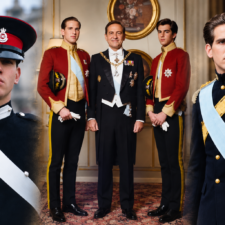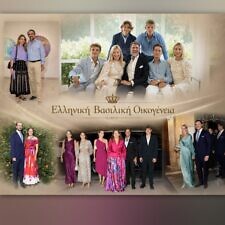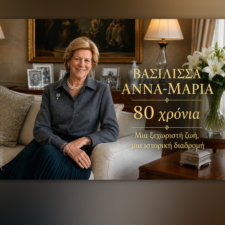
Today, 30 August 2026, Her Majesty Queen Anne-Marie celebrates her 80th birthday. This anniversary is not only a personal milestone, but also a significant moment in recent European history, as her life has been closely linked to two royal houses – those of Denmark and Greece – and to events that shaped the 20th century and the early decades of the 21st century. For more than sixty years, she has been a constant presence in public life. As the youngest daughter of King Frederick IX of Denmark and Queen Ingrid, she grew up in an environment where the concepts of duty, discretion and public service were fundamental values. At the age of just eighteen, she became Queen of the Hellenes, taking on a role that was to be marked by political upheavals, national trials and personal challenges.
Written by: Andreas Megos
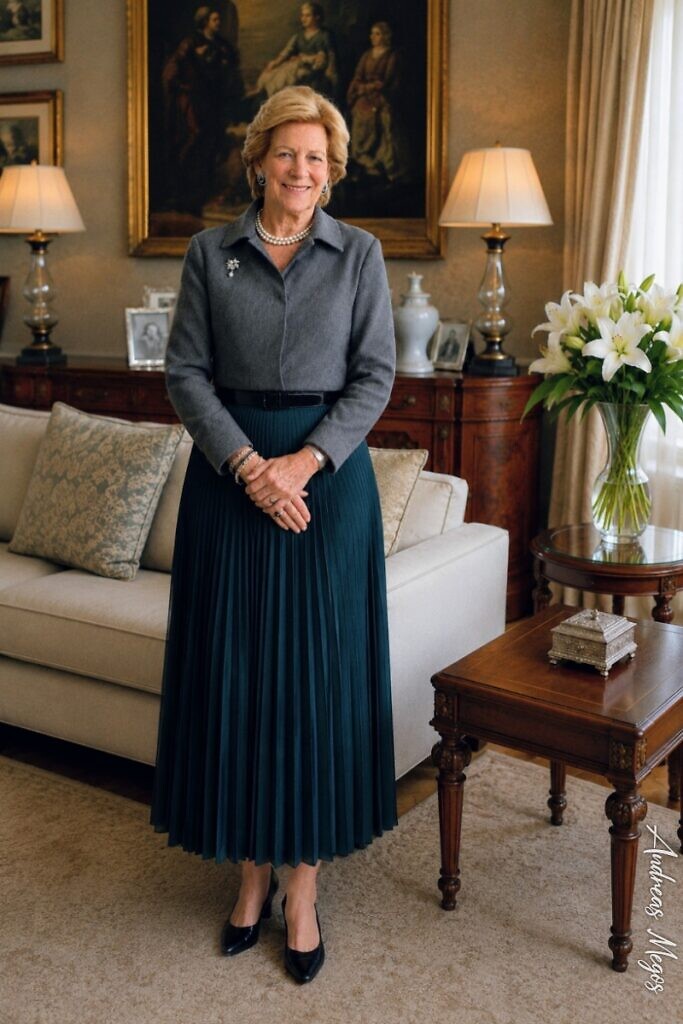
Her life was a constant process of adaptation. From the palaces of Copenhagen to those of Athens, from the splendour of official ceremonies to sudden exile, from her role as a young queen to that of a mother of five children and later a grandmother to a new generation, Anne-Marie experienced changes that went far beyond the bounds of an ordinary public life. Despite the historical upheavals and political controversies that accompanied the Greek monarchy, she consistently chose to maintain a measured public stance, avoiding confrontation and prioritising her family, her social contributions and the preservation of her ties with Greece.
From 1964 onwards and for the decades that followed, her social contribution was not confined to Greece. Through charitable events, as well as educational and other activities with a strong Hellenic character, she continued to maintain active links with Greek communities abroad, particularly in Italy and later in Great Britain. These initiatives were linked to the promotion of Greek education, language, culture and the collective memory of Greeks abroad, and were carried out with the participation and support of members of the Greek diaspora. Her connection with the Greek diaspora had, moreover, been a constant feature of her life since she left Greece. Anne-Marie did not seek to maintain her presence through political interventions or public debates, but rather through social contribution, education, culture and human relationships. In this way, her presence in Greek communities abroad took on a more symbolic and social character: she served as a link between Greece and the Greek diaspora. The consistency of this stance helped to shape a public image associated with dignity, discretion and the avoidance of political confrontation. These characteristics are recognised even by those who take a different view of the historical role and legacy of the institution institution of the Greek monarchy.
Eighty years after her birth, Queen Anne-Marie remains one of the most prominent figures amongst Europe’s royal families. Her life story reflects significant developments in post-war Europe: the transition of monarchies to a more symbolic role, changes in international relations, and the growing importance of social engagement as part of the public role of royal families.
This biography was written with my deep respect, sincere appreciation and the utmost honour for the person and life of Queen Anne-Marie. My aim was to capture, through a well-documented and objective narrative, the multifaceted journey of a woman whose life was closely linked to significant moments in Greek and European history.
It is not merely the story of a queen and her constitutional role, but also the personal journey of an extraordinary woman who found herself facing major changes, trials and upheavals, which she faced with dignity, a commitment to her principles and devotion to her family. Beyond her title and institutional role, her life story is that of a woman who retained her personal identity and, through her approach to life, left a distinctive and significant mark on modern Greek history.
Childhood Years at Amalienborg. The shaping of a princess
‘Character is not shaped by life’s great moments, but by everyday life.’
Princess Anne-Marie was born on 30 August 1946 at Amalienborg Palace in Copenhagen, in a world that was trying to heal the wounds of war.
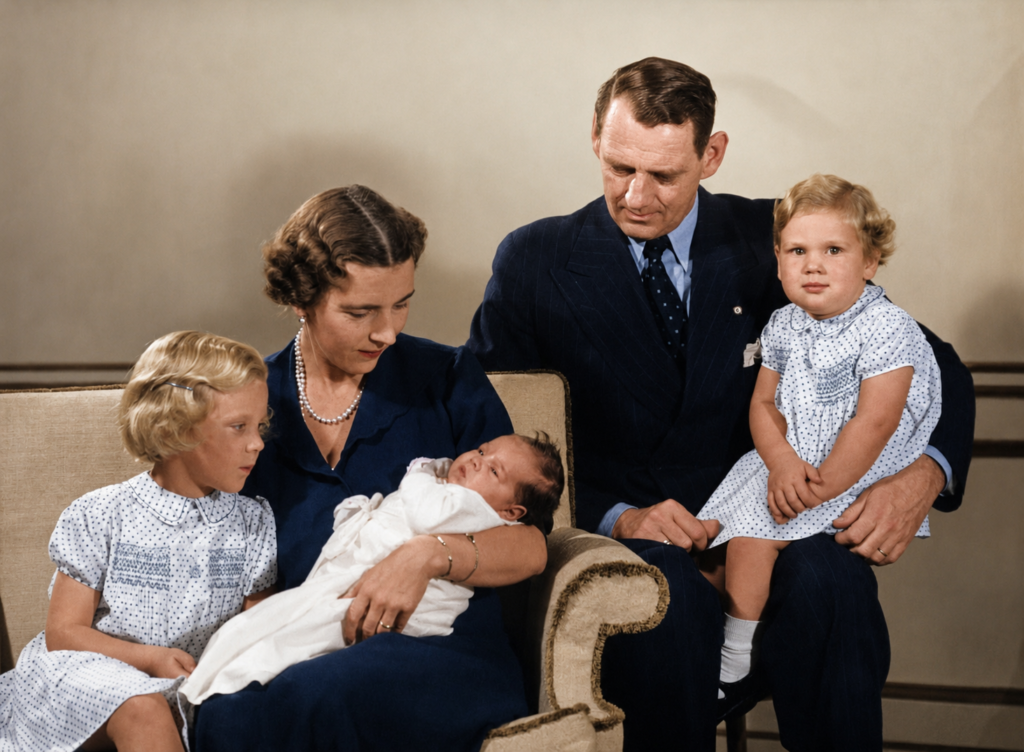
In 1946, Europe was seeking peace, security and reconstruction, whilst Denmark, having emerged from the difficult years of German occupation, was building its future with optimism. It was against the backdrop of this new era that the royal couple’s youngest daughter grew up. Although her birth was marked by the honours befitting royal protocol, her childhood was remarkably ordinary. Her parents believed that princesses ought to get to know the world as it really is, and not just through the windows of the palace.
Amalienborg Palace, in the heart of Copenhagen, was the family’s main residence. Despite the grandeur of its architecture, daily life there was characterised by simplicity and order. Meals were family gatherings, celebrations followed Danish traditions, and her parents devoted substantial time to their children. Her mother, Queen Ingrid, played a decisive role in shaping her character. With love but also firmness, she taught her three daughters that kindness is not a privilege of one’s background but a way of life. She insisted on punctuality, hard work, good manners and, above all, respect for every person, regardless of social status.
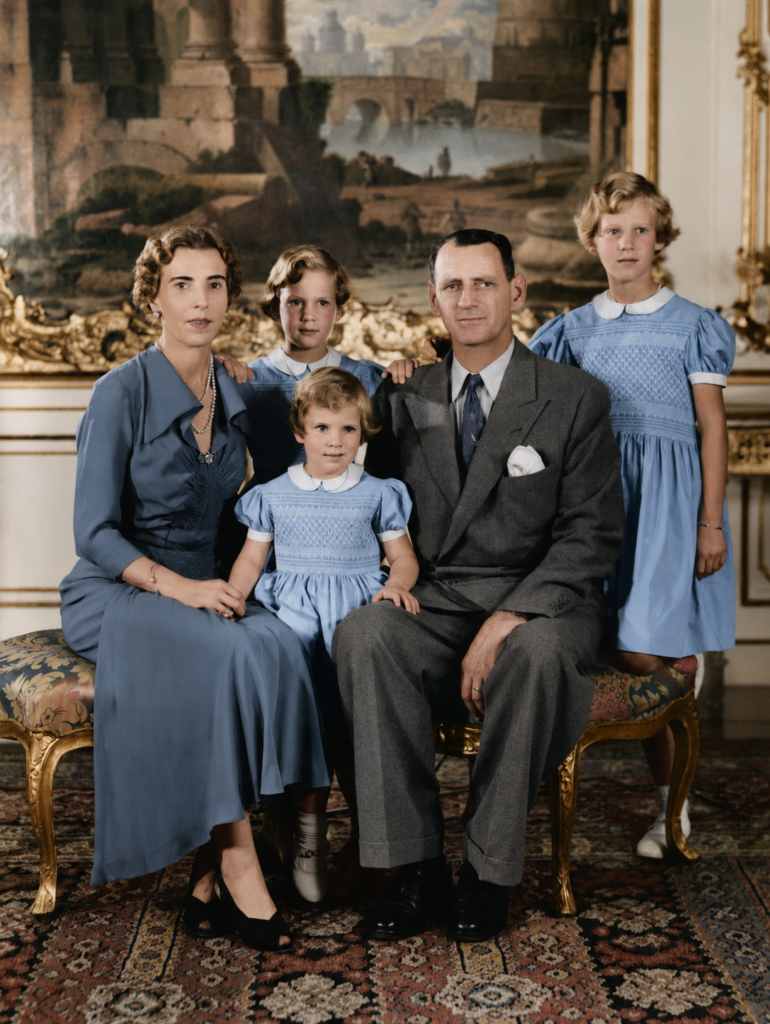
King Frederick IX, on the other hand, encouraged his daughters to develop a love of the sea, nature and sport. Sailing, which was a great passion of his, became a family tradition. They often spent their summers aboard the royal yacht Dannebrog or at the royal family’s summer residences, where official duties gave way to moments of carefree enjoyment.
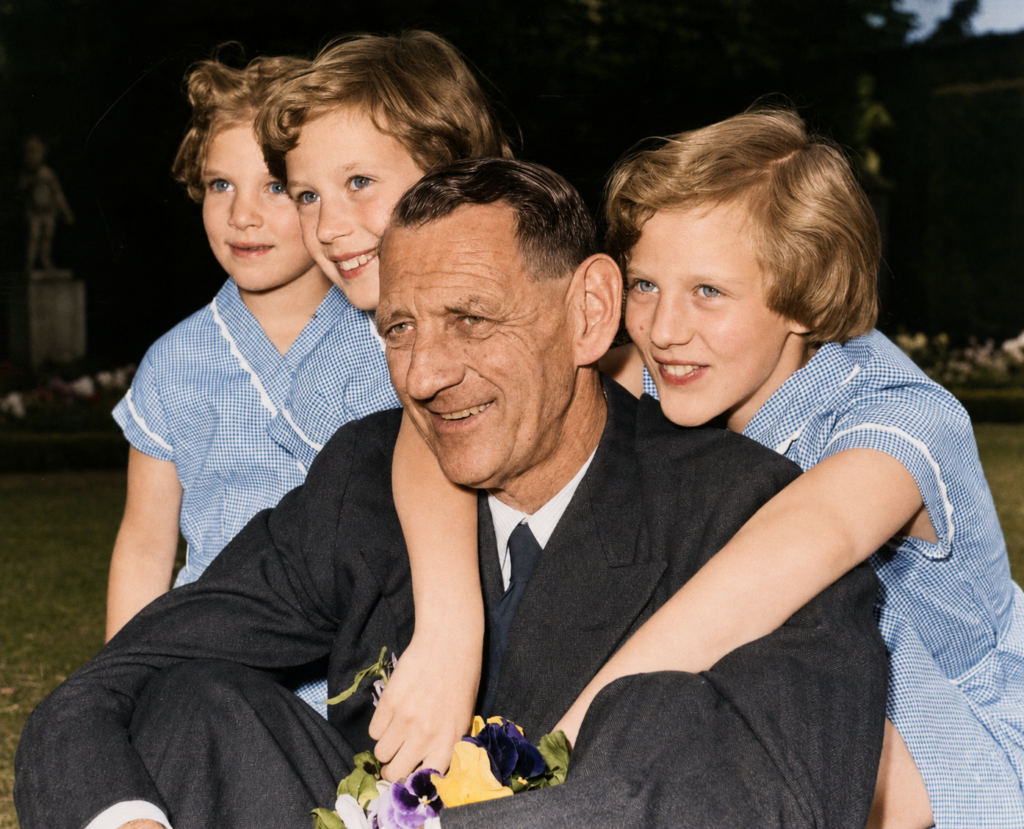
Little Anne-Marie stood out for her lively disposition. She was the most spontaneous of the family’s three girls, with a keen curiosity about the world around her and a particular love for animals. Those who knew her at that time remember her smile, her natural kindness and her ability to make friends easily. Her education was organised with great care. In addition to the core subjects, she was taught foreign languages, history, literature, music and art history. From 1952 to 1963, she attended Zale School in Denmark, where her favourite subject was modern history.
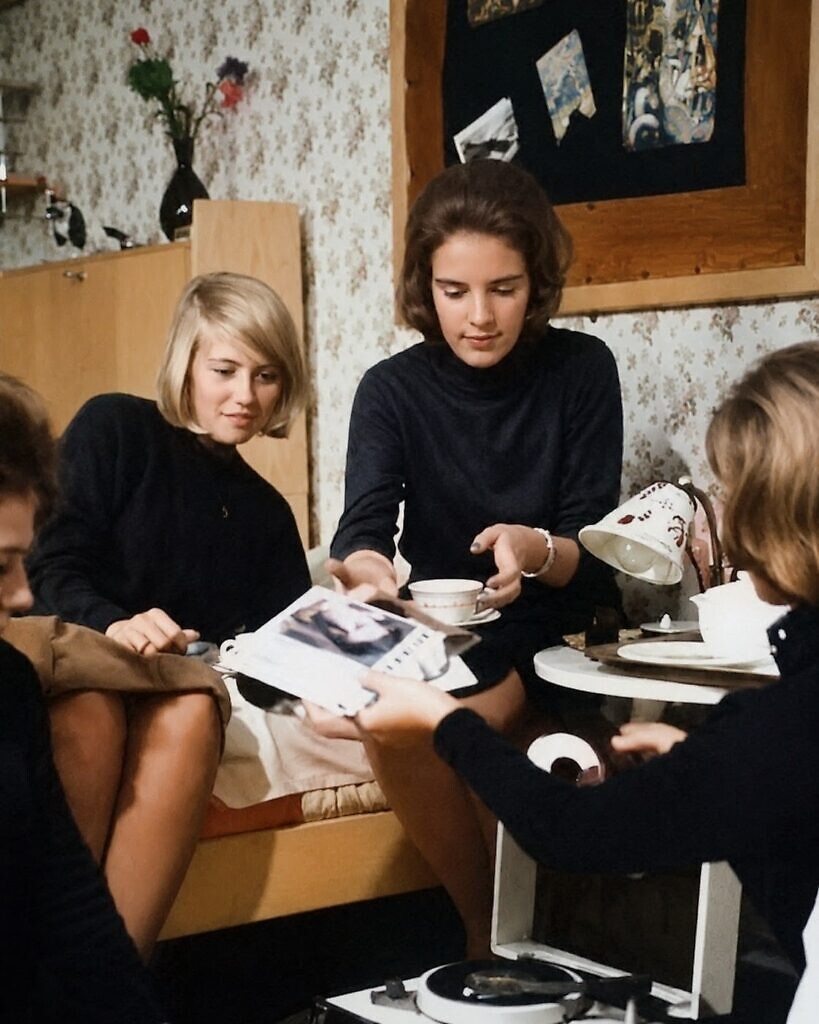
In 1961, she enrolled for a year at a boarding school for girls in Switzerland, the Sateler Girls’ School, whilst from 1963 until the spring of 1964, to improve her French, she completed her education at the Le Menil school in the same country. She also speaks Greek and English. Knowledge was considered an essential asset for anyone who was to take on a public role. At the same time, she was encouraged to cultivate independent thinking and personal judgement.
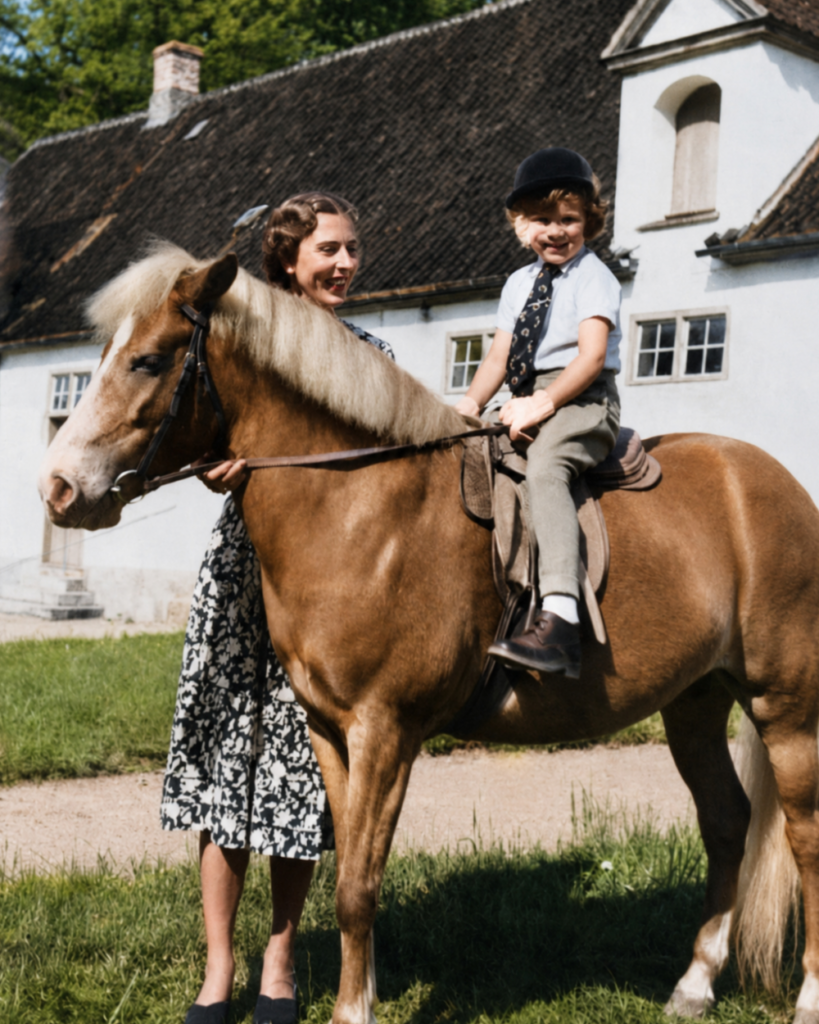
Sport held a special place in her life. Horse riding became one of her favourite pastimes from an early age, whilst she enthusiastically took part in activities such as swimming, skiing and sailing. These activities not only built up her physical stamina but also fostered self-discipline, perseverance and teamwork.
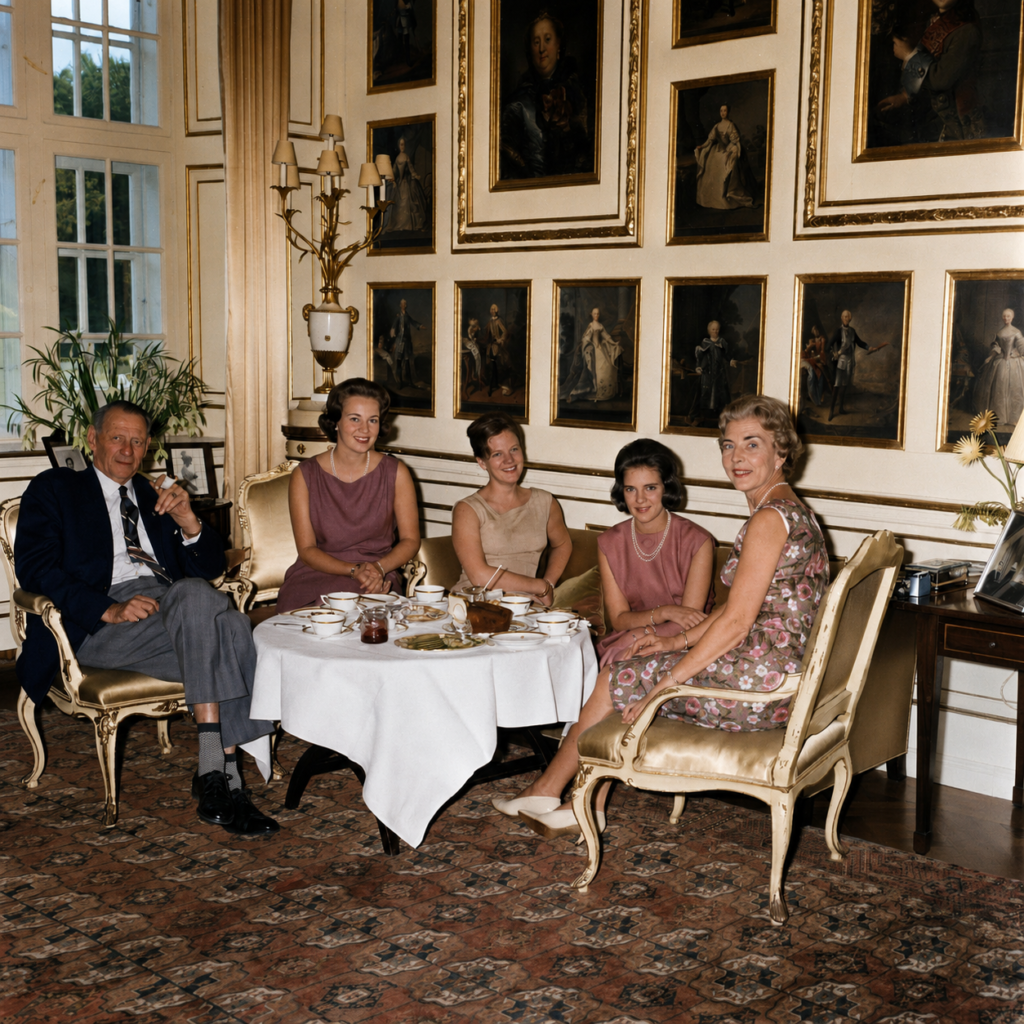
The Danish royal family often made informal visits to schools, hospitals and local communities. The young princess frequently took part in these visits, gaining first-hand insight into the lives of her fellow citizens. Through these experiences, she came to realise that the role of a member of the royal family is not limited to ceremonies and official engagements, but is linked to a constant presence amongst the people. The family’s ties with other European royal houses brought Anne-Marie into contact with peers from various countries. Family gatherings, celebrations and shared holidays served as an informal ‘school’ of diplomacy, where mutual understanding, courtesy and respect for different traditions took on particular significance.
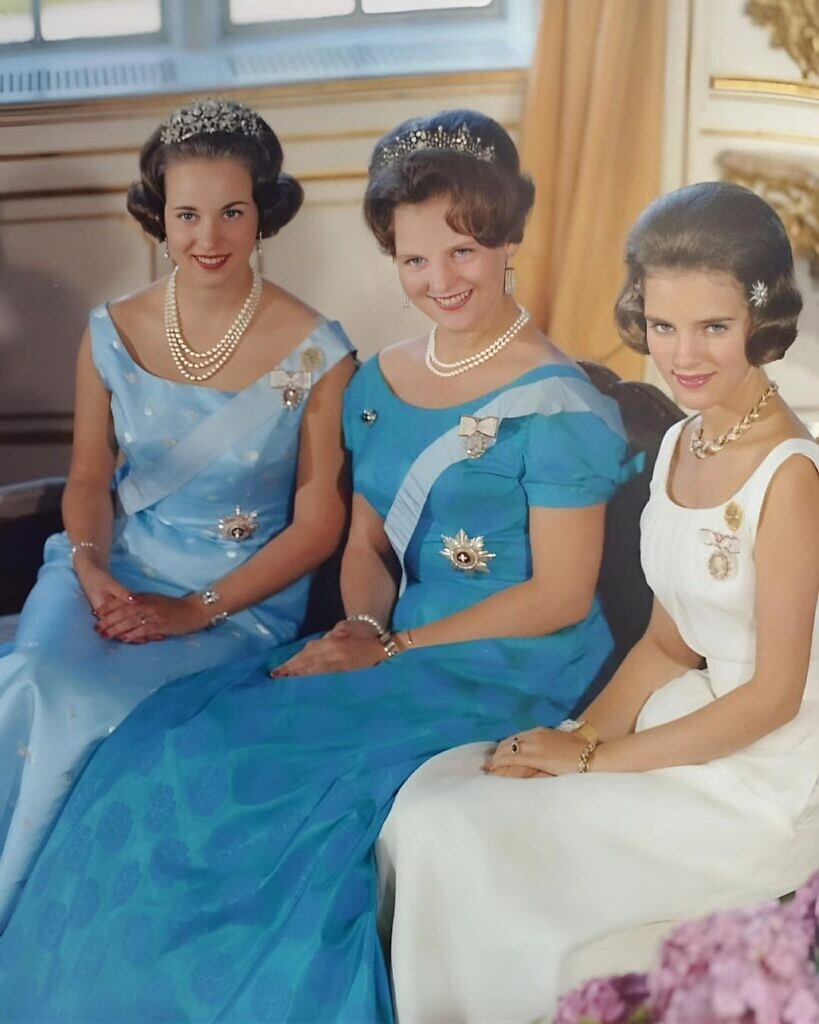
Meanwhile, Denmark in the 1950s was evolving into a modern welfare state, where social cohesion and equality were core values. Anne-Marie grew up in this environment, developing a deep sense of the social responsibility that comes with any public office.
As she approached adulthood, the young princess had already developed the qualities that would characterise her throughout her life: modesty, self-control, discretion and a sense of duty. These were virtues that did not stem from protocol, but from her upbringing and her own personal example. No one at the time could have known that an encounter with a young Greek heir to the throne would soon change the course of her life forever. Greece, which until then had been merely a friendly European country, was to become her second home and the centre of her public life.
Her life was entering a new chapter. And with it, a new chapter was also beginning in the history of the Greek dynasty.
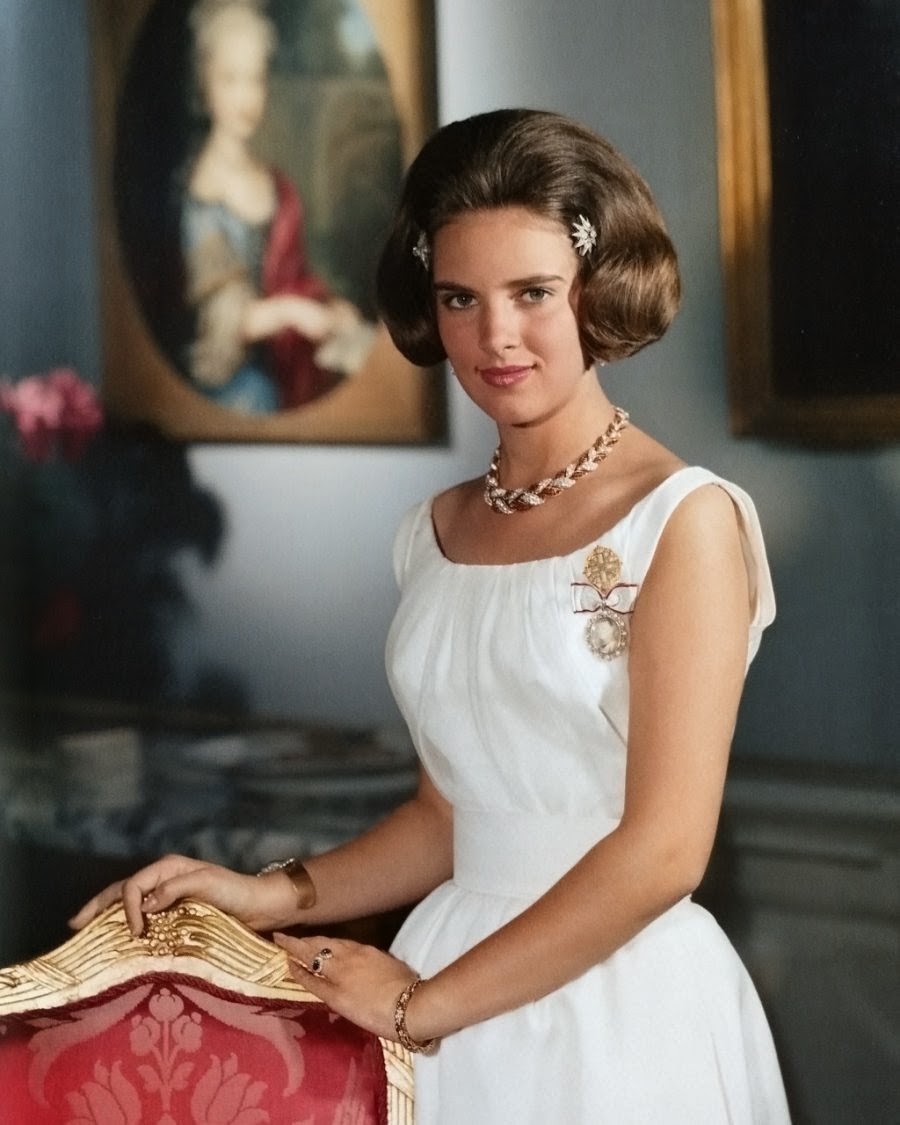
Meeting the Heir Apparent Constantine – A love that united two royal houses
Some encounters seem to follow the logic of history. Others, however, belong to the realm of destiny. The meeting between Princess Anne-Marie of Denmark and Constantine, heir to the Greek throne, was one of those moments destined to change not only the lives of two young people, but also the course of two royal families. Relations between European royal houses have always been close. Dynastic ties, family visits and joint appearances at official ceremonies created an environment in which the younger generations got to know one another from an early age. Thus, Anne-Marie’s first encounter with Constantine was not the result of a chance occurrence, but of the natural interaction between two families already linked by ties of kinship and mutual respect.
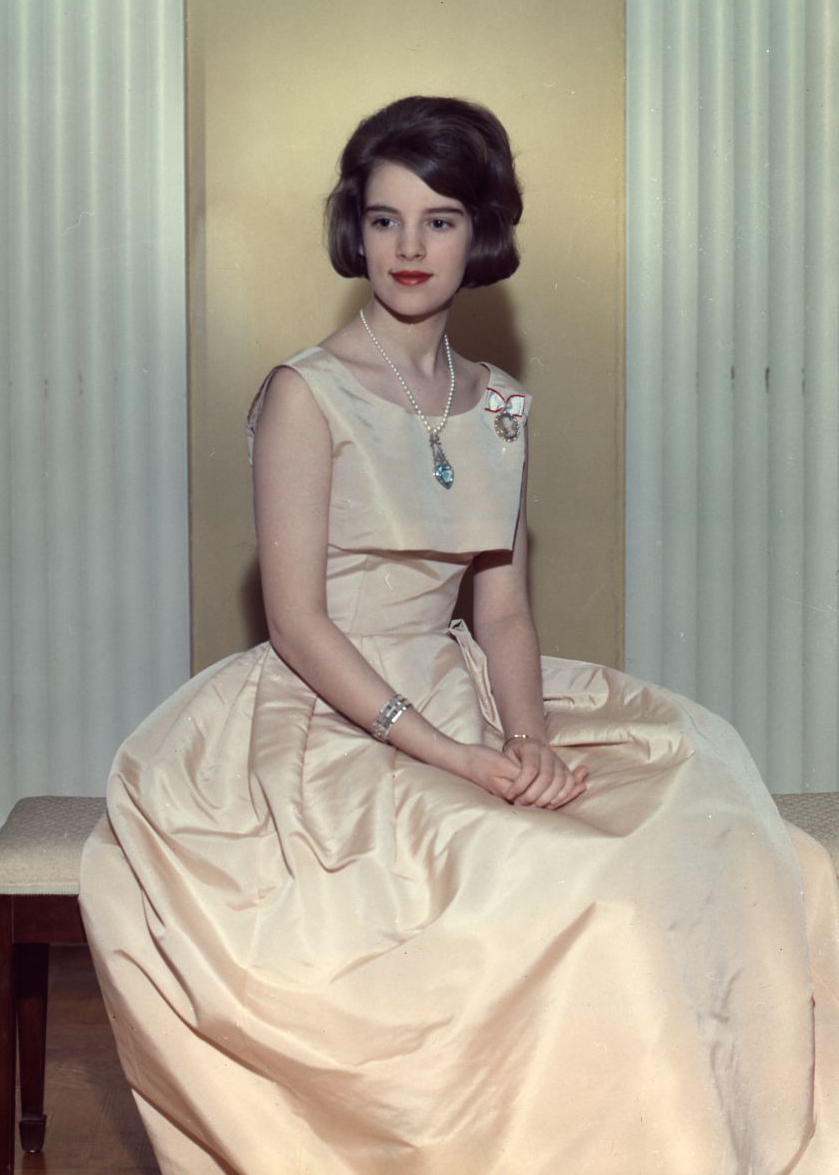
She met Crown Prince Constantine when she was just 13 years old, during a trip by the Greek royal family to Denmark. This visit was part of their scheduled visits to European royal families. From the very first moment he laid eyes on the young and beautiful Princess of Denmark, Constantine was captivated by her presence. Indeed, he is said to have confided to his father that, once she came of age, he would marry her.
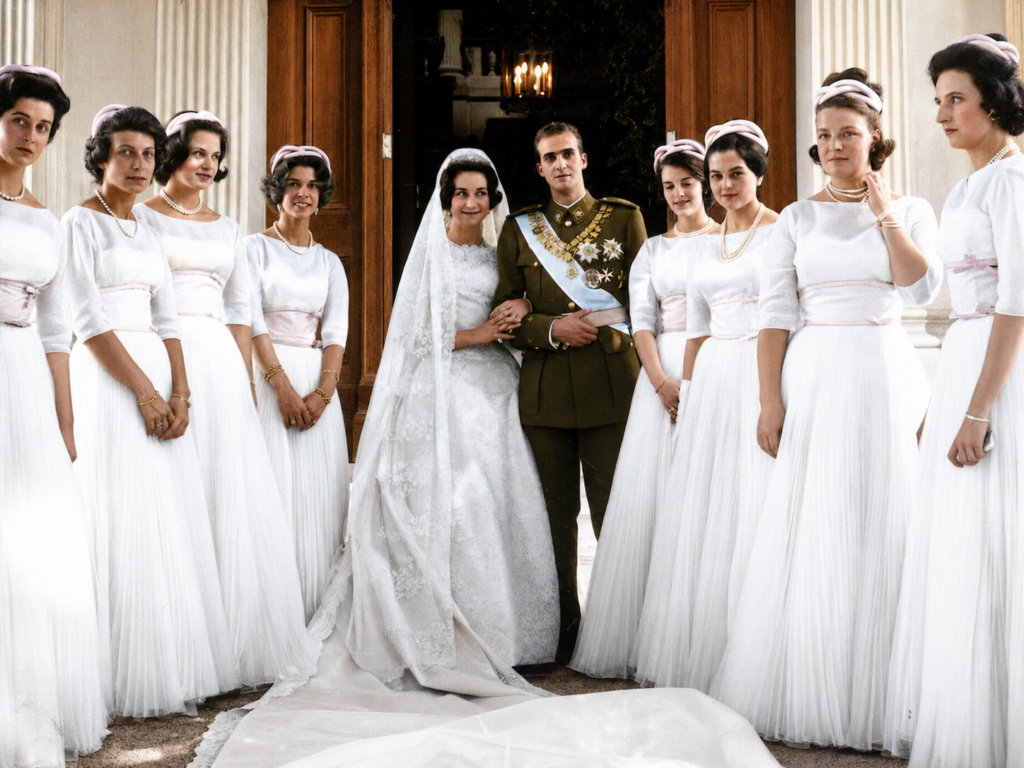
Three years later, they met again in Greece, at the wedding of Princess Sophia and Juan Carlos of Spain, which took place on 14 May 1962 in Athens, with two ceremonies held at the city’s Roman Catholic and Orthodox Metropolises. More than 100 members of Europe’s royal families travelled to Athens for the occasion, among them Anne-Marie, who served as one of the bridesmaids. A genuine affection soon blossomed between the two young people and, over the years, their repeated encounters at family gatherings and international events gradually deepened into a close and meaningful personal relationship.
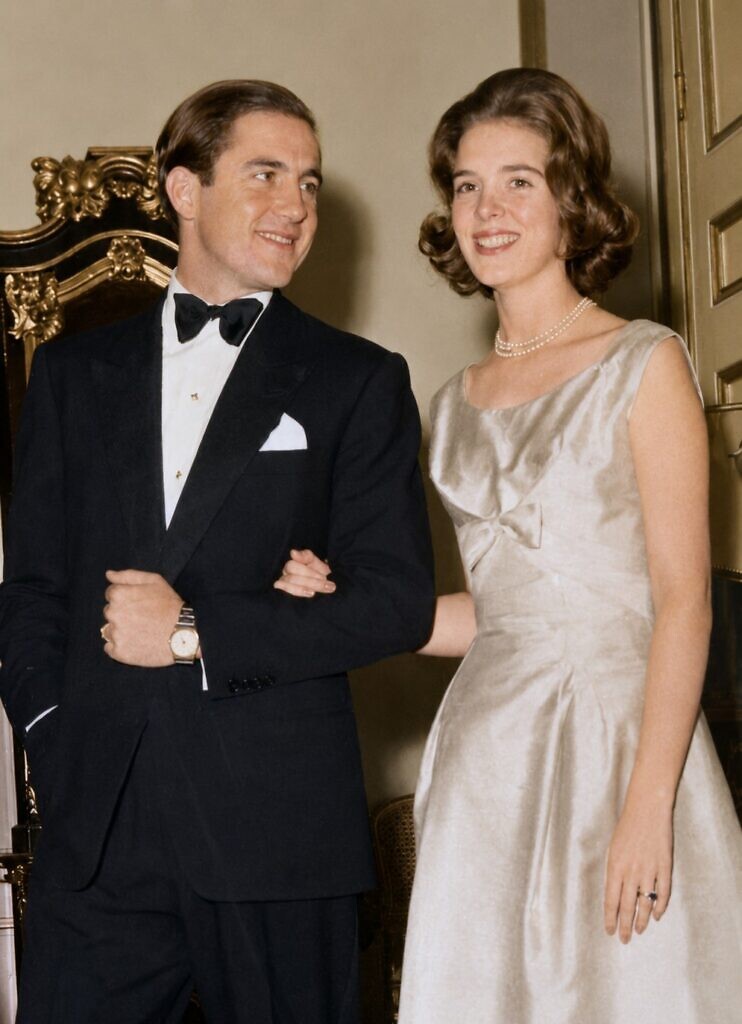
Constantine, a gold medallist in sailing at the 1960 Rome Olympic Games, possessed self-confidence, a sporting spirit and a strong sense of duty. Anne-Marie, six years his junior, impressed with her natural grace, discretion and a maturity beyond her years. Their shared values – a love of family, sport and the sea – forged a relationship based on mutual trust and respect. As their relationship grew deeper, the two royal families viewed the prospect of a marriage favourably. The union of the Danish and Greek royal families was considered particularly significant, not only for the houses themselves, but also as a symbol of the close ties between the European monarchies of the time.
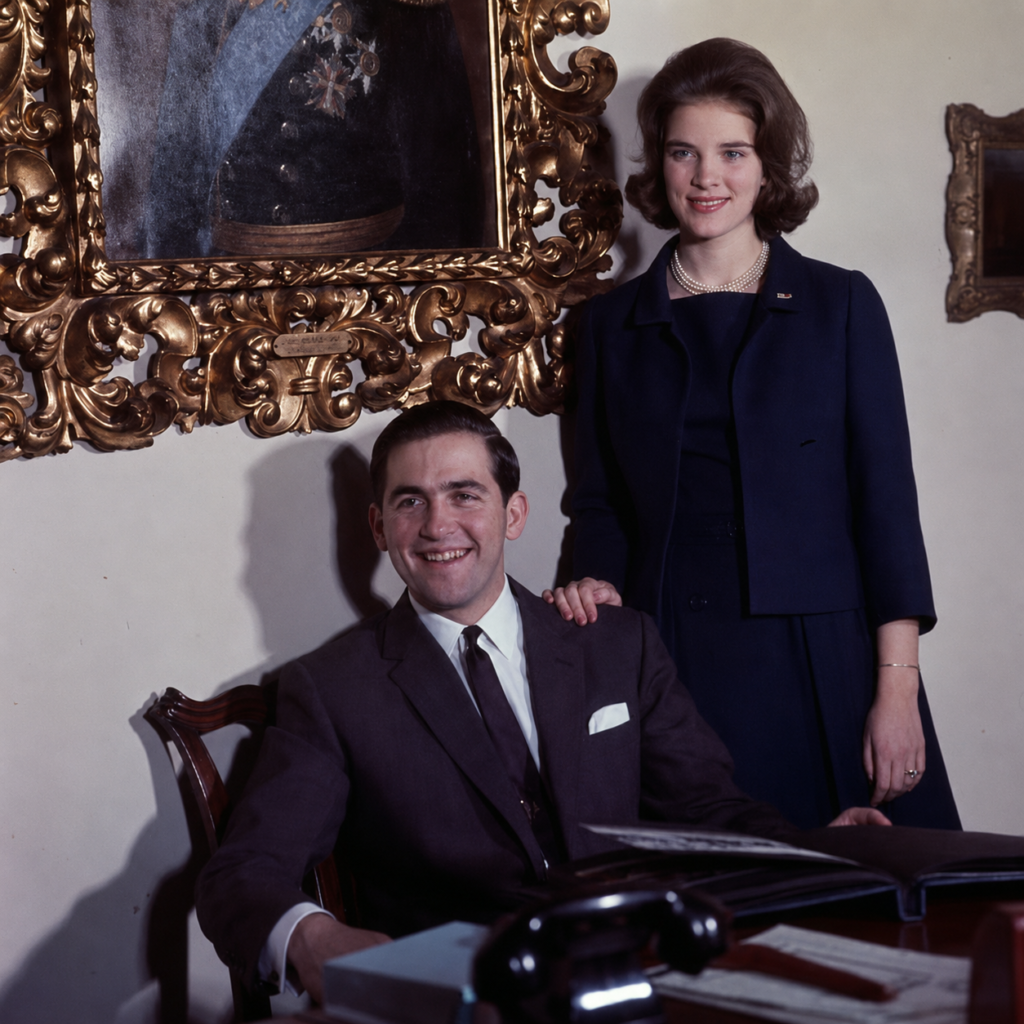
In January 1964, their engagement was officially announced. The news was received with particular interest by the international press. In Denmark, the young princess was gradually bidding farewell to her homeland, knowing that she would soon be taking on a new and demanding role in Greece. To the Greek public, Anne-Marie came across as a young woman with a European education, modesty and a noble demeanour – qualities that made a positive impression.
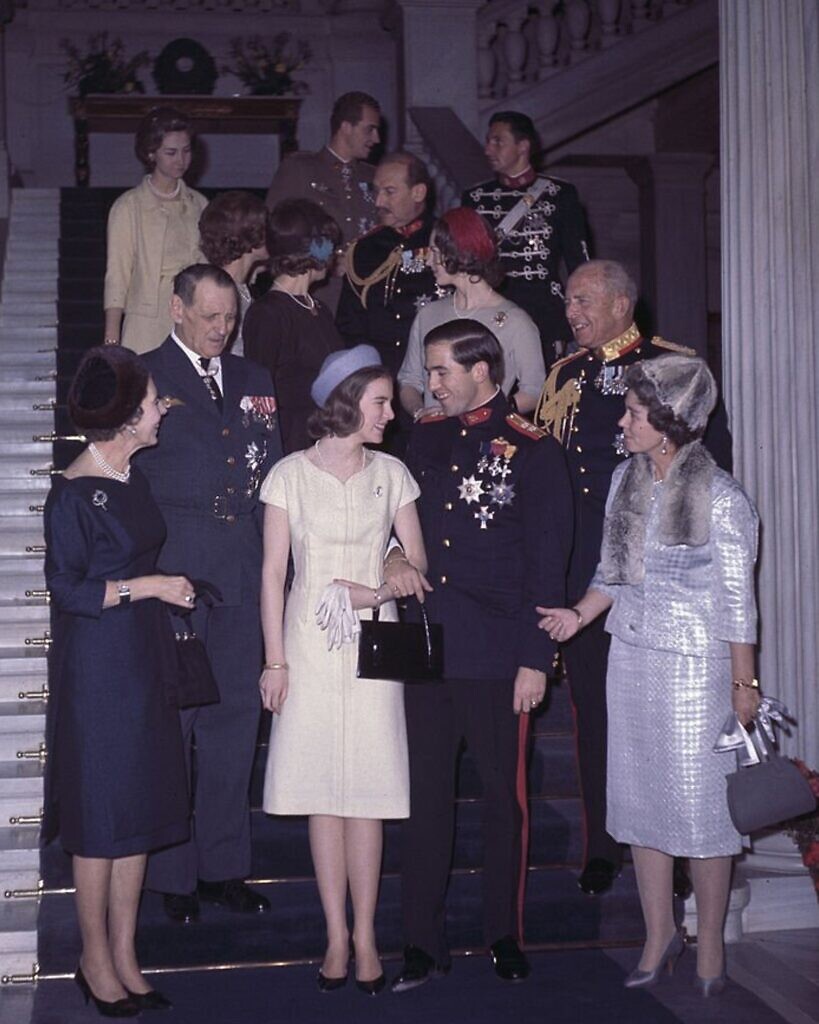
Their relationship developed against a backdrop of significant political and social change in Europe. Monarchies were gradually adapting to the demands of the post-war era, whilst the media were showing ever-greater interest in the private lives of members of royal families. Nevertheless, the relationship between Constantine and Anne-Marie remained free from the excessive publicity that would characterise similar relationships in the decades that followed.
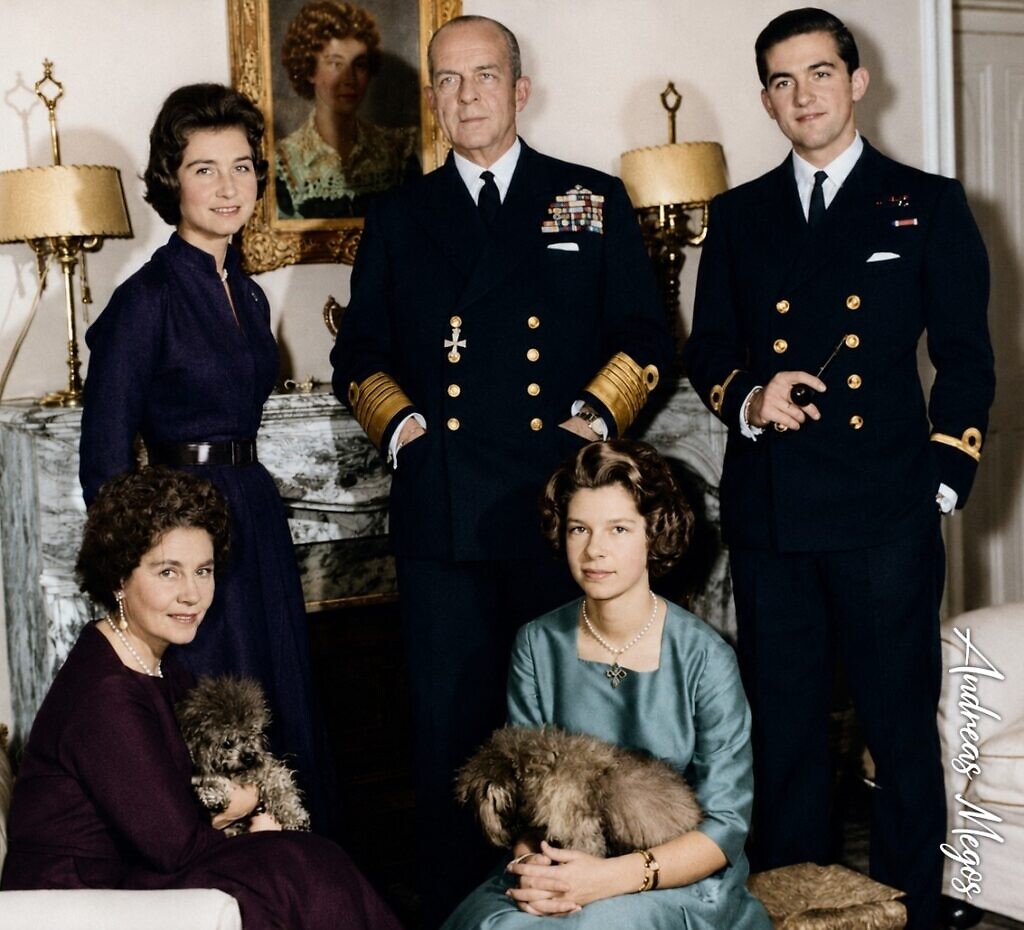
A dramatic turn of events, however, was to have a decisive impact on their lives. On 6 March 1964, King Paul I of Greece passed away following a brief illness. The heir apparent, Constantine, aged just twenty-four, ascended the Greek throne as King Constantine II, assuming his duties at a particularly critical time, characterised by intense political developments and significant challenges for the country.
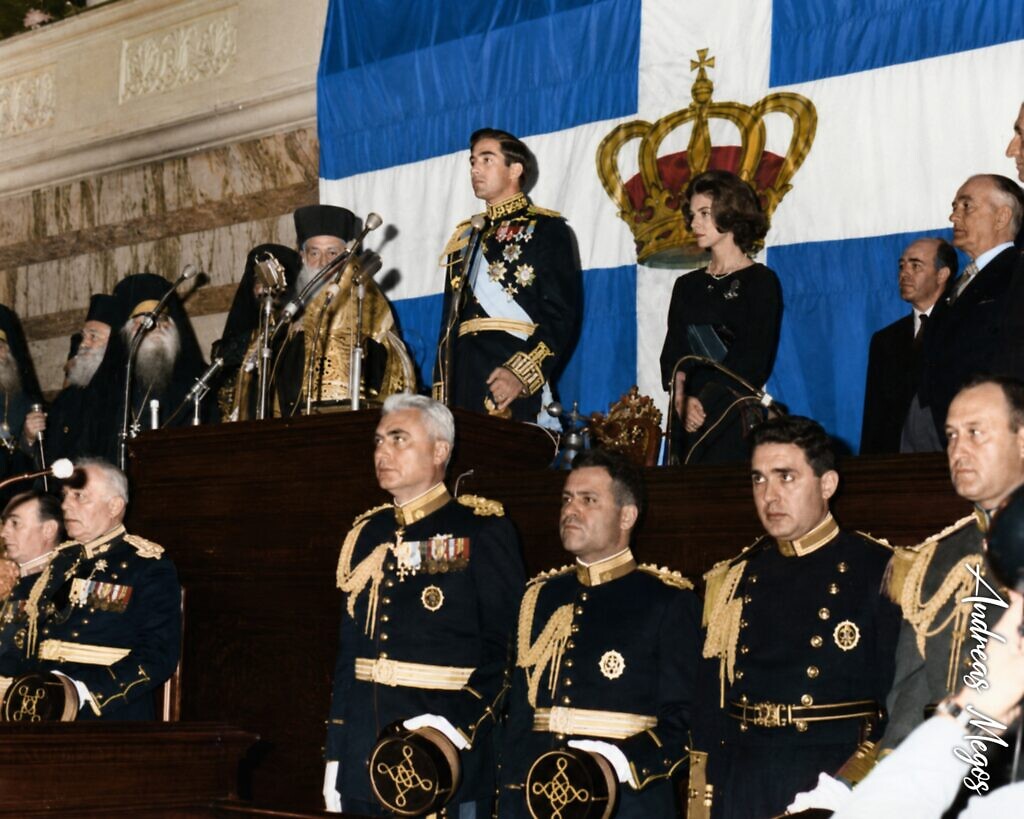
This change hastened the wedding arrangements. The young Princess of Denmark now knew that she was not to become the wife of a heir to the throne, but Queen of the Hellenes, taking on, along with her new role, the responsibilities and obligations that this title entailed. Despite her young age, she faced this new prospect with remarkable maturity and dedication, devoting a significant part of her time to preparing for the life that lay ahead of her. As part of this preparation, she undertook intensive courses in the Greek language and history, whilst also studying the Orthodox tradition and the country’s culture. Her decision to convert to Orthodoxy before her marriage was a deeply personal choice, but also an act of particular symbolic significance. Her efforts to gain an in-depth understanding of Greece, the country that was to become her new homeland, were greatly appreciated and received positive comments in both Greece and Denmark.
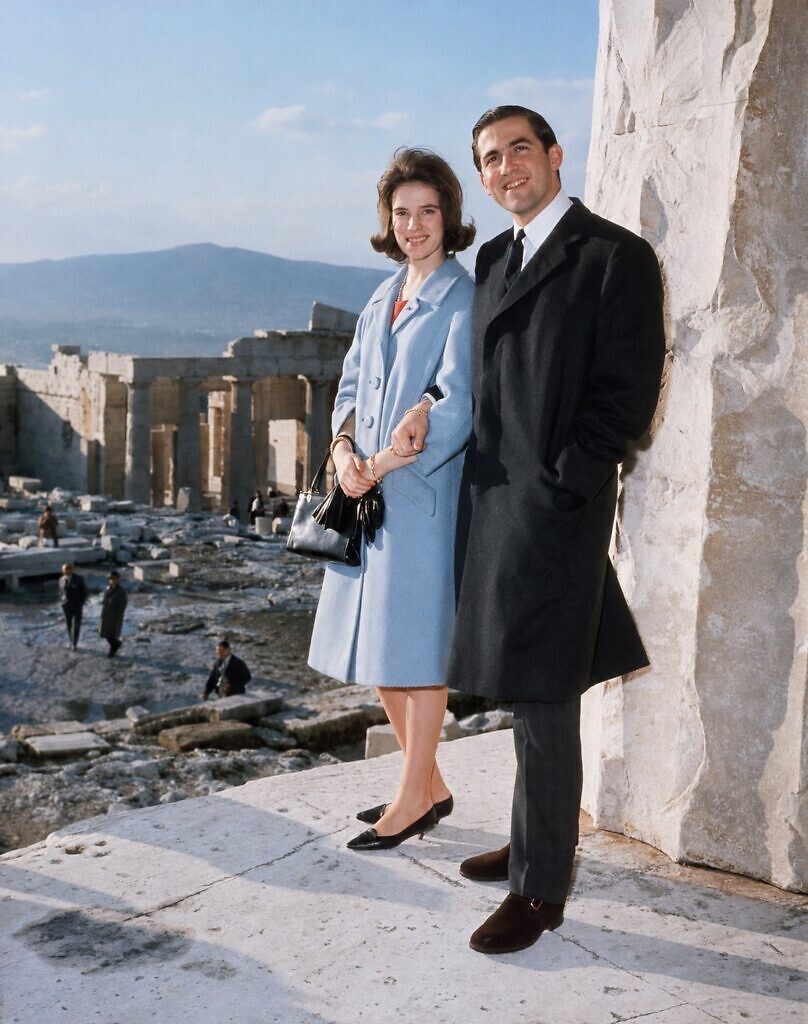
Her arrival in Athens was greeted with great enthusiasm and deep emotion. In her public appearances, the young princess exuded a natural charm and simplicity that seemed to transcend the weight of public scrutiny and her new role. Her smile, her kindness and discretion in her demeanour, as well as her efforts to address the public in Greek, helped to create an atmosphere of warm acceptance and affection.
The relationship between Constantine and Anne-Marie, however, did not remain purely a private matter. It soon attracted international interest, as it reflected a long-standing European tradition whereby marriages and family ties between royal houses forged bonds of communication and rapprochement between different peoples and countries.
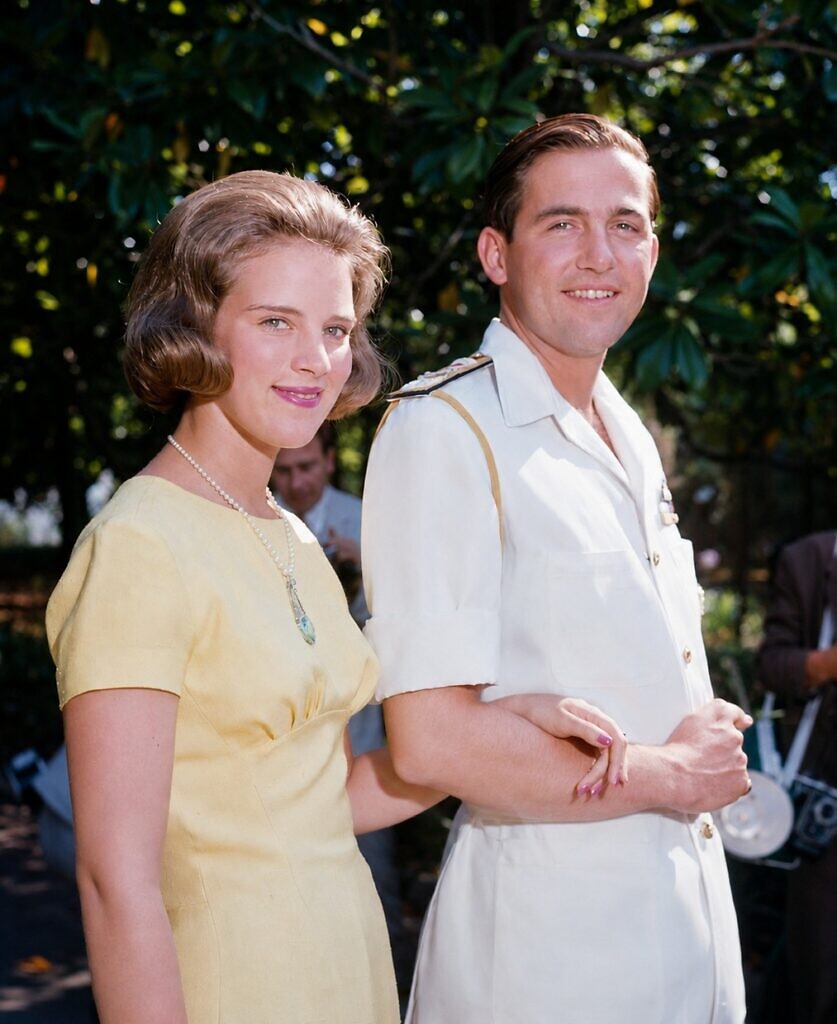
In the summer of 1964, preparations for the wedding had now entered their final phase. Athens was preparing to host one of the most significant royal ceremonies of the 20th century. Delegations from across Europe, heads of state, members of royal families and prominent public figures were due to arrive in the Greek capital to honour the union of two young people.
For Anne-Marie, however, those days held a much deeper and more personal significance. She was preparing to leave behind the country of her childhood and to begin a new chapter in her life in Greece, alongside the man with whom she had decided to share her future. Their marriage would not merely be a splendid royal occasion, but the beginning of a shared journey, one that would take them through great joys and difficult trials, with devotion, faith and mutual love as its firm foundation.
18 September 1964 – The wedding of Constantine and Anna-Maria – The new Queen’s arrival in Greece
Some moments transcend the personal happiness of two people and become events of historical significance. 18 September 1964 was one such day. Athens became the focus of global attention, hosting one of the most spectacular royal weddings of the 20th century. For Greece, it was a time of optimism. The country was experiencing economic growth, society looked to the future with hope, and the royal family was at the centre of public life. The marriage of the young King Constantine II to Princess Anne-Marie of Denmark was regarded as an event of particular national and international significance.
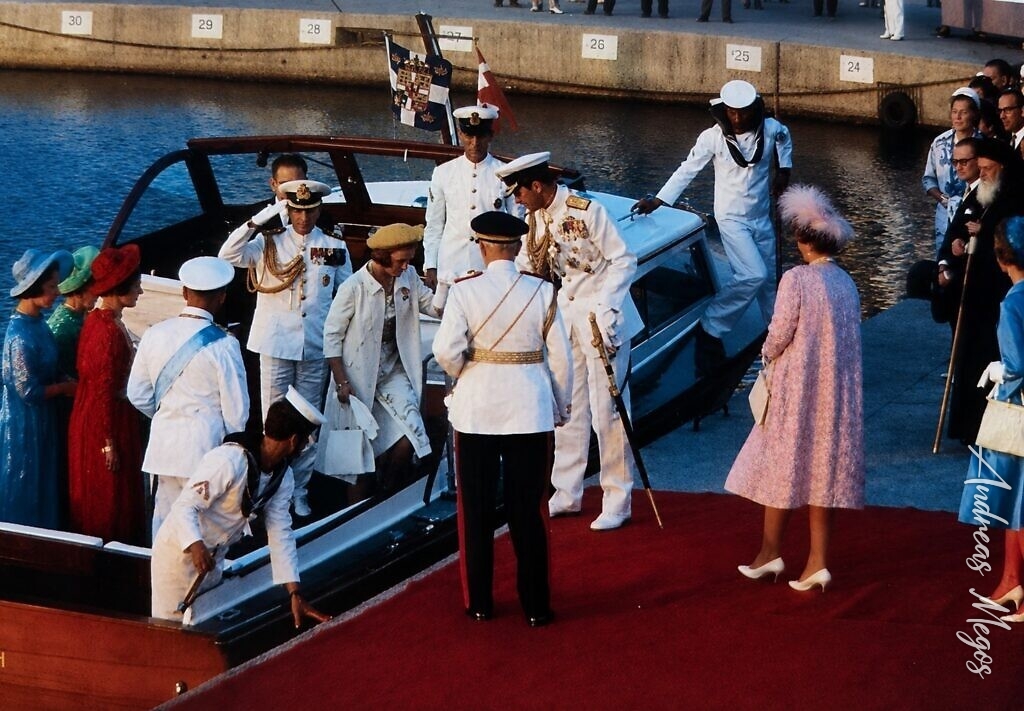
The arrival of 18-year-old Anne-Marie in Athens was greeted with great warmth. Her youth, her natural grace and her modest demeanour drew positive comments from both the Greek and international press. Despite the intense media attention, she maintained her characteristic composure, knowing that she was leaving her homeland behind to begin a completely new life. Preparations for the wedding had begun several months earlier. The princess had devoted much of her time to learning the Greek language, familiarising herself with the history and traditions of Greece, and adapting to the demands of her new role. Her decision to take a personal interest in these preparations was greatly appreciated and seen as a sign of respect for the country that was to become her new homeland.
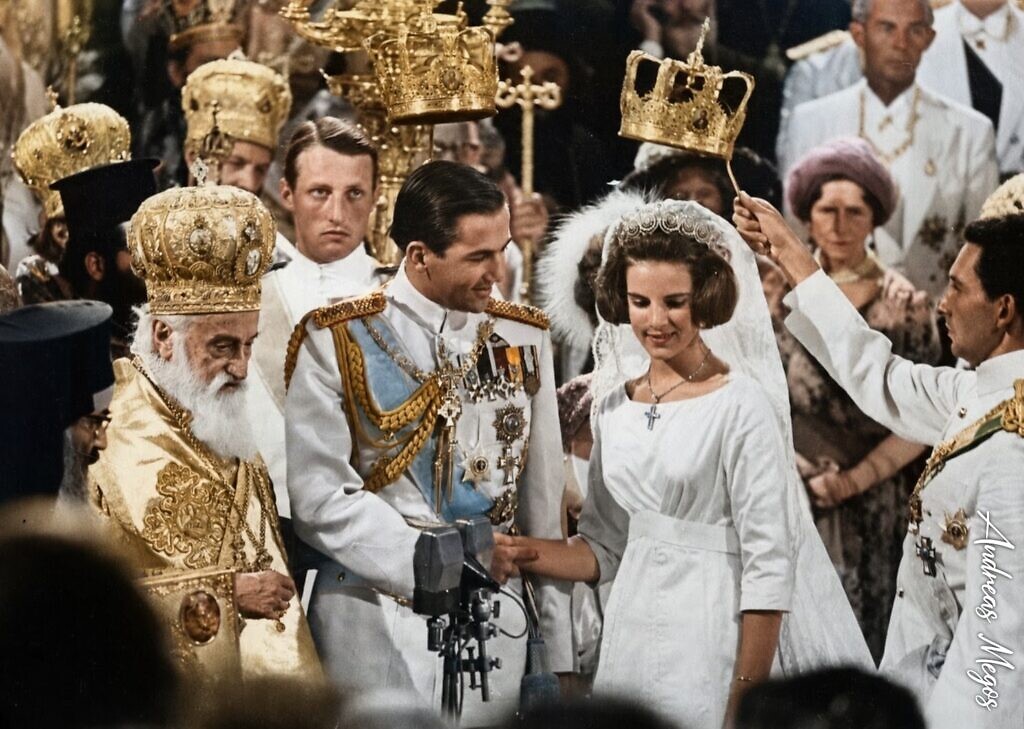
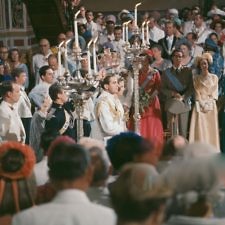
On the morning of 18 September 1964, Athens was decked out in its festive finery. Flags fluttered in the streets, church bells tolled jubilantly, and thousands of people flooded into the city centre to witness a historic moment. The ceremony took place at the Metropolitan Cathedral of Athens, in accordance with the rites of the Orthodox Church. Anne-Marie had previously converted to Orthodoxy, a decision she approached with seriousness and personal conviction. This religious transition was of particular significance, as it underlined her intention to fully embrace the traditions of the Greek people and her new role.
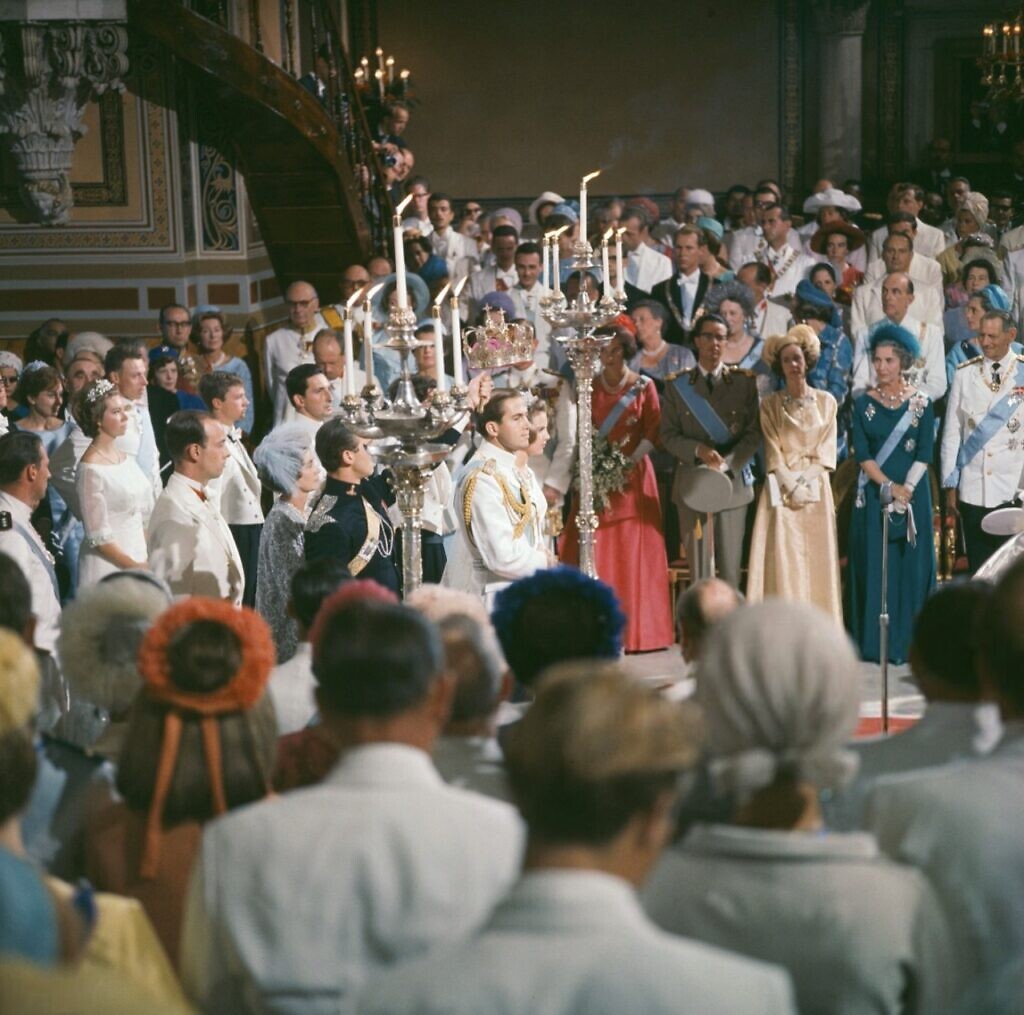
During those days, Athens hosted the largest gathering of members of royal families to have taken place since the Second World War. Given the distinguished lineage of the couple – and their kinship with Queen Victoria of Great Britain and King Christian IX of Denmark, who, through their descendants, were linked to almost all the royal families of Europe, including those of Britain, Denmark, Greece, Russia and Germany – the gathering of guests had a character that was both distinctly high-society and family-oriented.
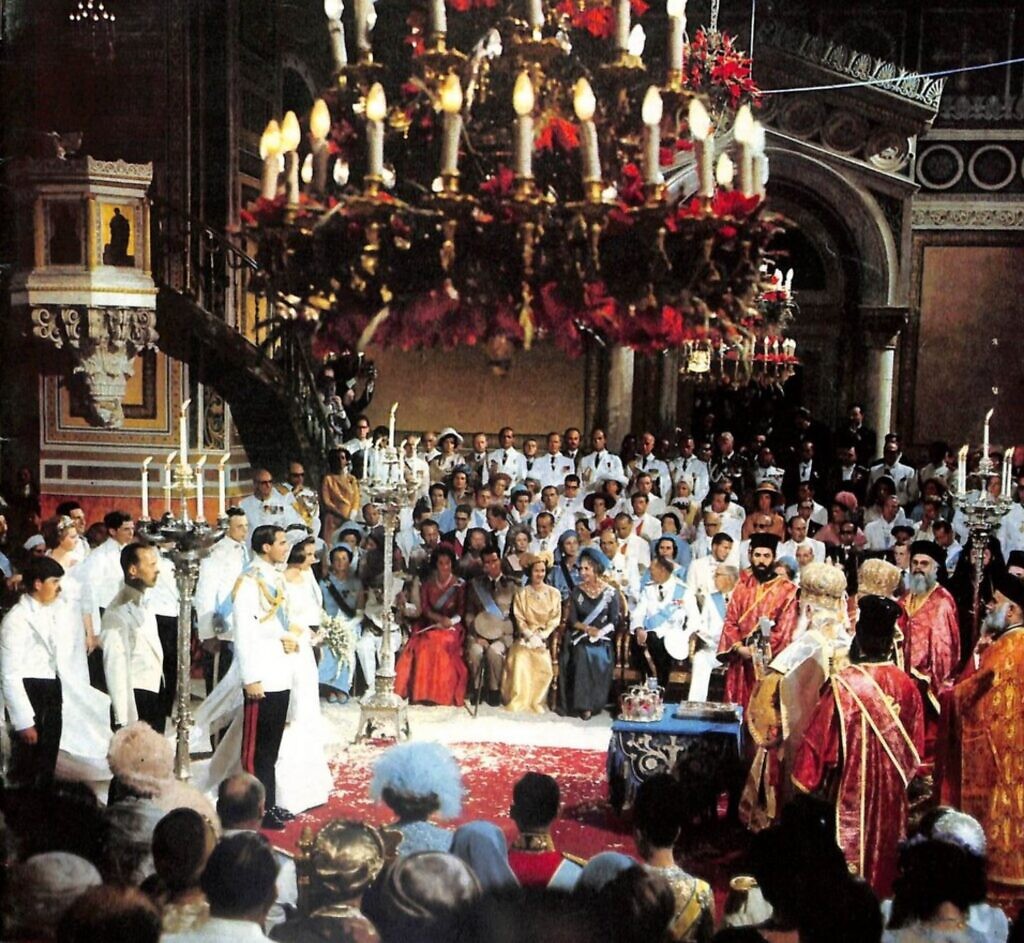
The ceremony took place in the presence of around 1,200 distinguished guests, including members of almost all European royal families – kings and queens, heirs to the throne, princes and princesses – as well as representatives of non-European dynasties. In addition to the newlyweds’ parents, King Gustaf Adolf of Sweden, Anne-Marie’s maternal grandfather, King Baudouin of Belgium and his wife, Queen Fabiola, Queen Juliana of the Netherlands and her husband, Prince Bernhard, King Olaf of Norway, King Bhumibol of Thailand and Queen Sirikit, King Hussein of Jordan, Prince Rainier of Monaco, as well as the deposed kings of Italy, Umberto II and Maria-José, and of Bulgaria, Simeon II and Margarita.
This impressive gathering of representatives from European and other royal houses highlighted the special role that the Greek and Danish royal families continued to play within the wider European dynastic network. The ceremony was broadcast on television in dozens of countries, whilst the international press devoted extensive coverage to the event, placing Athens, for a few days, at the centre of European royal life.
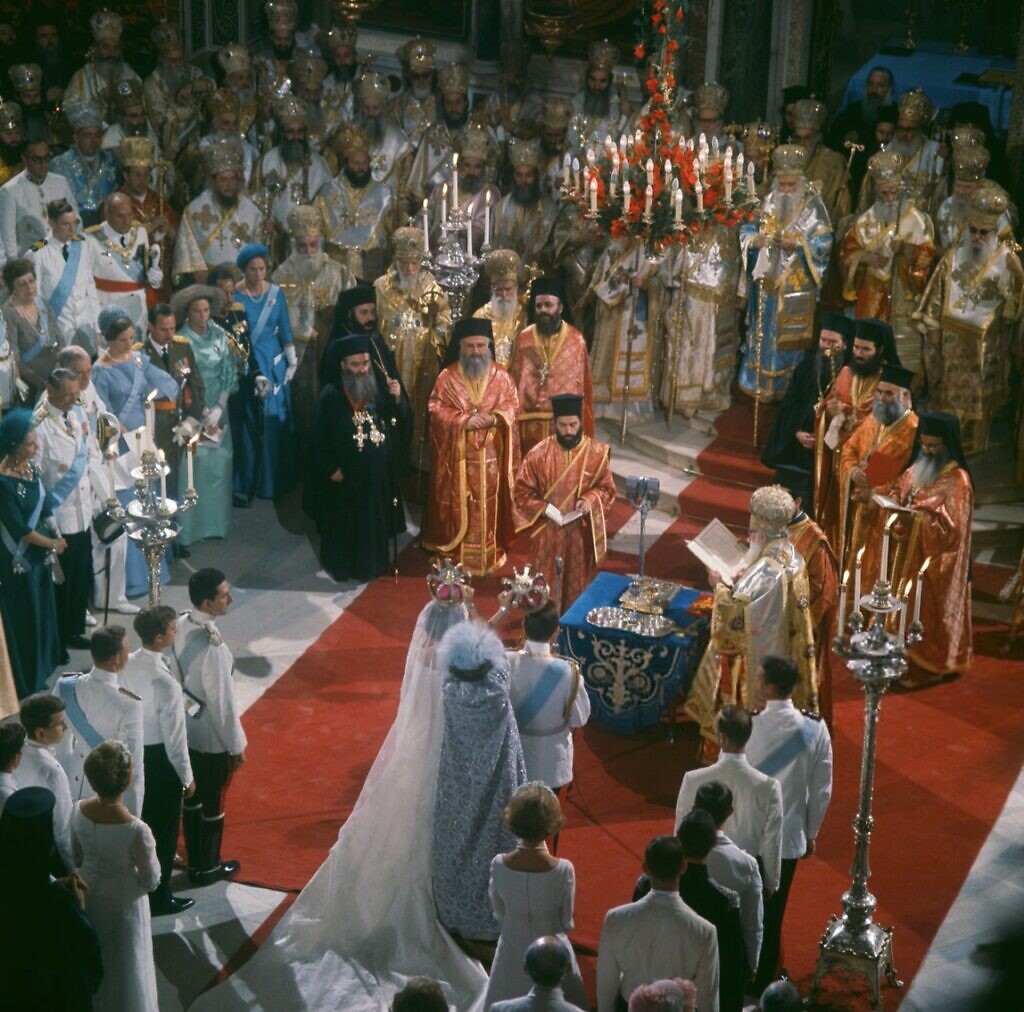
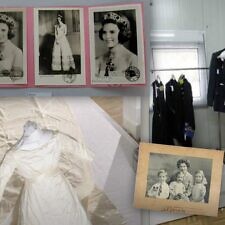
The bride wore a creation by the Danish designer Holger Blom, simple yet exceptionally elegant, with a long train. The Irish veil, which dated from 1905 and had belonged to Anne-Marie’s grandmother, Crown Princess Margaret of Sweden, held in place the famous diamond tiara of the Khedive of Egypt, a family heirloom with a particularly romantic history. The tiara had been commissioned by the Khedive of Egypt, Abbas II, from the renowned French jewellery house Cartier, as a wedding gift for Princess Margaret, niece of King Edward VII of the United Kingdom, to mark her marriage to the future King of Sweden, Gustaf VI Adolf, at Windsor Castle in 1905. As the young couple had met and fallen in love in Egypt, Abbas II wished to present them with a special and symbolic wedding gift.
Following the untimely death of Princess Margaret in 1920, the tiara was bequeathed to her daughter, Princess Ingrid, the mother of Queen Anne-Marie. Ingrid took it with her when, in 1935, she married the future King Frederick IX of Denmark. Since then, the tiara has been inextricably linked to the family’s most significant wedding occasions and has become known as the ‘Wedding Tiara’. The tradition has continued from generation to generation: all of Queen Ingrid’s daughters and granddaughters wore the tiara on their wedding day, creating a beautiful family tradition that continues to this day. Following Queen Ingrid’s death in 2000, the tiara was bequeathed to her youngest daughter, Queen Anne-Marie, with the wish that it should remain available to Queen Ingrid’s descendants so that they might wear it on their own wedding day.
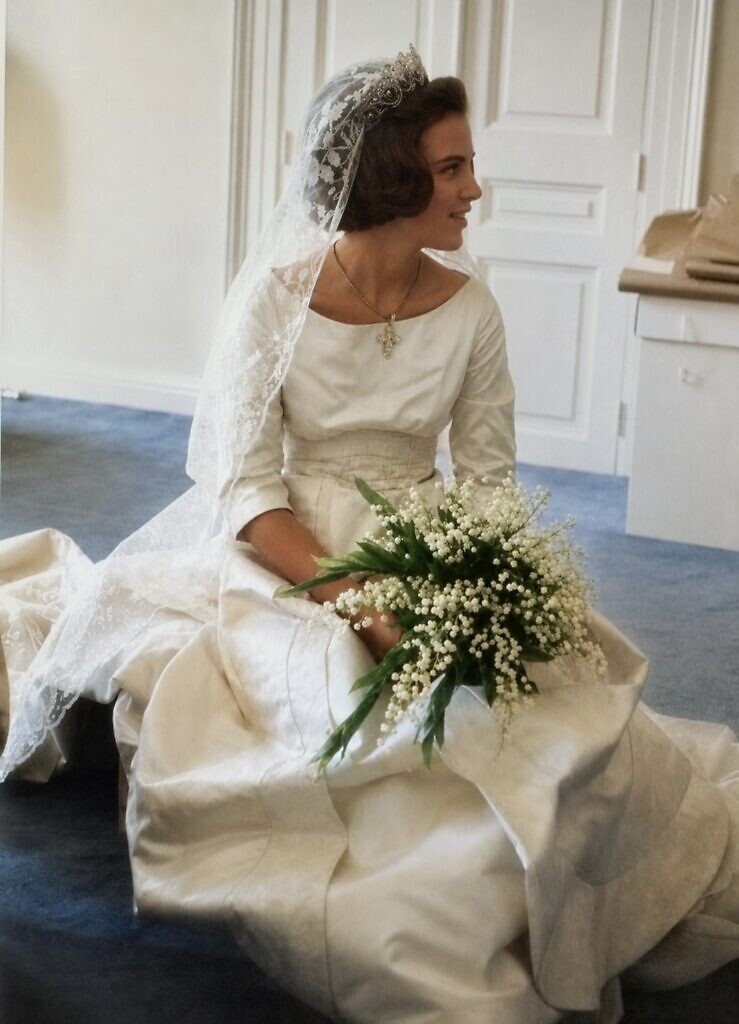
Anne-Marie’s bridal bouquet was made of mige, the fragrant ‘Tear of the Virgin Mary’, also known as the ‘Lily of the Valley’. The small, snow-white blossoms, with their delicate and refined form and characteristic, heady fragrance, came together to create a bouquet that was both subtle and distinctive After all, it was King Constantine’s favourite flower, and he presented it to his future wife on their wedding day, imbuing it with a deeply personal symbolism.
Six decades later, the same flower would once again be by Constantine’s side. In her final farewell to her beloved husband, Queen Anne-Marie placed a wreath made entirely of mige flowers upon his coffin. A ribbon bore the simple yet poignant words: ‘Your beloved Anne-Marie’. It was not merely a wreath. It was a symbolic farewell; a return to the beginning of their shared story. The same flower that she had held in her hands on the day she became his wife was there on the day she said her final goodbye.
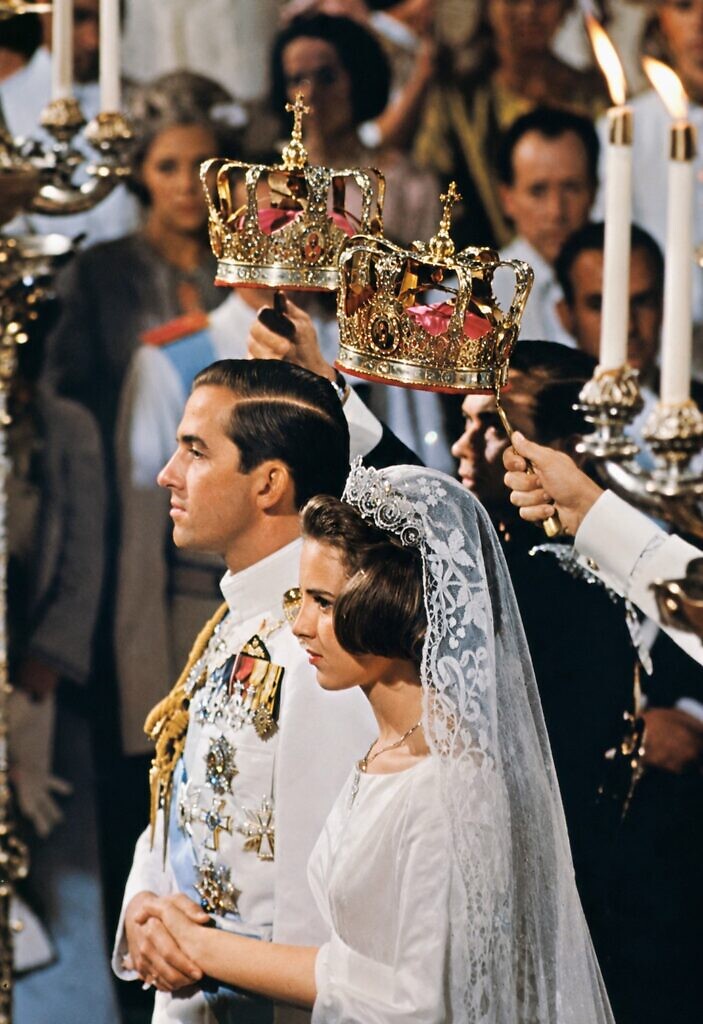
Anne-Marie’s overall appearance exuded youthfulness, freshness and understated elegance. It was an image that combined simplicity with timeless refinement and foreshadowed the natural, effortless elegance that would characterise her public presence throughout her life. King Constantine, just twenty-four years old, stood by her side, having already shouldered the burden of royal responsibility. He was wearing the formal ceremonial uniform of a field marshal of the Greek Army, symbolically reflecting his new role as the country’s supreme ruler. The death of his father, just a few months earlier, had fundamentally altered the nature of the wedding ceremony. The wedding, which was originally intended to be that of an heir to the throne, had now evolved into an official ceremony for the reigning King of Greece, lending it even greater institutional and state significance.
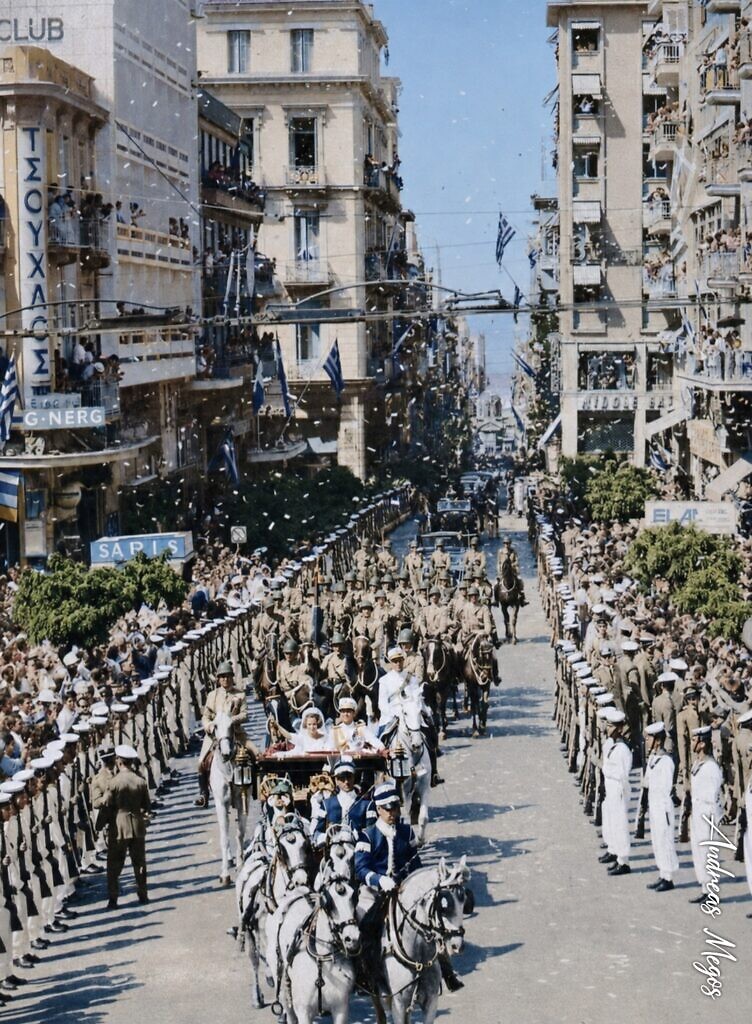
Following the completion of the religious ceremony, the royal couple, riding in a carriage, appeared on the streets of the capital, waving to the crowds who had gathered to welcome them. Images of the newlyweds returning the crowd’s enthusiastic greetings were broadcast by international news agencies and featured in the major newspapers of Europe and America.
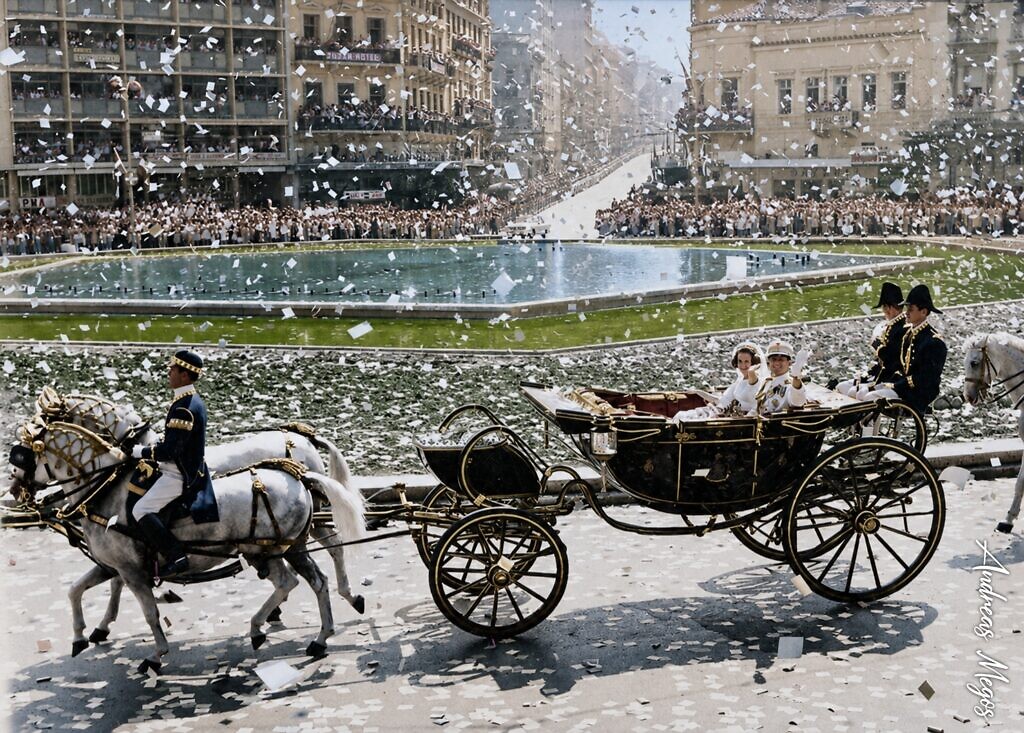
For a few days, Athens and Greece found themselves at the centre of international attention, not because of a political crisis or dramatic turn of events, but because of a joyful, splendid occasion, full of symbolism for the future of the Greek monarchy.
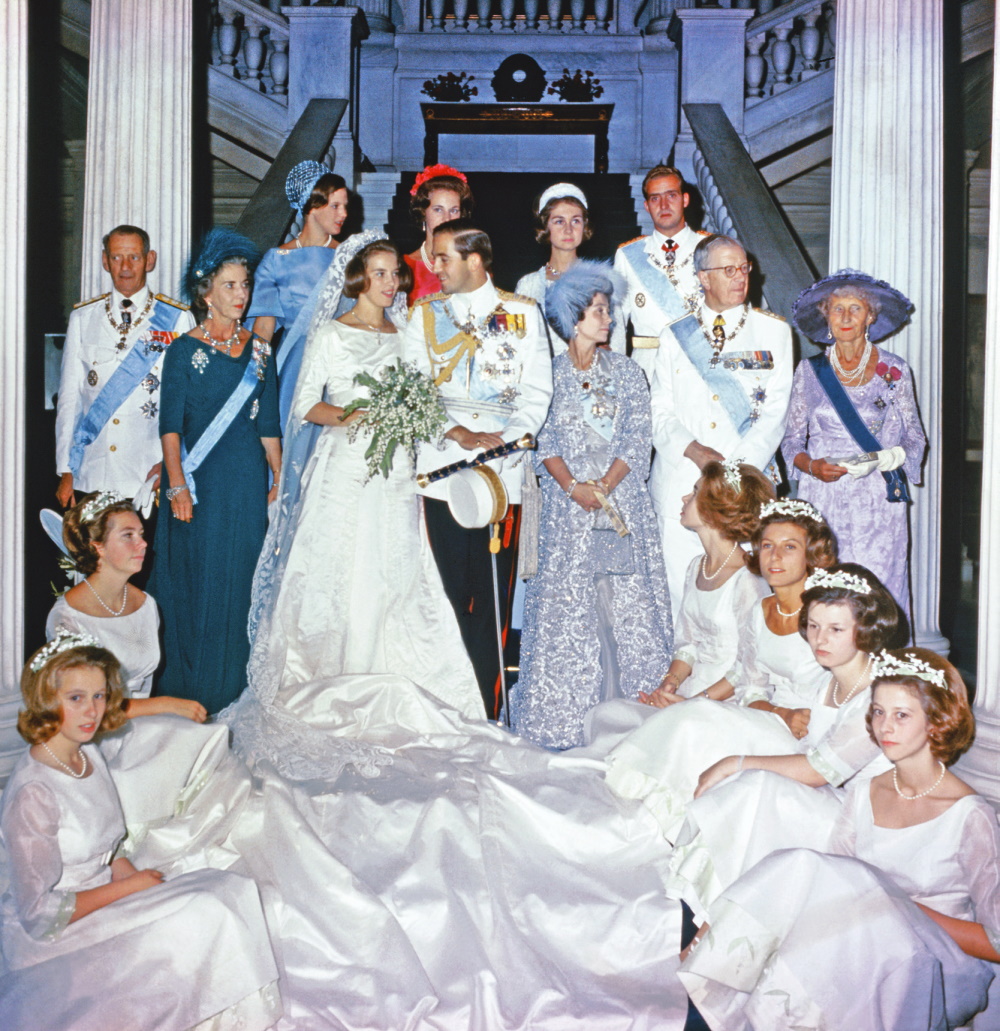
Anne-Marie was no longer the youngest princess of Denmark. She had become Queen of the Hellenes. The burden of her new role was a heavy one. At the age of just eighteen, she was called upon to represent a historic institution, to adapt to a new country, a society different from the one in which she had grown up, to learn a new language and to win the trust of a people with a long-standing historical tradition. Those who met her during that period spoke of the seriousness with which she approached her new duties. She studied the country’s history and culture, and prepared meticulously for every public appearance.
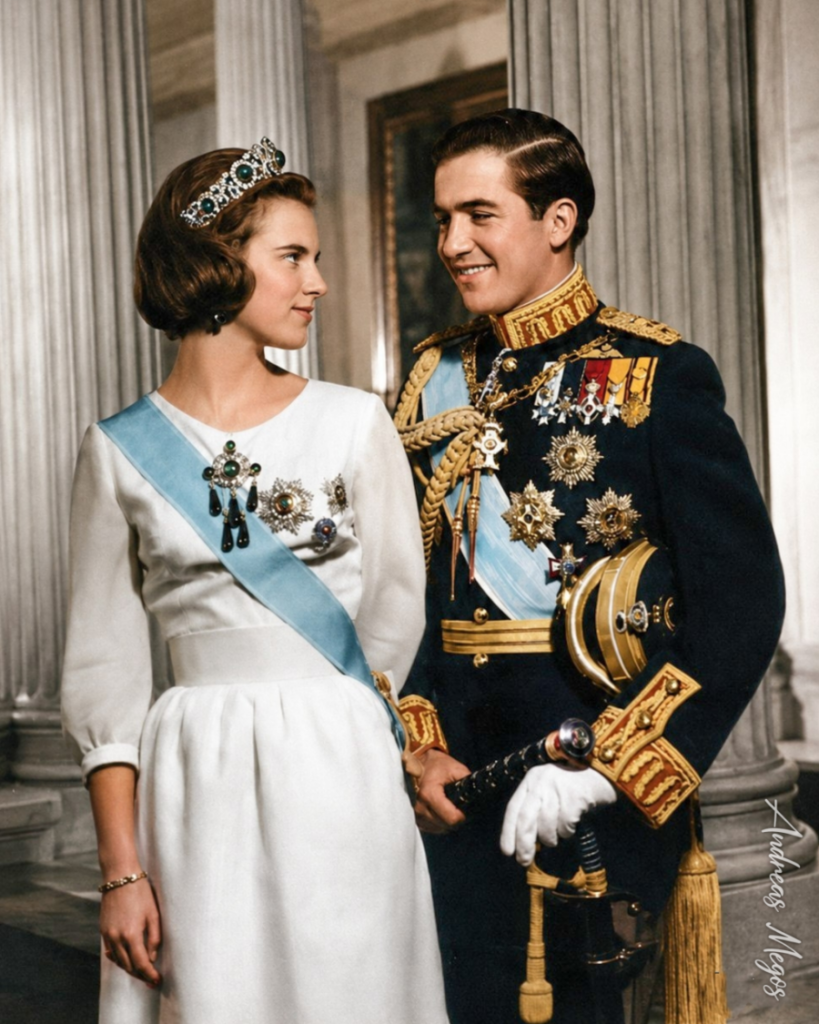
The first few months of her reign were devoted mainly to familiarising herself with life in Greece. Accompanying King Constantine on official visits and tours, she came into contact with people from every corner of the country. She was impressed by the hospitality, the strong family ties and the historical consciousness of the Greek people – qualities which she herself would later repeatedly cite as distinctive characteristics of Greece.
At the same time, she sought to further improve her command of the Greek language. She realised that direct communication with the public was not merely a formal obligation, but an essential part of her role. Through daily study and systematic practice, she managed, within a relatively short period of time, to use Greek with ease in her public appearances.
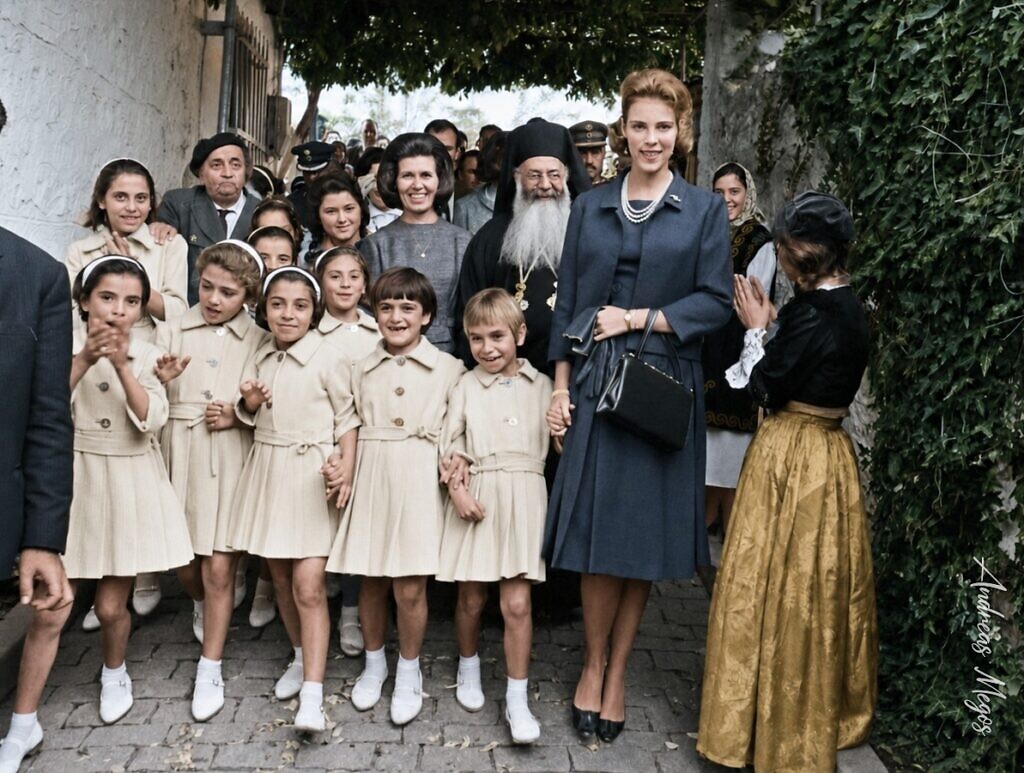
Her early public engagements focused mainly on social institutions, hospitals, schools and charitable organisations. Her contact with children, the elderly and vulnerable social groups was not merely a matter of royal protocol; it also reflected her personal sensitivity, which had been nurtured from her childhood in Denmark under the influence of her mother, Queen Ingrid.
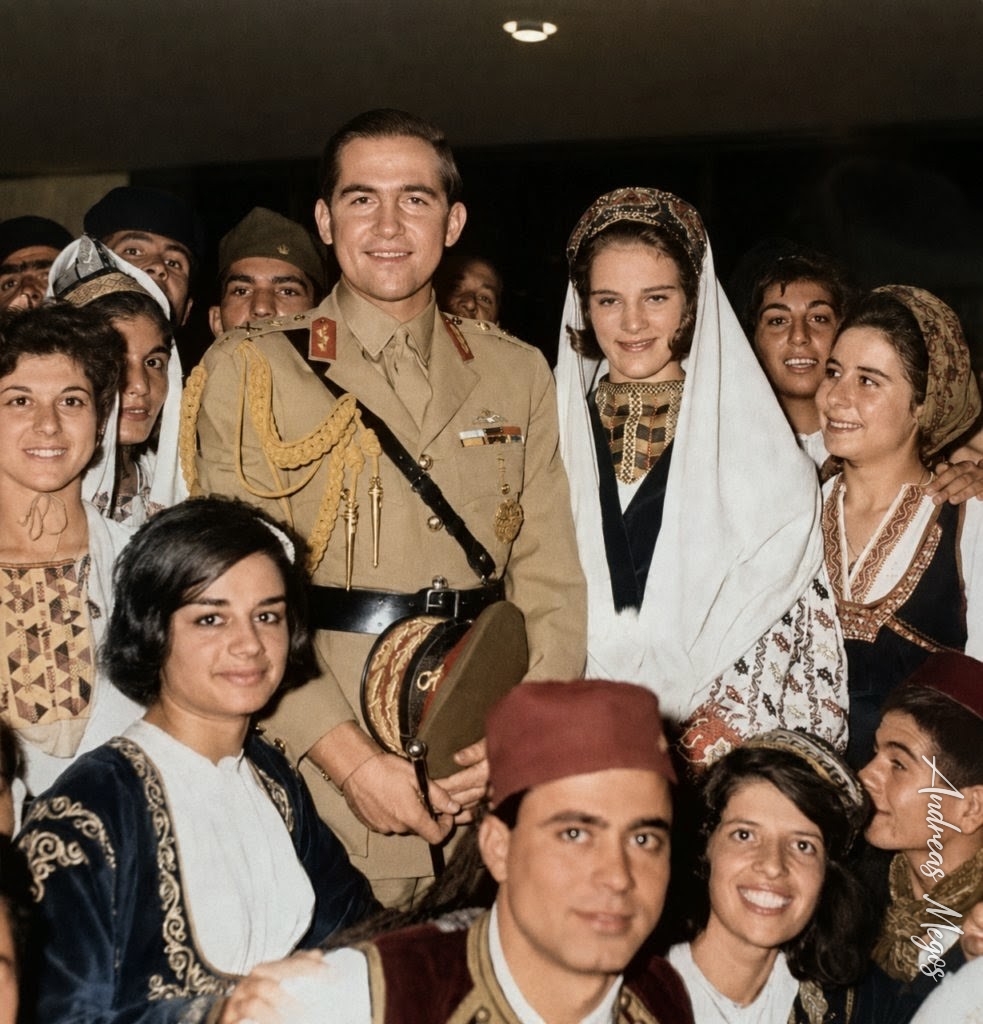
That autumn of 1964, few could have foreseen that the happy start to the young royal couple’s life together would so soon be put to the test by political developments. Greece was already in a period of mounting political tension, which, in less than three years, would lead to one of the most critical periods in the country’s modern history.
For Anne-Marie, however, those early days remained full of optimism. She had left her hometown behind to serve a new homeland, believing that the future would allow her to make a meaningful contribution to the Greek people. Reality would prove to be far more complex, yet the attitude she adopted from day one – discretion, consistency and dedication to duty – would be the defining feature of her entire public role.
A Young Queen in a Changing Country (1964–1967)
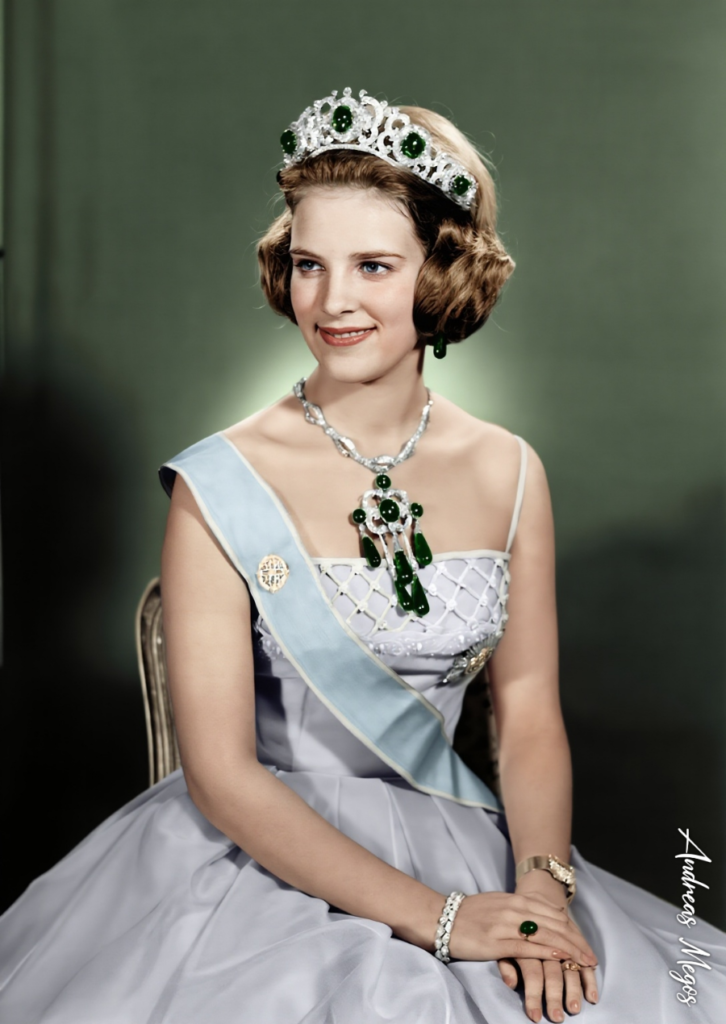
Anne-Marie’s accession to the role of Queen of the Hellenes coincided with one of the most critical periods in modern Greek history. At the age of just eighteen, she found herself at the centre of public life in a country with a long history, intense political divisions and high expectations of the new royal couple.
The first few months after the wedding were marked by optimism. In the eyes of many, the young King Constantine II and the new Queen embodied the image of a new generation that could herald a period of renewal for the institution of the monarchy. The international press often referred to the couple as Europe’s youngest royal couple, whilst their public appearances attracted particular interest.
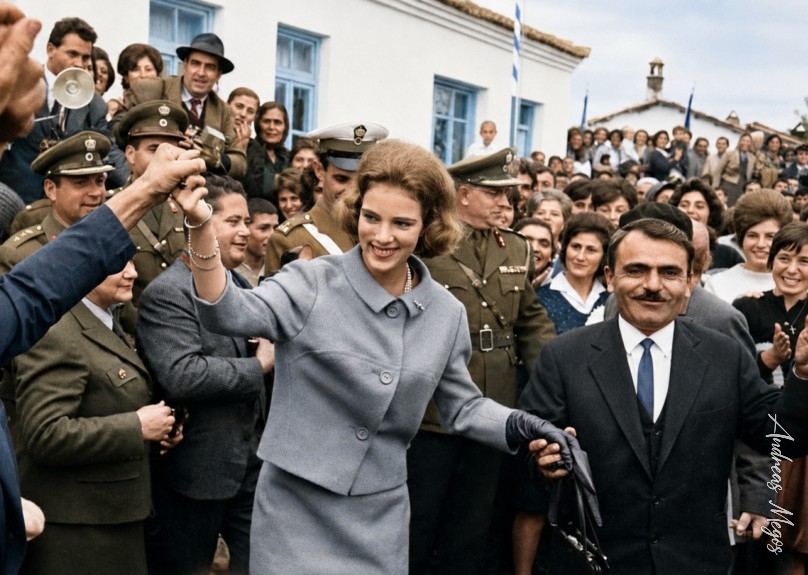
For Anne-Marie, daily life changed considerably. The Queen’s schedule included official ceremonies, state dinners, meetings with representatives of civil society organisations, and visits to every corner of the country. Princess Irene also played a significant role in helping the young Queen Anne-Marie settle into her new life in Greece. The two women were of a similar age, which facilitated communication and the development of a close relationship based on mutual understanding. Drawing on her experience and in-depth knowledge of Greek society, Irene stood by her side, helping her to familiarise herself with Greek royal protocol, ceremonial obligations and the particularities of life in Greece. At the same time, she introduced her to the social customs and daily practices of the Greek royal circle, providing her with a valuable bridge to help her adapt to a world that was still new to her.
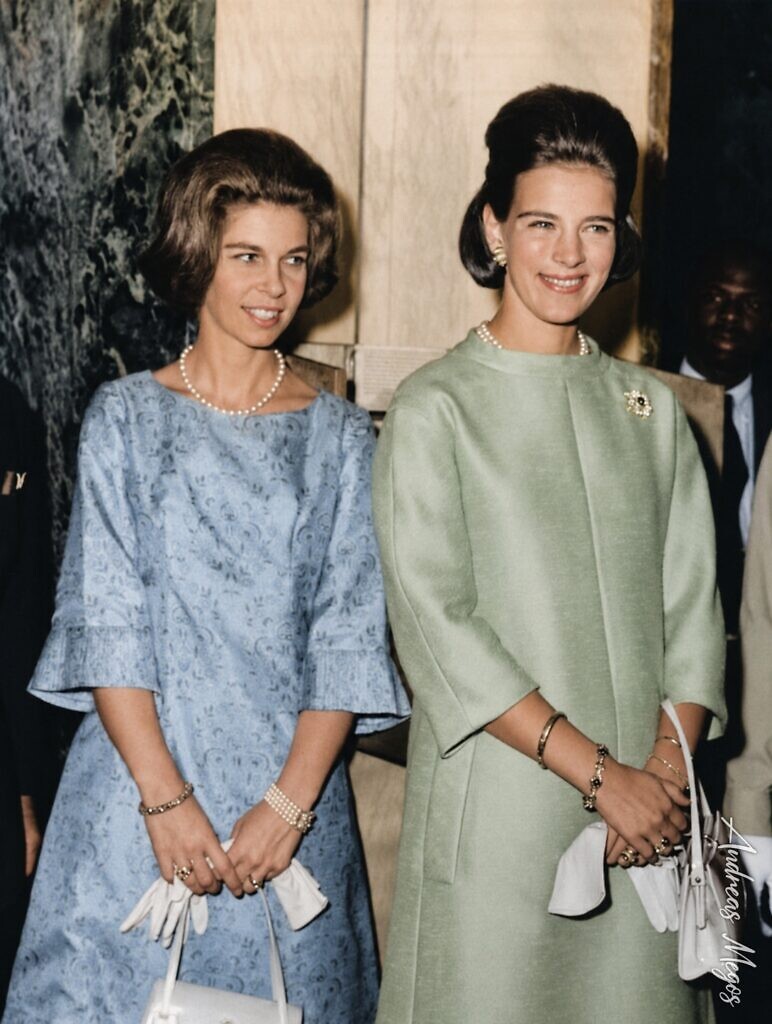
Those who worked alongside Anne-Marie during that period say that she insisted on preparing meticulously before every public appearance. She would study the history and distinctive features of every region she visited, keep herself informed about the problems facing local communities, and strive to engage meaningfully with the people she met. This approach was not merely a matter of protocol; it reflected her personal understanding of her role.
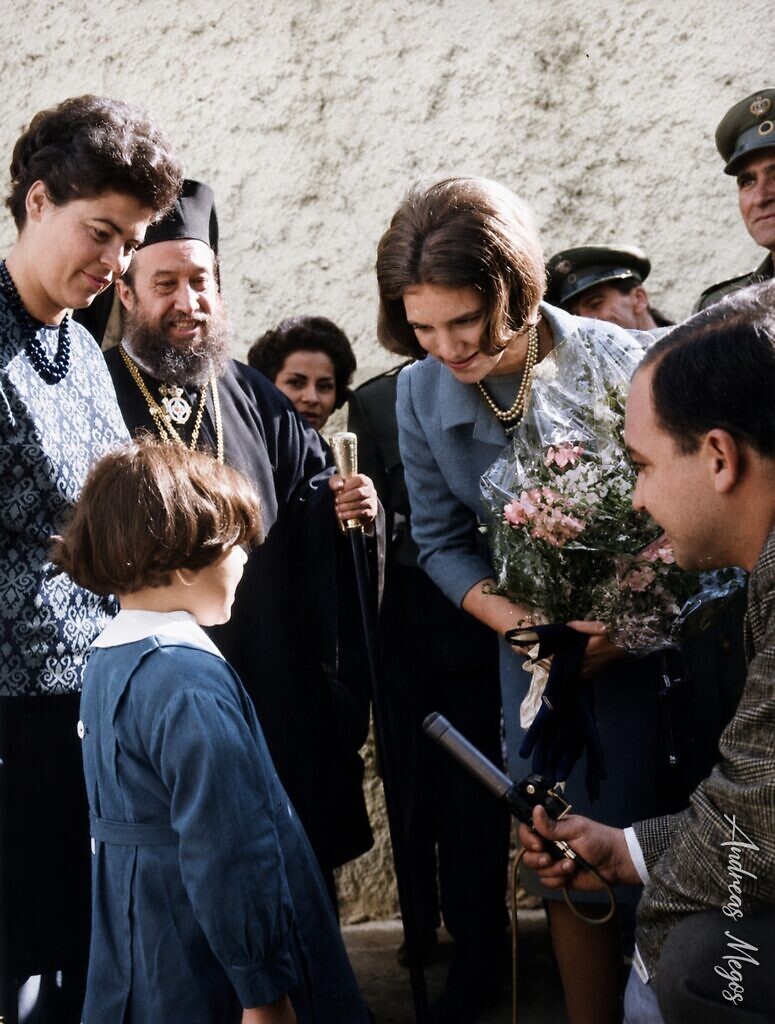
From the outset, he showed a particular interest in social welfare, health and the protection of children. He visited hospitals, children’s care institutions, schools and social care organisations, seeking to gain first-hand insight into the needs of Greek society. The experience she gained in Denmark, where social policy played a prominent role, influenced how she understood a queen’s public role. At the same time, Anne-Marie began to familiarise herself with Greek traditions and culture. She travelled to historic sites, visited monasteries, museums and archaeological sites, whilst showing a particular interest in local traditions and folk arts.
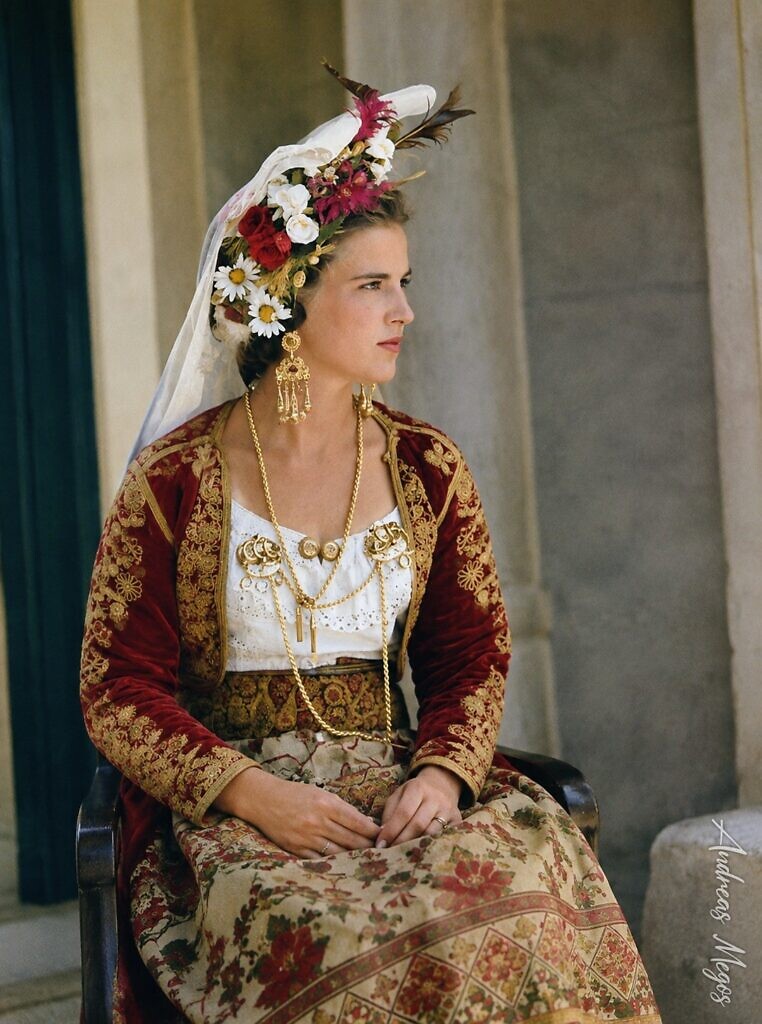
Her acquaintance with Greek cultural heritage was not confined to official guided tours; she often spoke with rural residents, craftspeople and representatives of local associations, seeking a more direct insight into the country. In her public appearances, she stood out for the simplicity of her demeanour. Although she adhered strictly to royal protocol, she avoided any air of affectation. Her kindness, calm demeanour and willingness to chat with the public quickly became the subject of positive comments. Many newspapers of the time referred to the ‘modest Queen’, noting that her youth was combined with remarkable maturity.
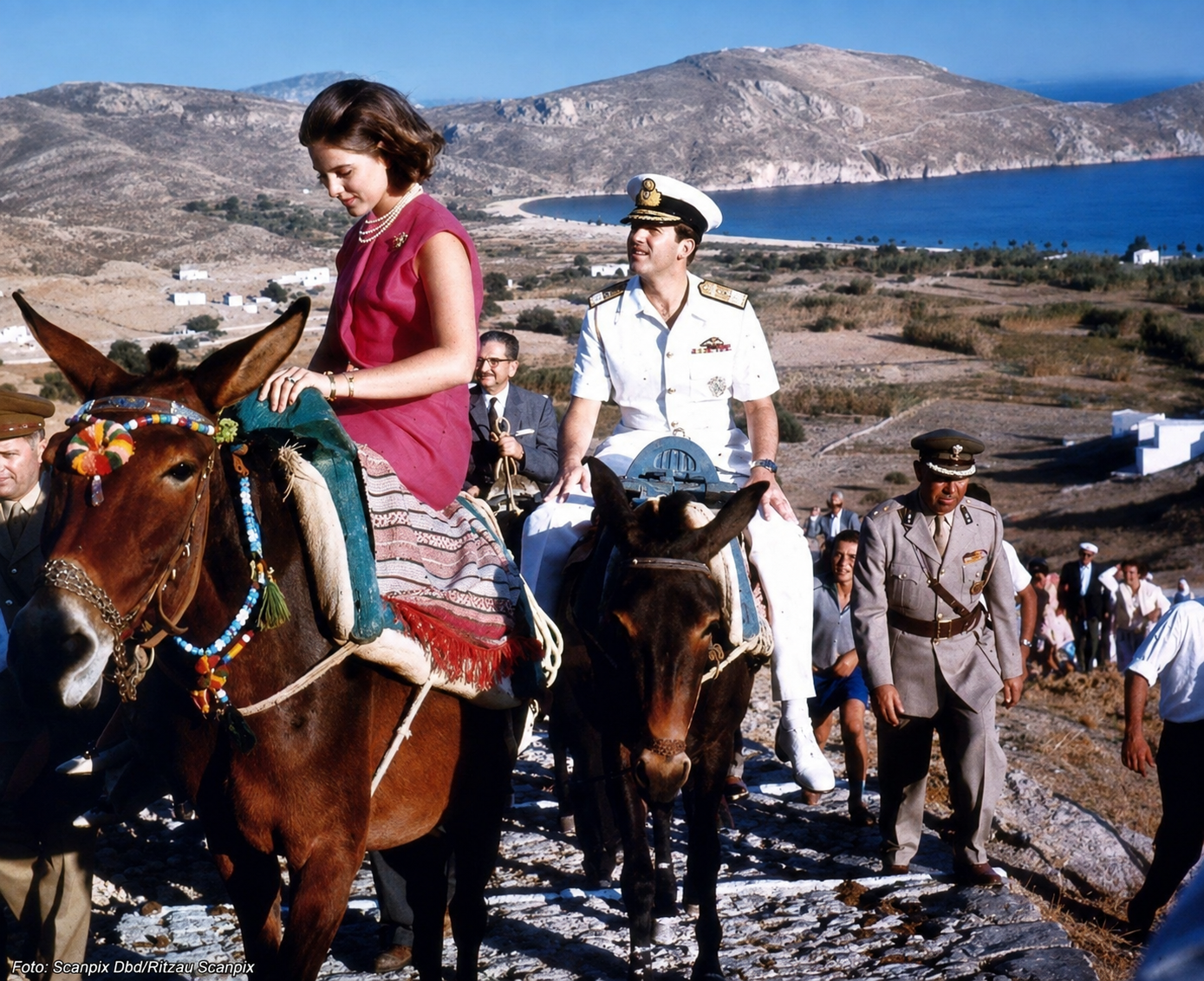
However, just as the young Queen was trying to settle into her new life and her duties in Greece, the country’s political landscape was becoming increasingly unstable. Tensions between the Crown and the government reached a peak in the summer of 1965, during a period of deep political crisis that went down in history as the ‘July Events’. The resignation of Prime Minister Georgios Papandreou and the political turmoil that followed sparked fierce confrontations and a deep division within Greek society, creating an increasingly difficult political environment for the young royal family.
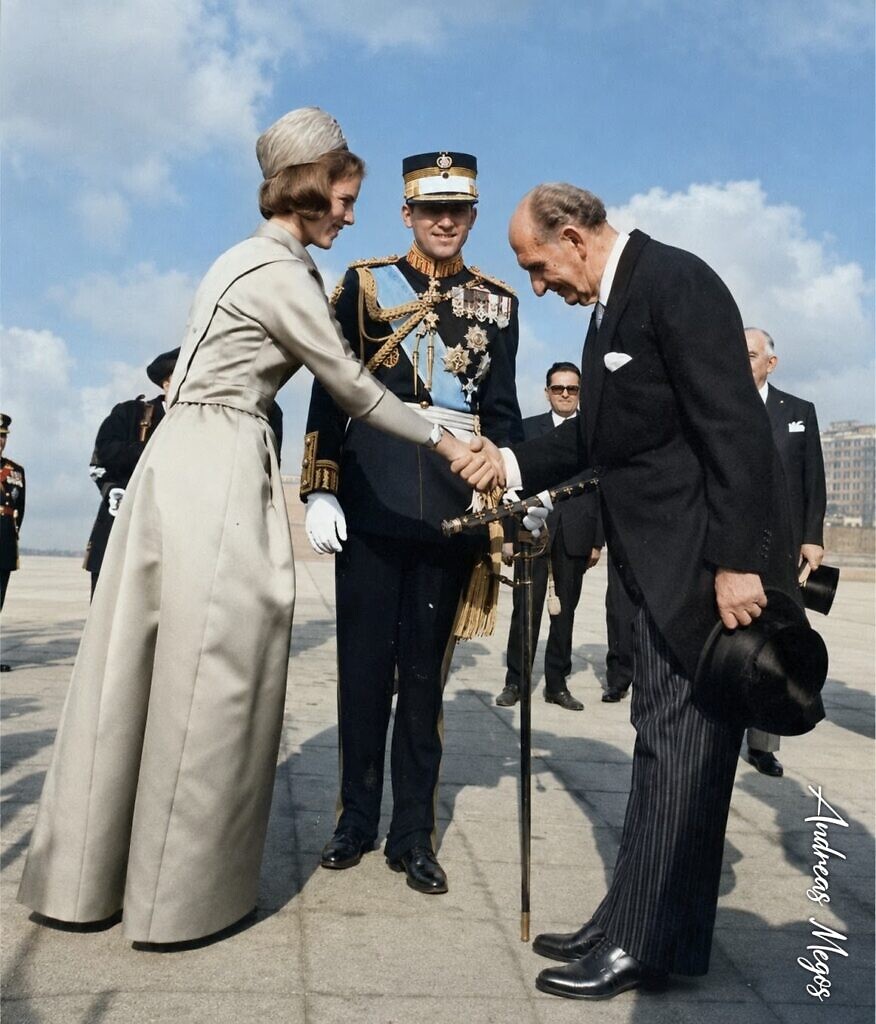
Anne-Marie did not participate actively in the political events of that period. As the wife of the Head of the Greek State, however, she inevitably found herself at the centre of an increasingly tense public climate. The royal couple’s public appearances were now overshadowed by political tension, whilst every move made by the Palace attracted heightened interest and was closely scrutinised by both the Greek and international press. For the young Queen, adapting to her new life was no longer merely a matter of familiarising herself with Greek protocol and her public duties, but also of navigating an increasingly sensitive and divided political environment.
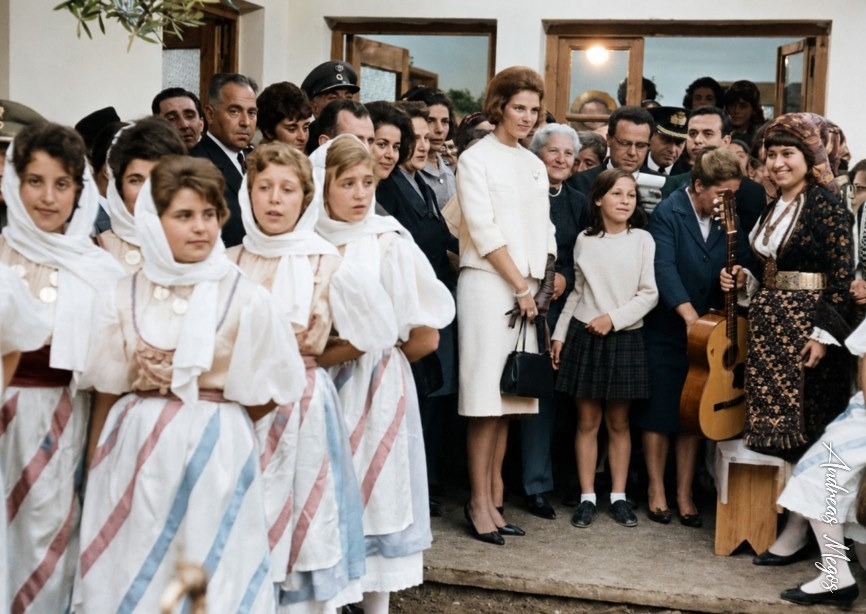
Despite the political turmoil and an increasingly challenging public climate, Anne-Marie chose to remain committed to her social and charitable duties. She viewed her role as Queen first and foremost as an ongoing opportunity to serve society and support those most in need. For this reason, she avoided taking political stances and making public statements, preferring to let her work speak for her. With a discreet presence and consistency, she sought to serve the institution through her social work, whilst remaining above the political controversies of the time.
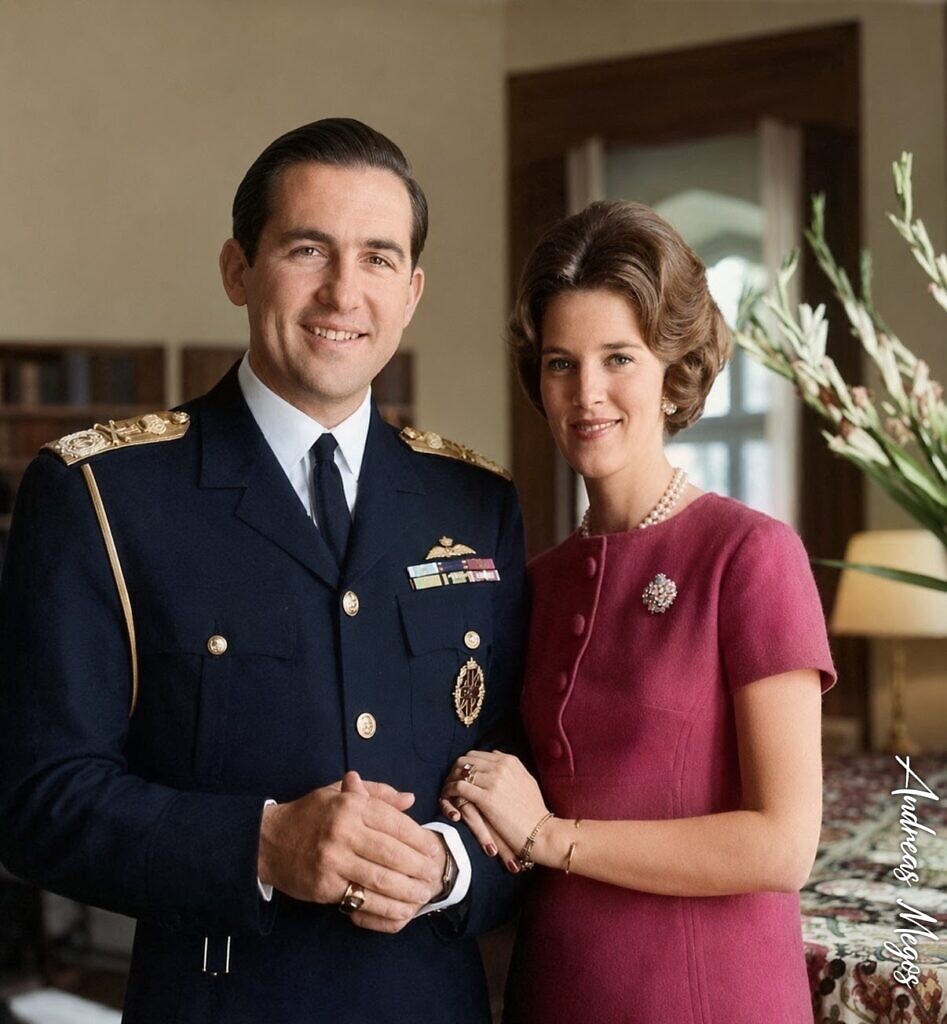
On a personal front, the early years of Queen Anne-Marie’s marriage to King Constantine were characterised by close companionship, mutual trust and genuine support. Despite the fact that their marriage was, from the very outset, the focus of public attention and their duties as the royal couple were particularly demanding, the two of them sought to maintain a daily routine as close as possible to ordinary family life.
Their shared love of sport and the sea was one of the qualities that brought them even closer together. Constantine, who had excelled at sailing from a young age and had won the Olympic gold medal at the 1960 Rome Games, remained particularly attached to the sea and sailing. Anne-Marie shared his love of the sea and outdoor activities, finding in them precious moments of freedom away from strict protocol and public appearances.
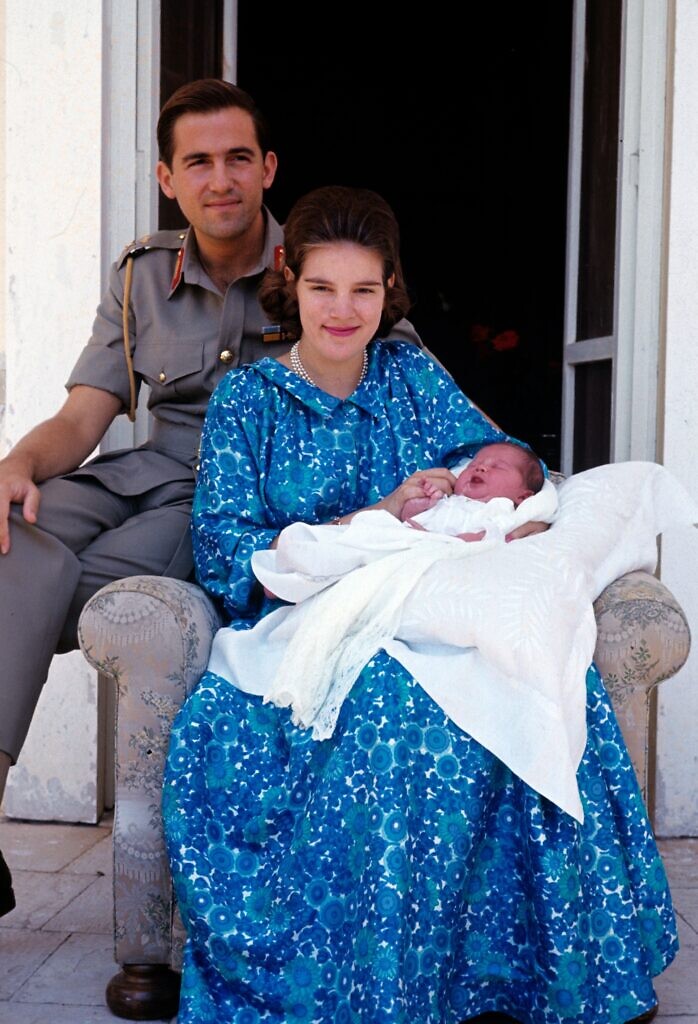
Family, of course, held a special place in their lives. The birth of Princess Alexia in July 1965 gave their relationship a new dimension and strengthened their desire to create a stable and secure family environment. Despite their institutional roles, Constantine and Anne-Marie strove to offer their children as normal a childhood as possible, with family moments, play, and activities away from the spotlight. For Anne-Marie, motherhood has been a top priority ever since, a role that would go on to shape her entire life thereafter.
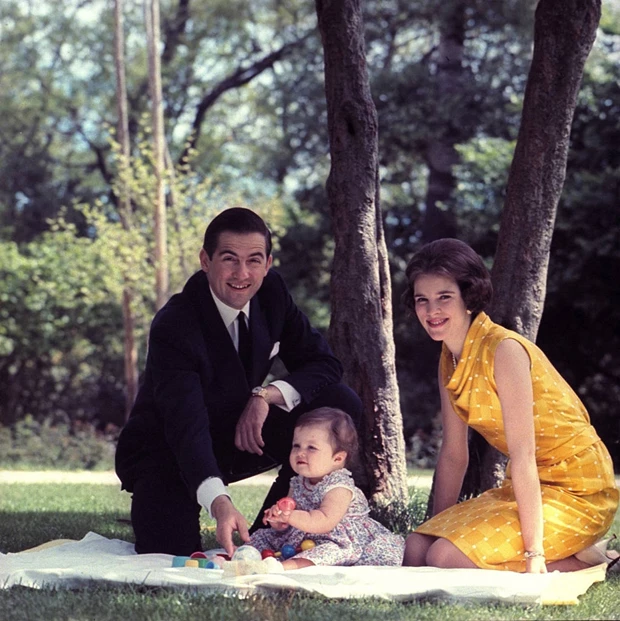
This equilibrium between public duty and private life was to be one of the defining features of their life together. From the early years of their marriage, the royal couple appears to have viewed their royal role as a shared mission, relying on one another to meet the demands of public life, whilst also seeking, beyond the formalities, those simple moments that allowed them to remain, above all else, a young couple and a family.
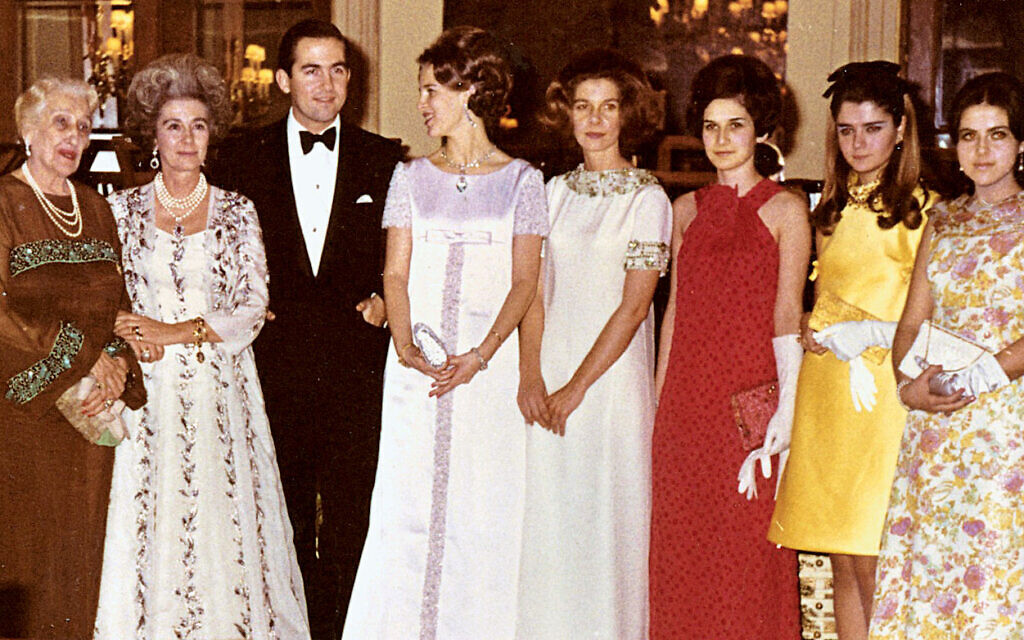
However, as 1967 drew nearer, political developments were becoming increasingly worrying. Prolonged instability, polarisation and the inability to find a stable political solution were creating a climate of uncertainty that affected the whole country. The young royal couple was faced with challenges no one could have foreseen just three years earlier, on their wedding day.
For Anne-Marie, the years 1964–1967 were a period of rapid maturation. Within a short space of time, she was transformed from a young princess of Denmark into the Queen of a country facing a profound political crisis. This experience had a decisive influence on her character and prepared her, though she did not yet realise it, for the greatest trial of her life: the events of April and December 1967, which would irrevocably alter the course of her family’s history and her place in Greek history.
The coup, the counter-coup and the beginning of exileιας
1967 was the most defining year in Queen Anne-Marie’s life. There are moments in a nation’s history that divide time into ‘before’ and ‘after’. For Greece, 21 April 1967 was one such moment. The imposition of military dictatorship turned the country’s political life on its head and created a new reality, in which the royal family was faced with difficult and critical decisions.
For Queen Anne-Marie, this period was the greatest trial of her life to date. Within a few years of her arrival in Greece, the young queen, wife, and mother was called upon to deal with events that far exceeded her personal experience and placed her at the centre of a profound national crisis. For her, that year was not merely a political turning point. It was a personal ordeal that left its mark on the rest of her life.
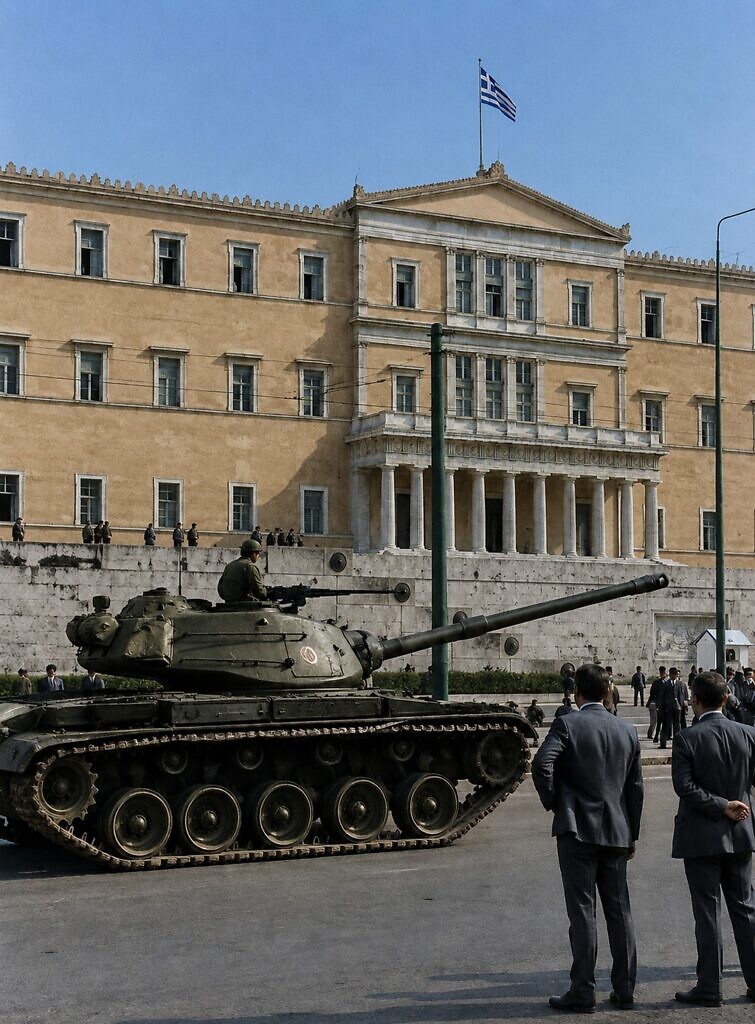
In the early hours of 21 April, a group of Greek Army officers staged a military coup, overthrowing the democratic order and suspending key provisions of the Constitution. Politicians were arrested, martial law was imposed, and the country entered a seven-year period of dictatorship.
King Constantine II was faced with one of the most difficult decisions of his reign. The situation was unfolding at an extremely rapid pace, whilst the options for responding were limited. Under these circumstances, a government was sworn in, with the Prosecutor of the Supreme Court, Konstantinos Kollias, as Prime Minister, and which included the ringleaders of the coup.
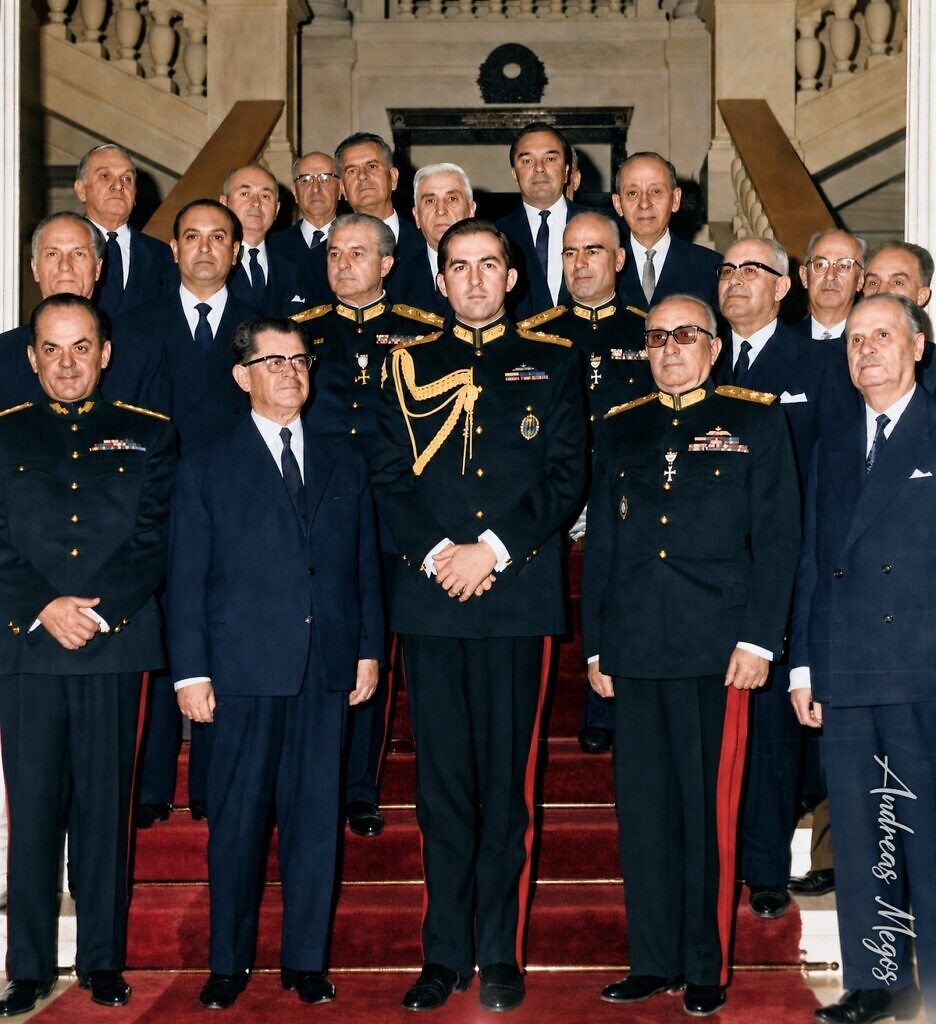
In the photograph above, the King appears to have attempted to express his opposition to the coup plotters. During the group photograph of the ‘revolutionary’ government, he stood amongst them with a visibly sullen expression, in contrast to the smile he usually wore on such formal occasions. Later, Constantine explained the motive behind his particular stance, whilst acknowledging, however, that his attempt had not achieved the desired result.
Under the extremely critical circumstances of 21 April 1967, the swearing-in of the government is not regarded as an acceptance of the dictatorship, but as a necessary manoeuvre aimed at preventing bloodshed, to maintain an institutional and constitutional framework, and to create the conditions for the overthrow of the regime at a later date and the restoration of democratic legitimacy.
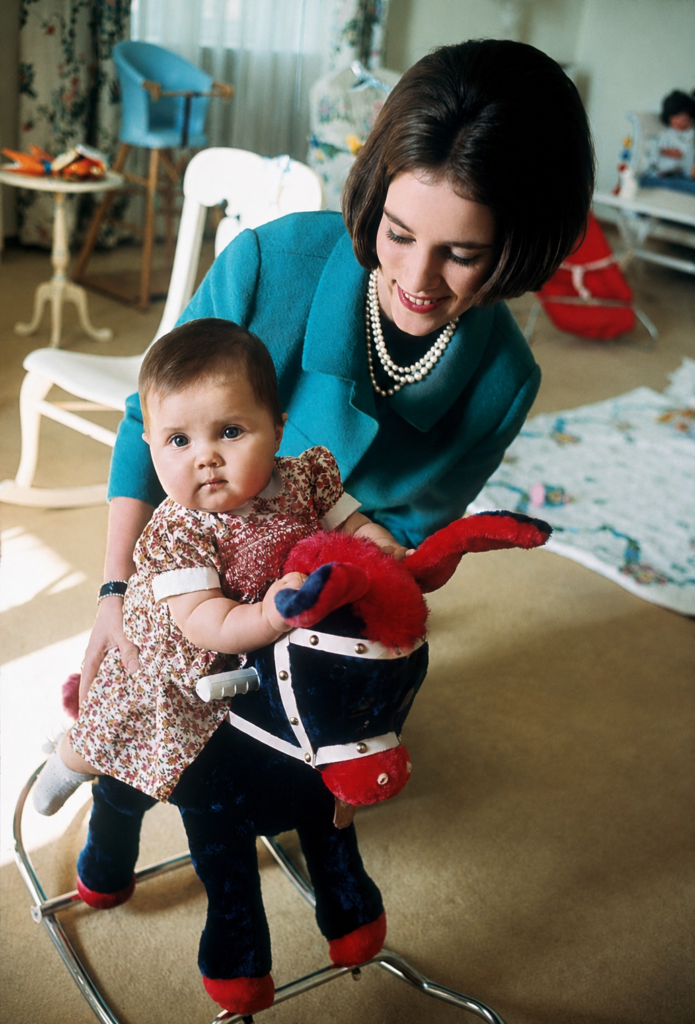
Anne-Marie, just twenty years old and already the mother of a young child, suddenly found herself at the centre of a period of intense political and social upheaval. She watched events unfold with anxiety. However, as the wife of the head of state, she experienced first-hand the tension, uncertainty and mounting pressure that characterised the situation. For such a young woman, these events were a particularly difficult and unprecedented experience.
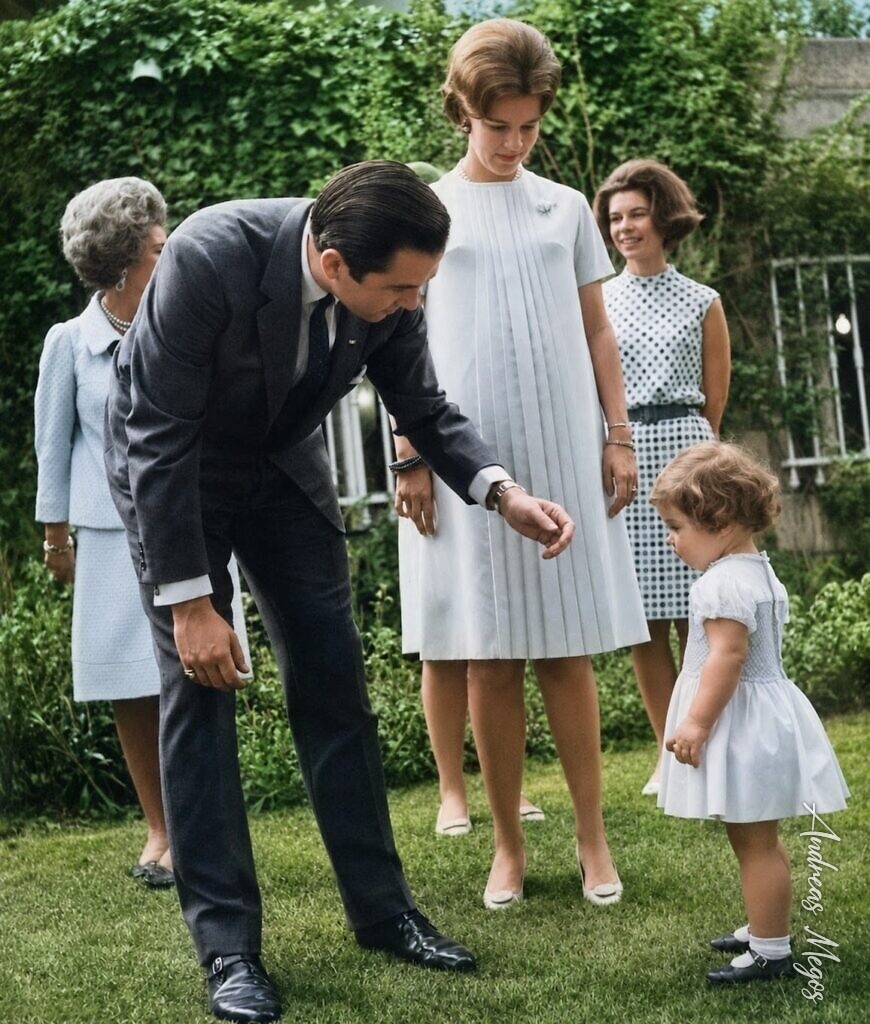
During the first few months of the dictatorship, relations between the Crown and the new regime remained particularly difficult and complex. The royal family found itself confronted with an unprecedented political reality, as democratic institutions had been suspended and the country was under military rule. Despite the extremely limited scope for action within this new framework, the Crown endeavoured to maintain its institutional role and act as a stabilising force, without politically accepting the new situation as definitive.
King Constantine, for his part, maintained contact with senior military officers, politicians and other figures who remained committed to constitutional legitimacy. At the same time, he was exploring avenues that might lead to the restoration of constitutional order and the country’s return to normal parliamentary life. His position was extremely difficult: every move he made had to take into account both the balance of power that had emerged following the coup and the risk of even deeper political destabilisation. Amidst this climate of uncertainty, Anne-Marie stood by his side, supporting her husband.
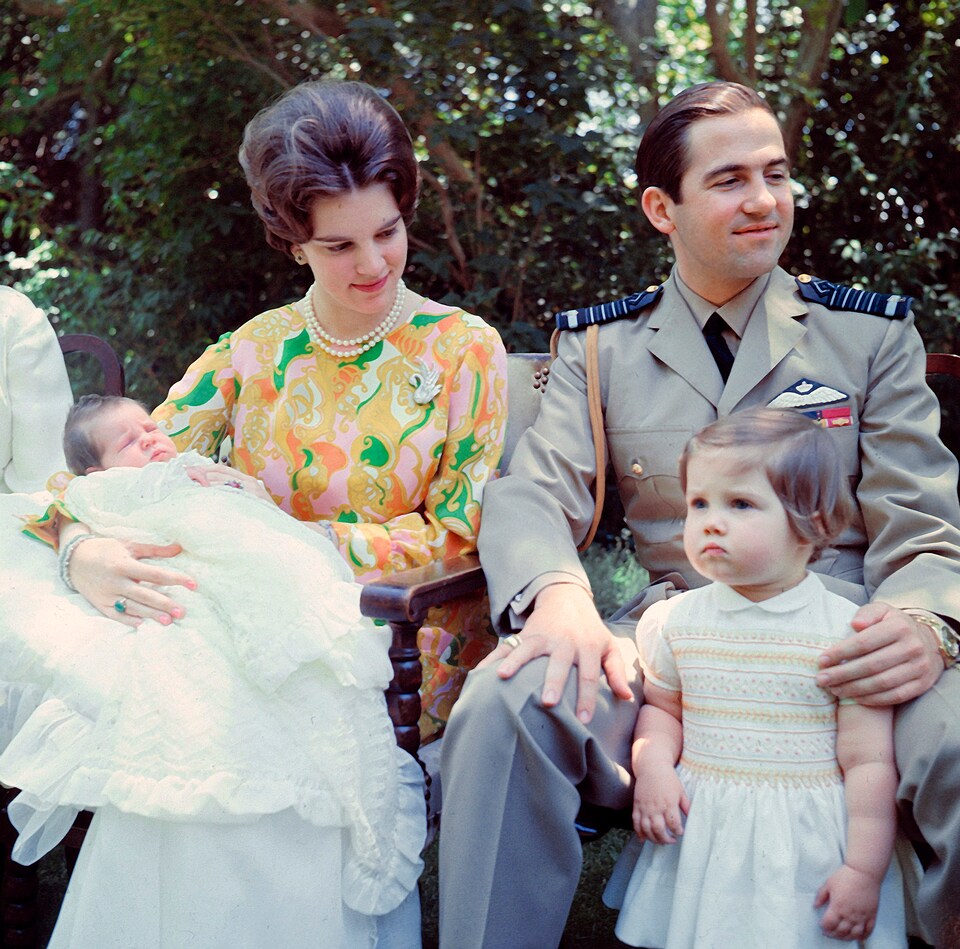
Anne-Marie stood discreetly but steadfastly by her husband’s side, facing the difficult circumstances with remarkable composure and inner strength. Keeping her distance from any political involvement, her role was first and foremost that of wife and mother. During a period of intense uncertainty, she endeavoured to preserve the family’s harmony and to establish, as far as possible, a sense of security within the home.
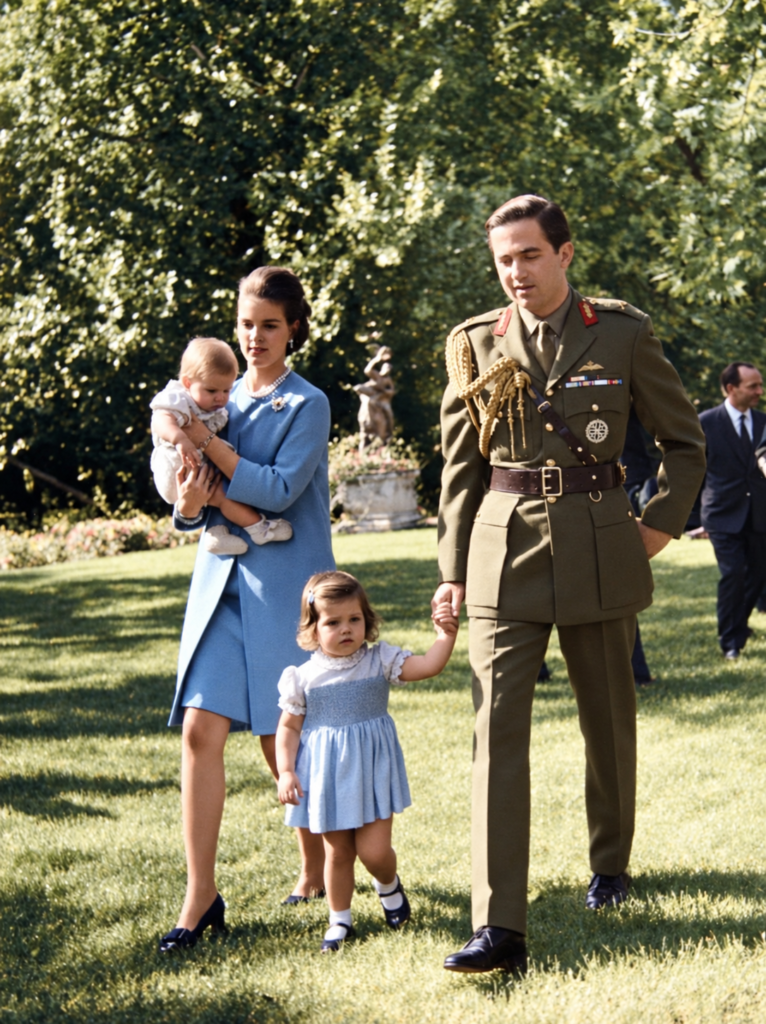
Particularly following the birth of Crown Prince Pavlos on 20 May 1967, the family took on an even more central role in her life. Together with Princess Alexia, the newborn heir was a constant source of joy for Anne-Marie, but also an additional reason to shield the family’s daily life from the political tension prevailing around them. According to accounts from people close to the royal couple at the time, the young Queen strove to maintain a calm and, as far as possible, normal family environment, offering her children the stability they needed at a time of profound uncertainty.
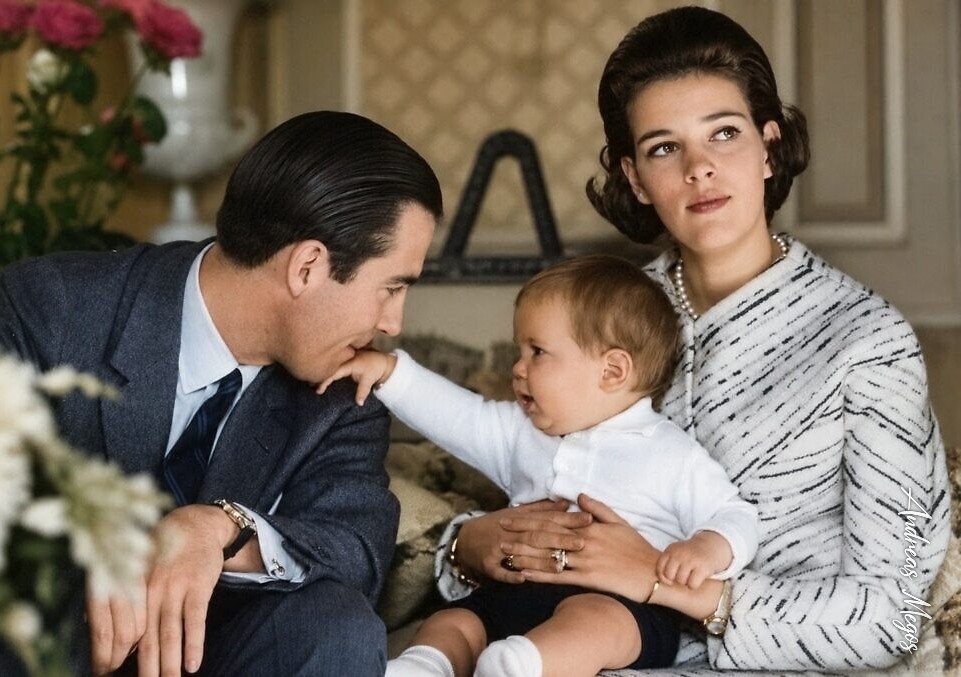
The crisis reached its peak on 13 December 1967, when the King attempted to organise a movement aimed at overthrowing the dictatorship and restoring constitutional order. The plan relied on the support of units of the Armed Forces, particularly in Northern Greece, where the King hoped to muster sufficient military forces to challenge the regime.
That morning, the King flew from Athens to Kavala, which had been designated as the centre of the operation. Accompanying him were Queen Anne-Marie, Princess Alexia, aged just two, the seven-month-old Heir Apparent Pavlos, Queen Mother Frederica and Princess Irene, Prime Minister Konstantinos Kolias, General Konstantinos Dovas, gynaecologist Vasileios Koutifaris, Ambassador Leonidas Papagos and the children’s governess, Cecilia.
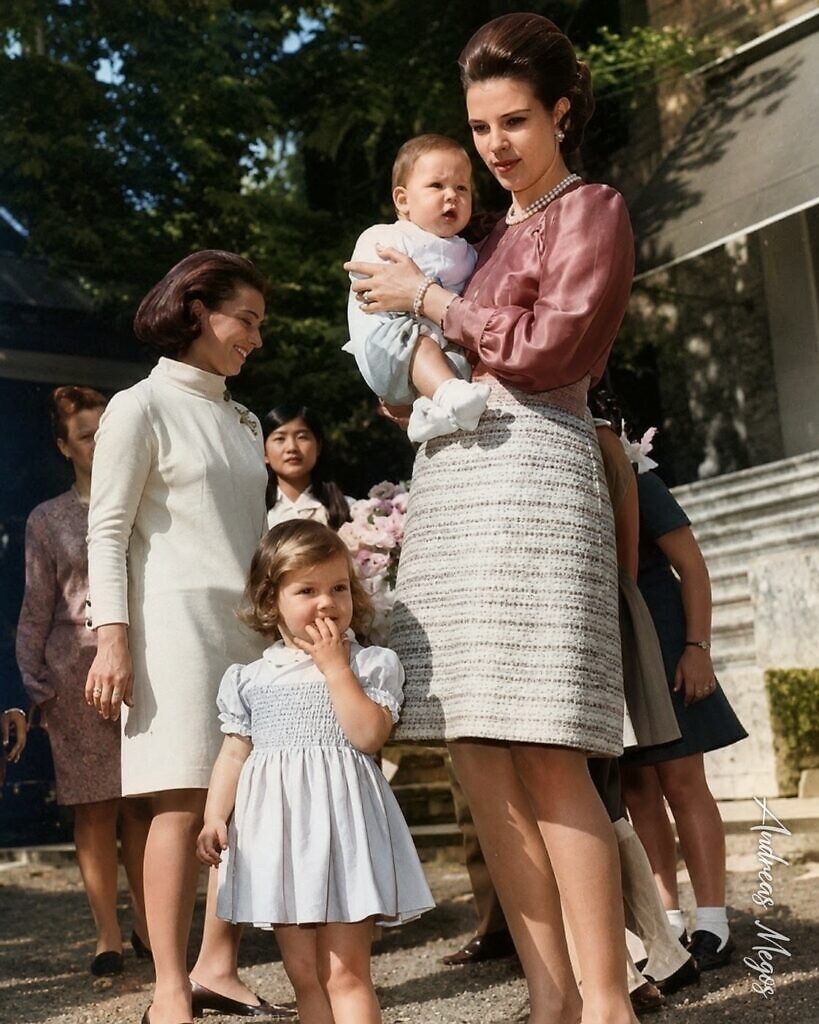
The venture, however, did not go according to plan. The military units that were supposed to support King Constantine’s initiative failed to coordinate effectively, whilst the junta leaders retained control of Athens and, gradually, of the situation across most of the country. As the hours passed, it became increasingly clear that the forces that had rallied behind the King were not sufficient to overthrow the regime. Within a few hours, the attempt had effectively collapsed.
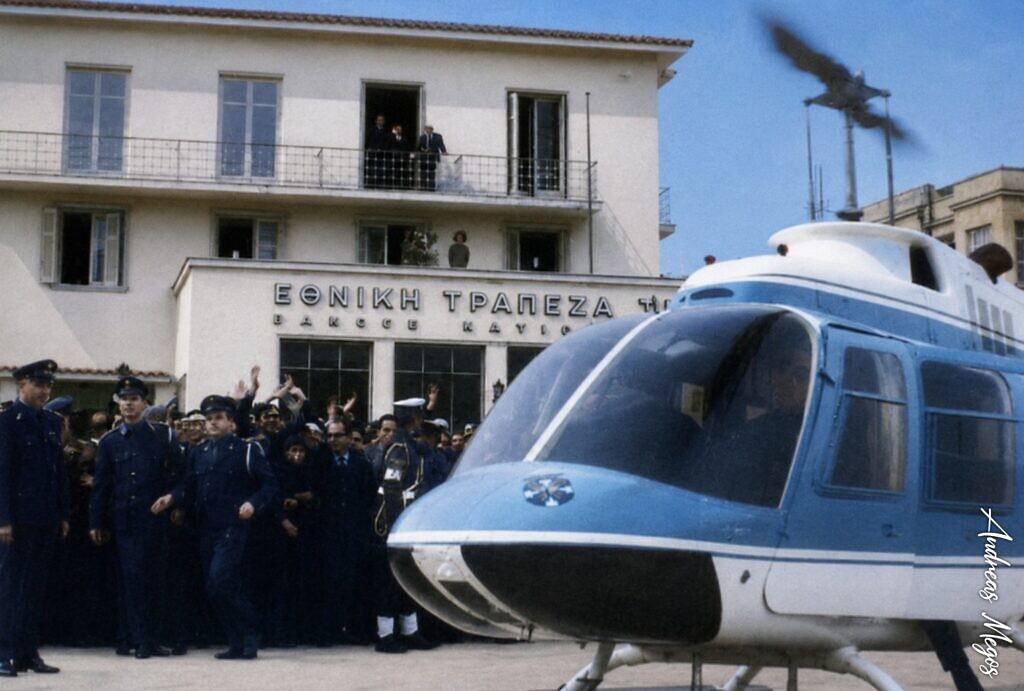
The ‘Omega’ strategic plan, as King Constantine had code-named it, constituted the first organised and serious act of resistance against the Colonels’ junta. Despite its failure, this move was a pivotal event in the confrontation between the Crown and the dictatorial regime and was to determine, to a large extent, the course of both the political system and the royal family itself.
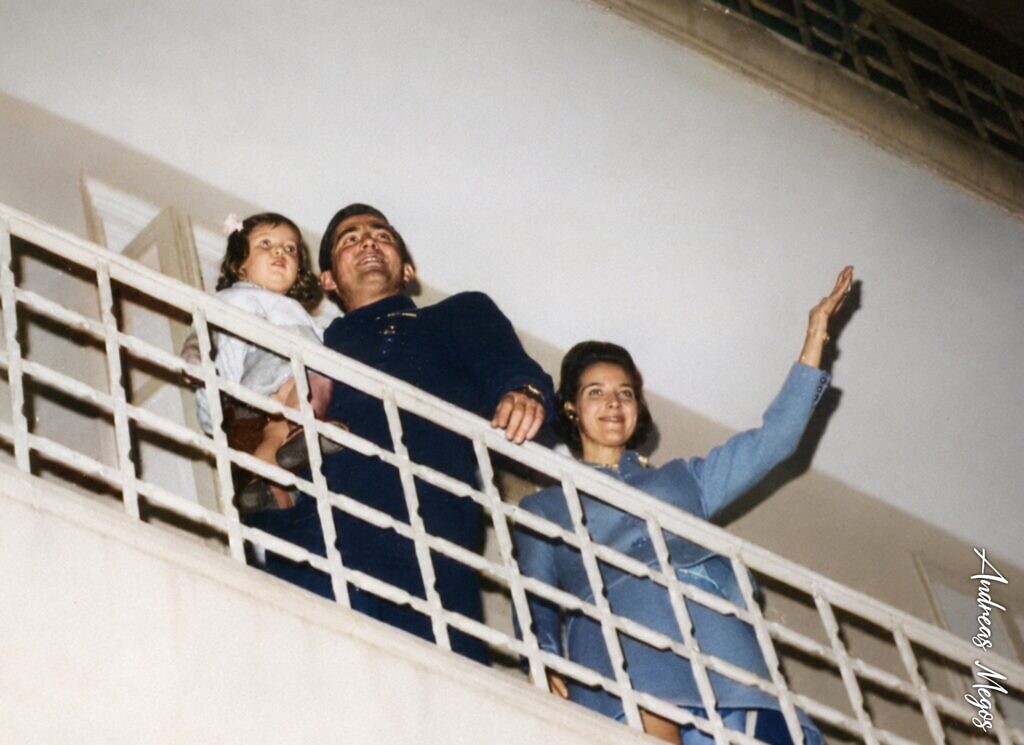
The decision that followed was dramatic, but under the circumstances it was deemed necessary. As the risk of the King and his family being arrested, as well as the possibility of an armed conflict with unpredictable consequences, became increasingly imminent, it was decided to leave Greece. The royal family boarded the royal Gulfstream G.I. ‘P-9’ aircraft and departed from Amygdaleona Airport in Kavala, bound for Ciampino military airport in Rome.
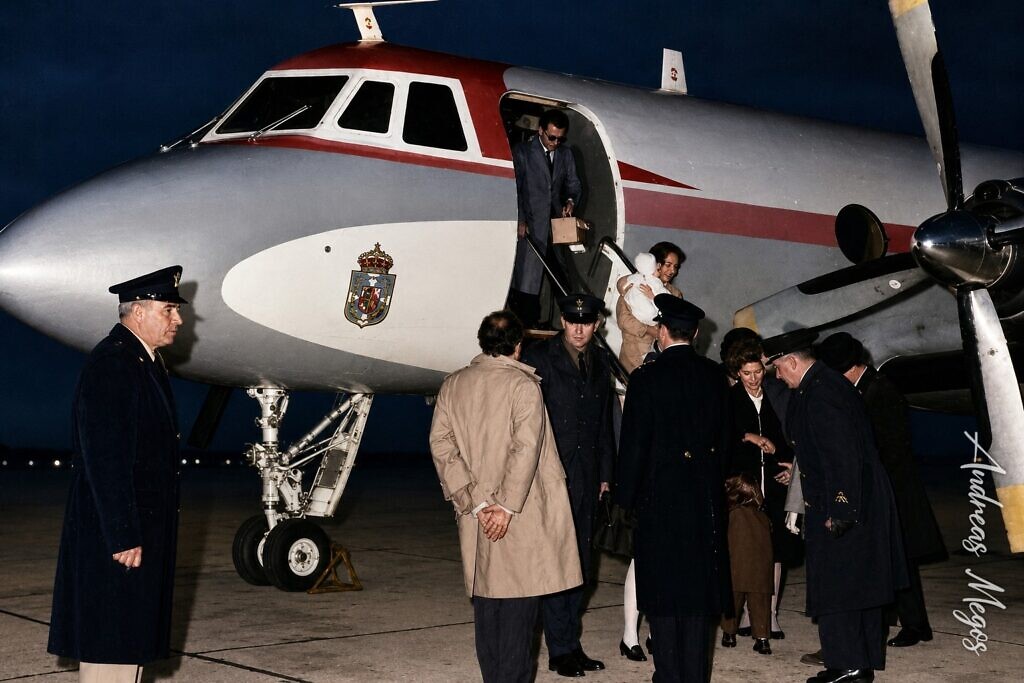
This departure was not merely a temporary withdrawal from the scene of events. It effectively marked the beginning of an exile that would last for decades and would irrevocably alter the course of Anne-Marie’s life, that of her husband and their children. For the young Queen, who had arrived in Greece just a few years earlier as the bride of the Greek throne, the flight to Rome marked the transition from her life in the royal circles of Athens to a new, uncertain reality far from the homeland that had by now become her own.
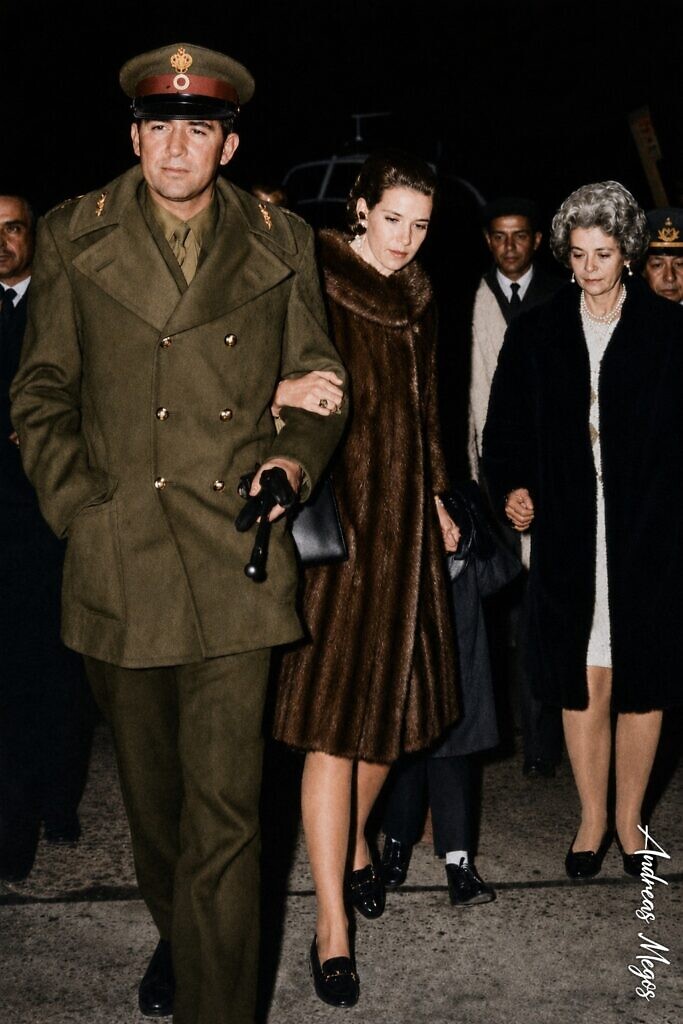
Her departure that night was one of the most dramatic and harrowing moments in Anne-Marie’s life. In the space of just a few hours, the young Queen was forced to leave behind her home, her private quarters, the possessions that were part of her daily life and, above all, the country she had come to love in the space of just a few years.
The departure was hasty and took place amid great uncertainty. The family’s luggage was limited to the bare essentials, as no one could know whether their stay abroad would last a few days, a few weeks, or much longer. Anne-Marie was leaving with her two young children, Princess Alexia and the seven-month-old Crown Prince Pavlos, without knowing when she would return to the home she had made in Greece. For a woman of just twenty-one, this scene carried a particular emotional weight. It signalled the abrupt end to the everyday life she had built with her husband and their children, and the beginning of a new, unfamiliar reality.
The Years of Exile
Their departure from Greece on the night of 13 December 1967 did not merely mark the end of the active reign of King Constantine II and Queen Anne-Marie. It marked the beginning of a new life, full of uncertainty, adjustment and personal trials. For the young queen, exile was an experience that permanently shaped her character and priorities.
The royal family’s first destination was Rome. The Italian capital offered a safe environment, but it could not replace the feeling of home. Initially, both the King and Anne-Marie believed that their departure from Greece would be temporary. They reckoned that political developments would allow them to return relatively soon. The reality turned out to be very different. Their temporary departure gradually turned into a long-term exile that was to last for decades. For Constantine and Anne-Marie, it was essential to maintain family stability and provide their children with a stable environment. Anne-Marie took on an even more important role: that of a mother who had to protect her family from the hardships of their new reality.
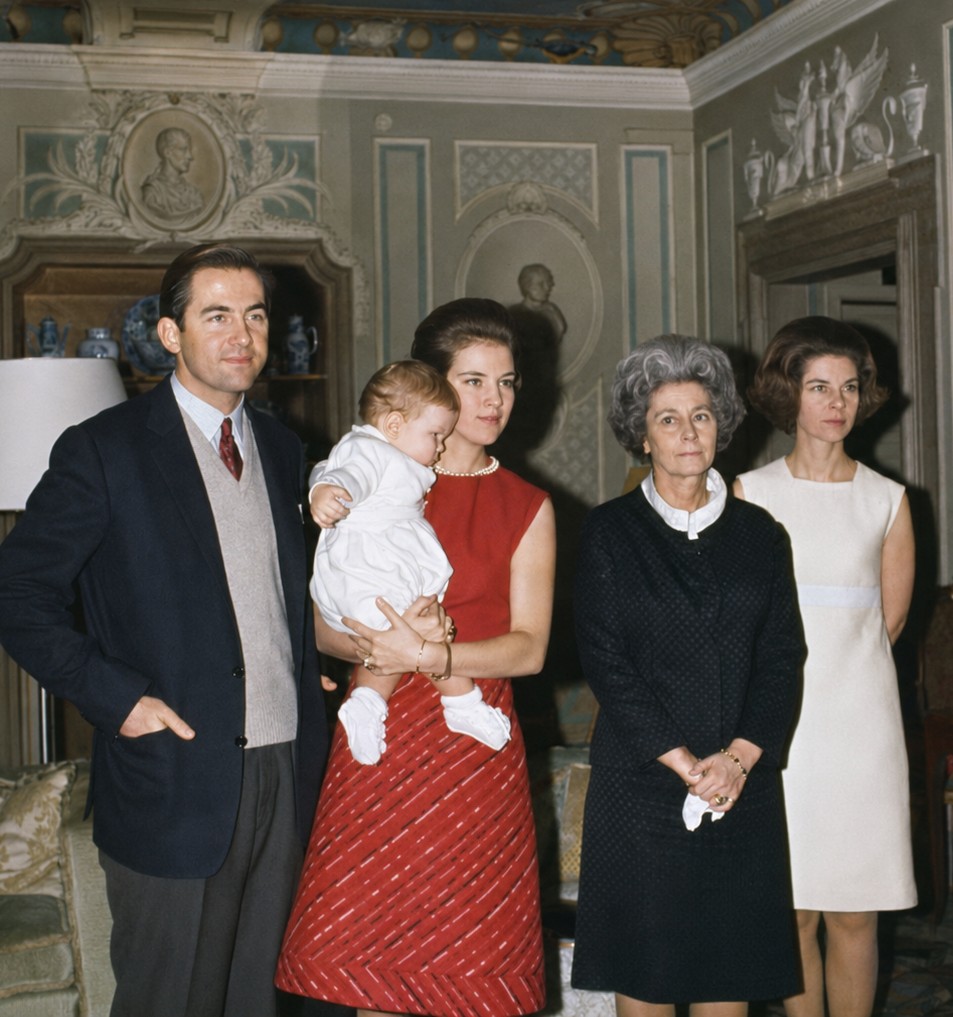
For the young queen, the ordeal was twofold. As well as losing the public role she had taken on just three years earlier, she found herself faced with the responsibility of protecting her family in a completely new environment. Motherhood, which already held a central place in her life, took on even greater significance.
Despite her personal difficulties, Anne-Marie never chose to engage in public confrontation. Instead, she maintained the discretion that had characterised her from the earliest years of her life in Greece. She focused her attention on her family, steadfastly supporting her husband through the difficult circumstances that were unfolding.
The end of 1967 marked the end of an entire era. Anne-Marie’s active reign in Greece had lasted just three years, yet the experiences she gained during that brief period would profoundly influence the way in which she faced all the subsequent challenges of her life.
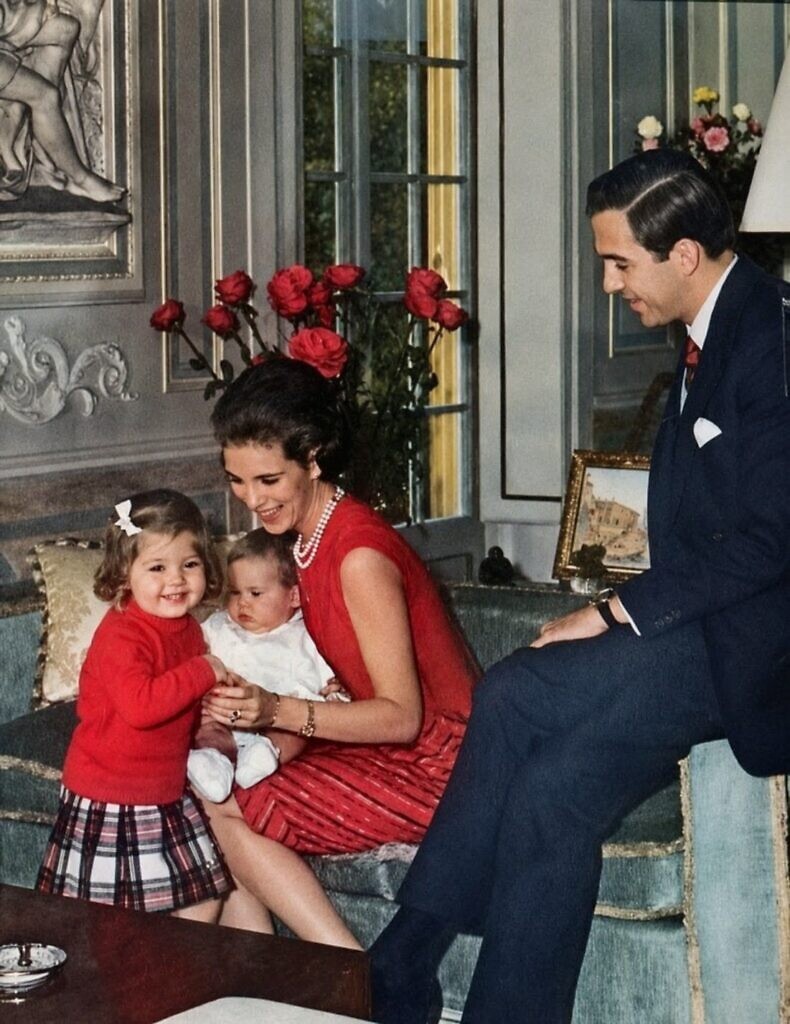
The exile that was about to begin was not merely a change of residence. It was the beginning of a new reality, within which the Queen would have to redefine her role, raise her family far from Greece, and keep alive the hope of returning.
The years of exile did not mean a separation from Greece. On the contrary, Greece remained a constant point of reference in the family’s life. Anne-Marie preserved the Greek language, traditions, and ties with friends and people who had stood by her. Her children’s Greek identity was nurtured within the family, so that they might come to know the history and culture of the country to which they were connected.
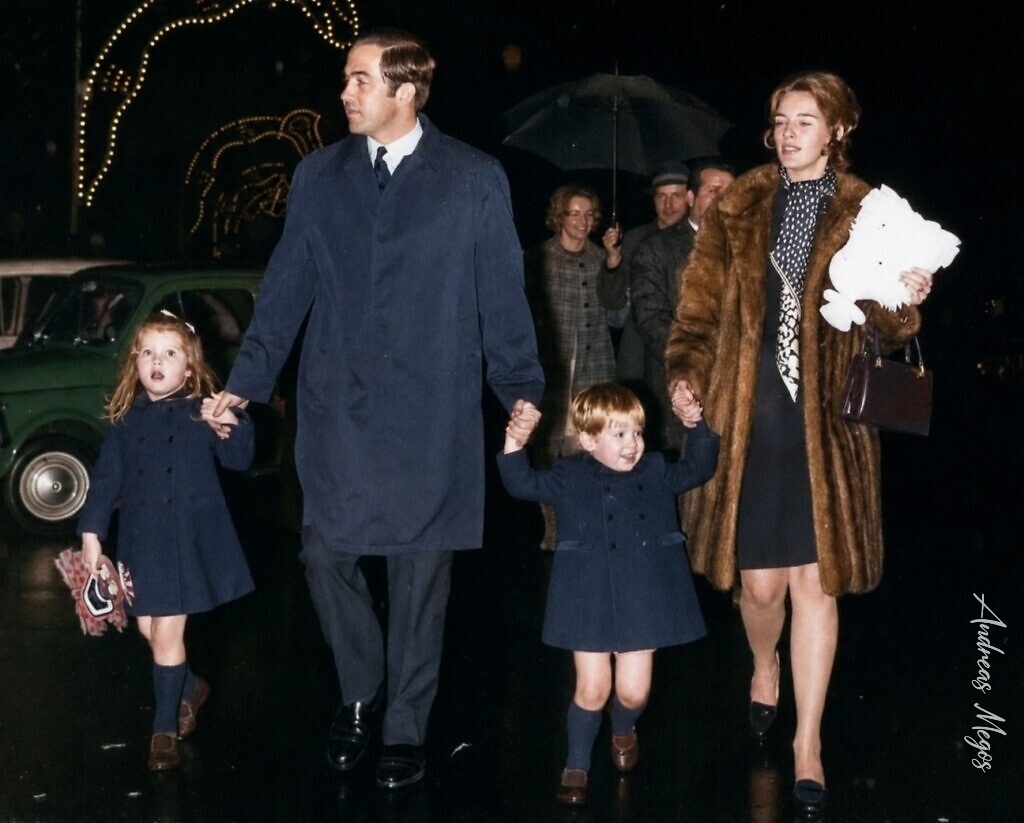
With dignified composure, patience, and a deep sense of duty, Anne-Marie embarked on the most challenging chapter of her life. The decades that followed would prove that her greatest strength lay not in public exposure or the exercise of power, but in her ability to maintain the unity of her family and to face adversity with steadfastness and mental fortitude.
In Rome, the family had to reorganise its daily life. From the palaces and the strict protocol of official life, they moved into a much more restricted and private existence. This change was not easy, particularly for people who had devoted their lives to public duties. However, Anne-Marie faced the new situation with remarkable composure.
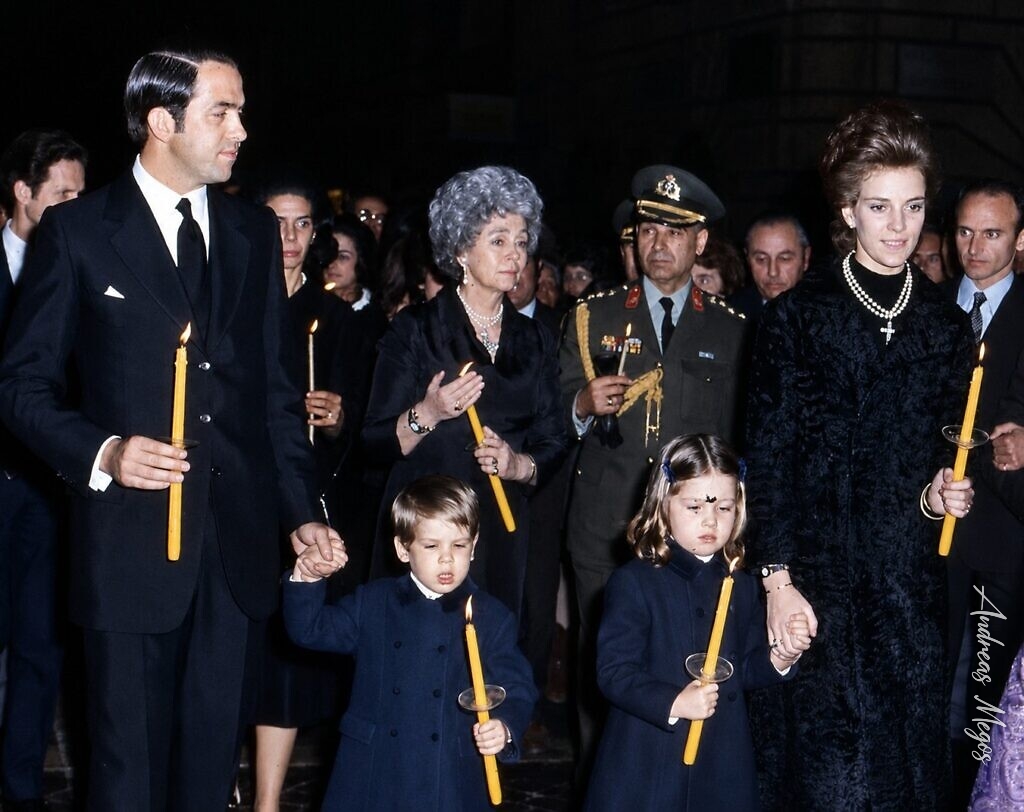
It was from that time onwards that her image began to take shape, not only as a queen, but above all as a mother. On 1 October 1969, the couple’s third child, Prince Nikolaos, was born, bringing great joy during a difficult period and further strengthening the family-oriented nature of their daily lives. For Anne-Marie, motherhood now served as a point of reference and a source of strength. She herself would later speak many times of the importance of family in helping her to cope with the hardships of exile.
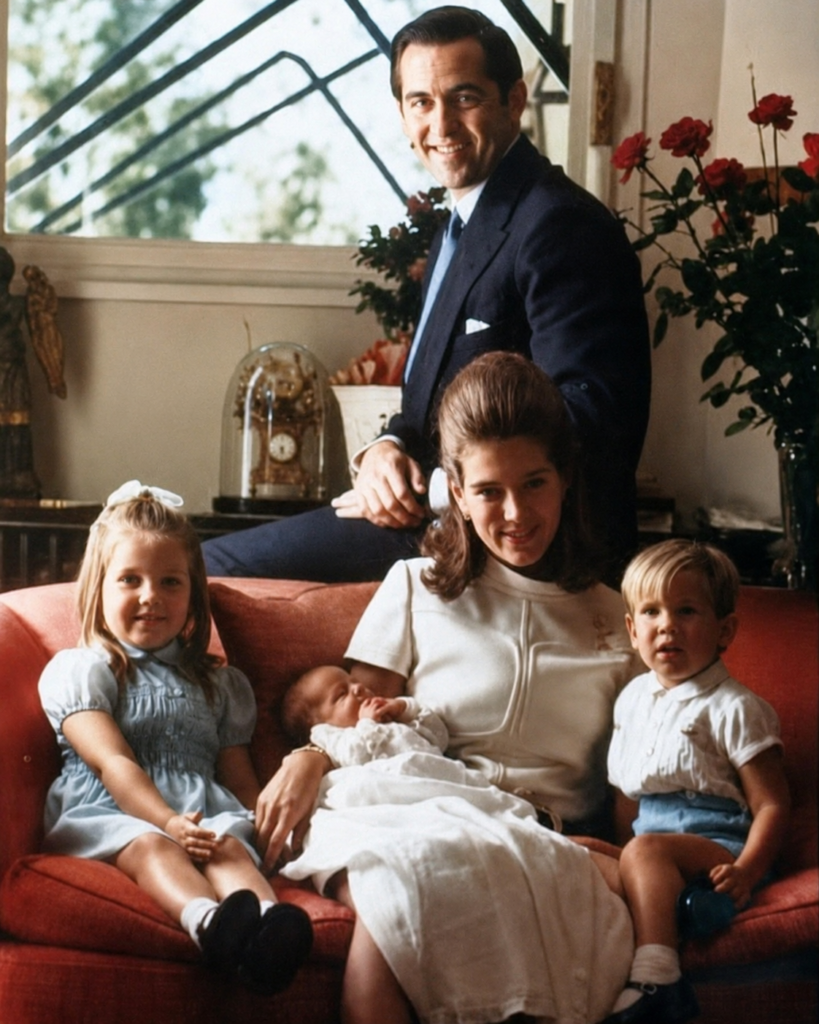
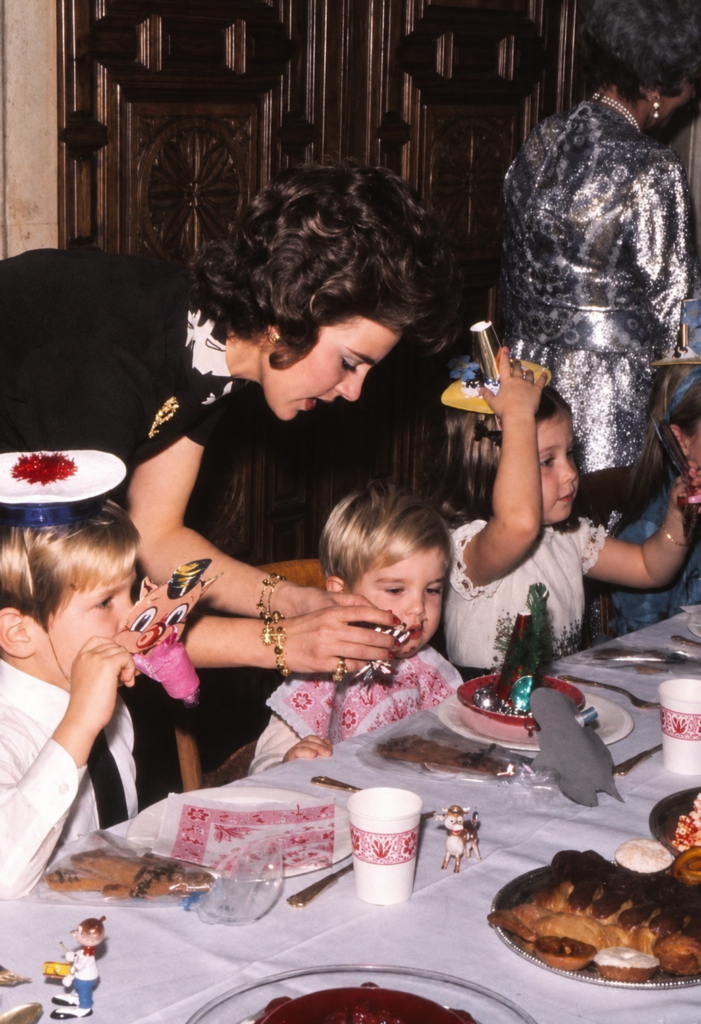
The upbringing of her children – Princess Alexia, Crown Prince Paul and, later, Prince Nicholas – was Anne-Marie’s top priority during her years in exile. In a world characterised by uncertainty and constant change, the Queen sought to offer them something she herself had been abruptly deprived of: a sense of stability and normality. She ensured that a family environment was created in which the children could grow up safely, forge strong family bonds and, as far as circumstances allowed, enjoy as normal a childhood as possible, far removed from political upheavals and the consequences of exile.
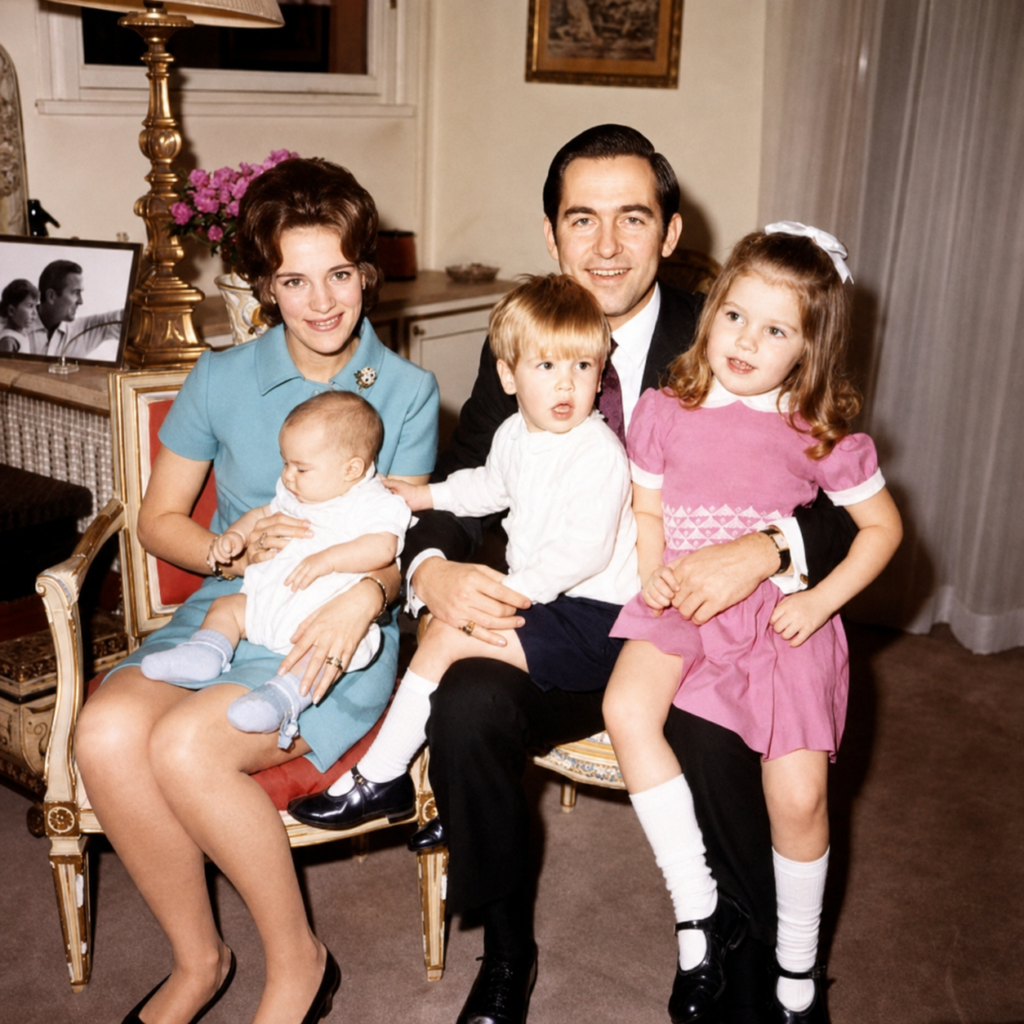
Despite the loss of their everyday life in Greece, the family was not left without a strong support network. Anne-Marie’s close family ties with European royal houses, particularly those of Denmark, Sweden, Norway, the United Kingdom and Spain, created a wider family environment within which the royal couple and their children could feel that they were not alone. These ties were not merely symbolic; they offered the family invaluable emotional support and a sense of continuity at a time when their lives had been turned upside down.
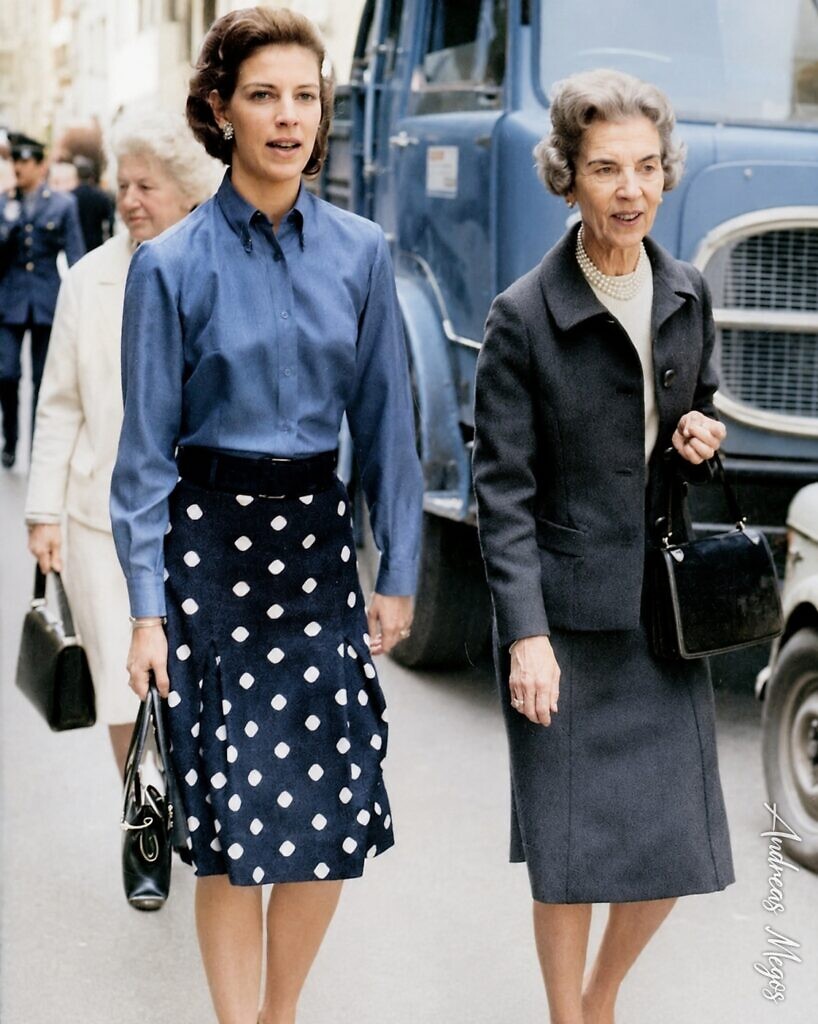
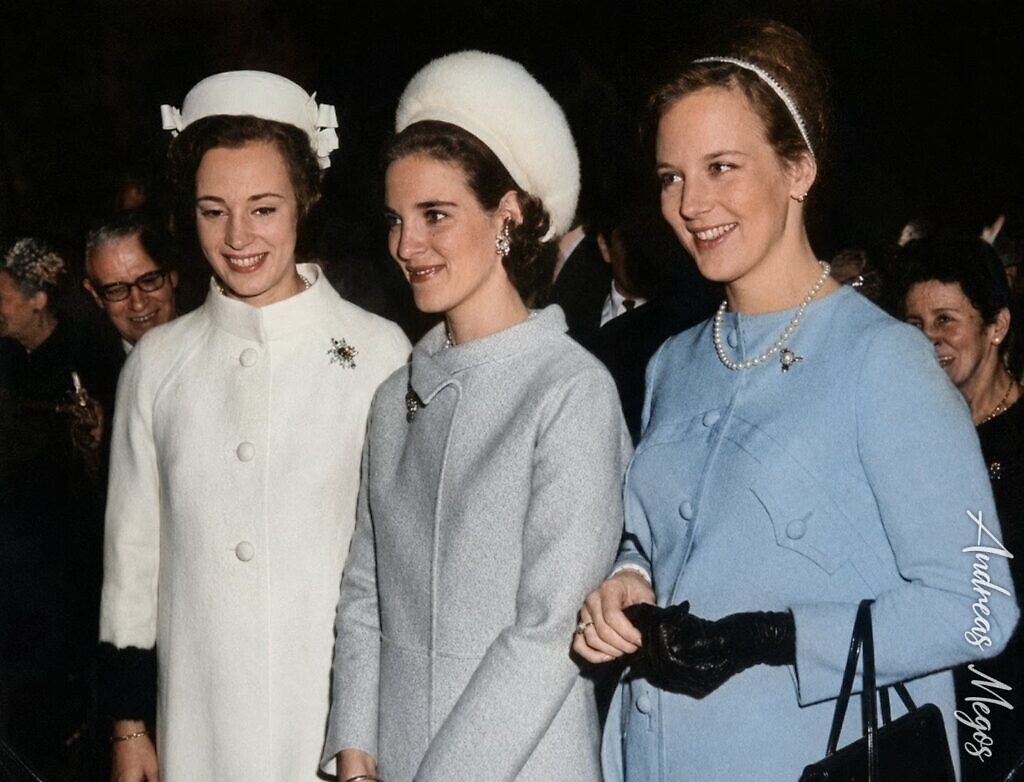
The presence of Anne-Marie’s mother, Queen Ingrid of Denmark, was particularly significant. Their relationship remained close and meaningful, providing the young Queen with an important source of support during the early and most difficult years of her exile. By her side were her two sisters, Princess Benedikte and Princess Margrethe, who in 1972 would ascend the Danish throne as Queen Margrethe II. These family ties proved particularly valuable, as they enabled Anne-Marie to maintain a strong connection with her Danish family and, at the same time, to offer her children a broader family context in which they could grow up with a sense of security and continuity.
From the very early years of their marriage, the lives of King Constantine and Queen Anne-Marie were also linked to a wider circle of Middle Eastern royal families. Among the relationships that stood out were those with the imperial family of the Shah of Persia and the royal family of Jordan. These connections were not confined to official meetings and the ceremonial obligations dictated by their status. Over the years, they developed into personal and friendly ties, within the particularly intimate environment of the European and Middle Eastern dynasties of the time.
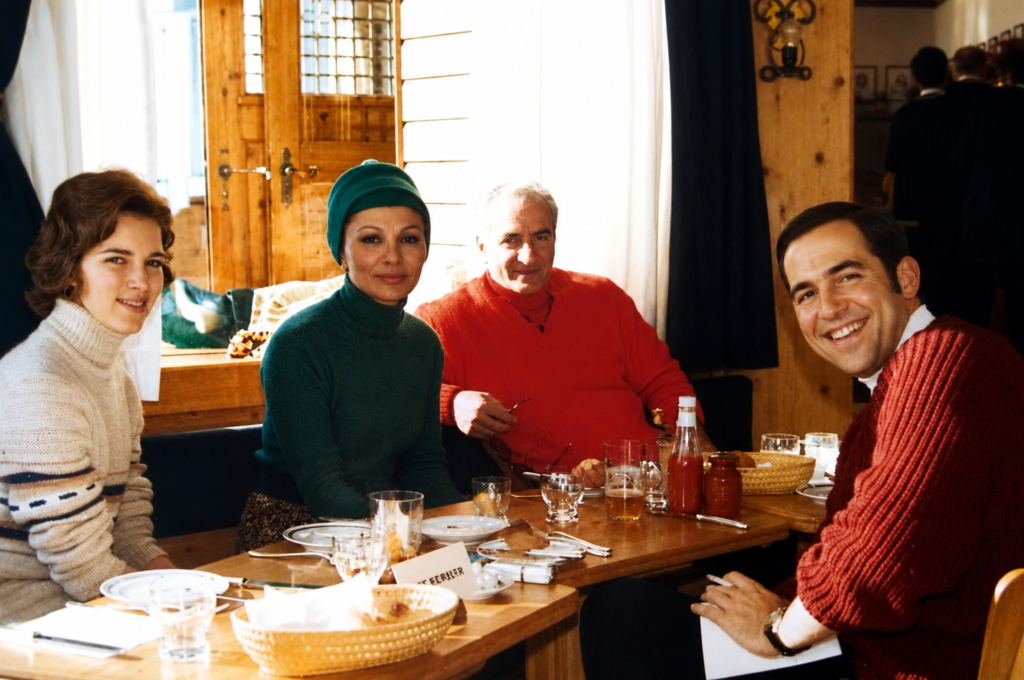
Constantine and Anne-Marie maintained a close relationship with Shah Mohammad Reza Pahlavi and his family, with their joint appearances and meetings forming a defining feature of the two families’ international social life. Greece, Persia and the monarchies of the Middle East were linked at that time through a dense network of family ties, friendships, official visits and social engagements, in which the young Greek king and his wife played an active part.
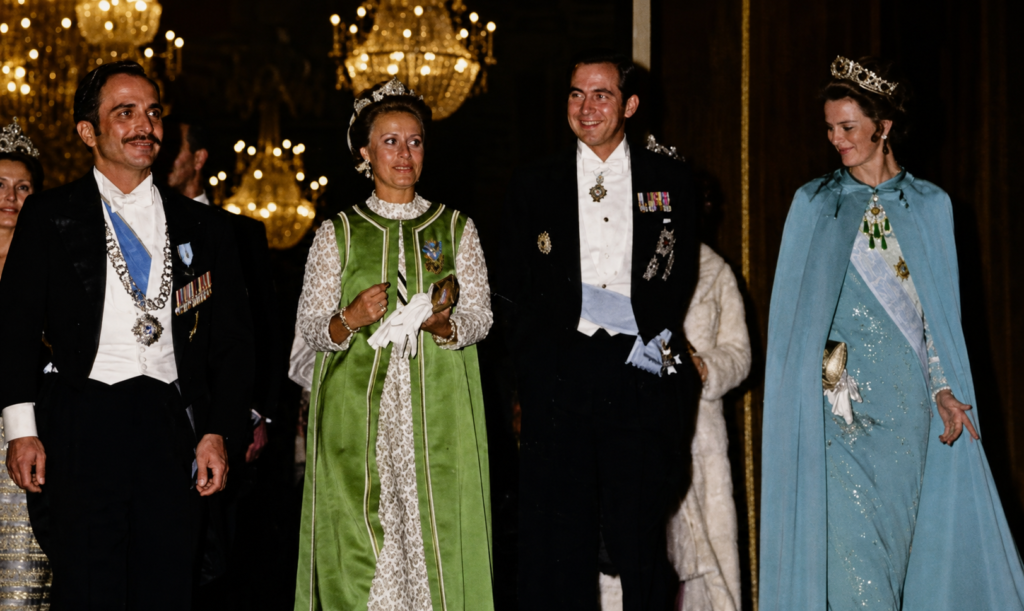
Their relationship with the Jordanian royal family was also particularly close. King Hussein and his family belonged to the same international royal circle as Constantine and Anne-Marie, whilst their meetings often took on a more personal and friendly character. Their joint appearances, visits and social engagements reflected an era in which the younger generations of the royal families had forged bonds amongst themselves that went beyond the narrow confines of formal diplomacy.
Life in Rome lacked the glamour of the palace, but it offered something just as important: more time for the family. The King and Queen took an active part in their children’s daily lives, seeking to instil in them values such as simplicity, responsibility and respect for others. Anne-Marie believed that, despite their privileged background, her children should grow up with an awareness of reality and not in isolation from it. At the same time, King Constantine remained in constant contact with politicians and prominent figures in the international community, closely monitoring developments in Greece. Anne-Marie, by contrast, chose to adopt a more discreet role. This approach was to remain a defining characteristic of hers throughout her life.
In the summer of 1973, the military government of Greece abolished the constitutional monarchy and established a “republic” through a referendum held on 29 July. The process took place, however, under a dictatorship and without the necessary conditions for a free and genuinely democratic expression of the will of the people. The result, therefore, was not recognised as the outcome of an uninfluenced electoral process.
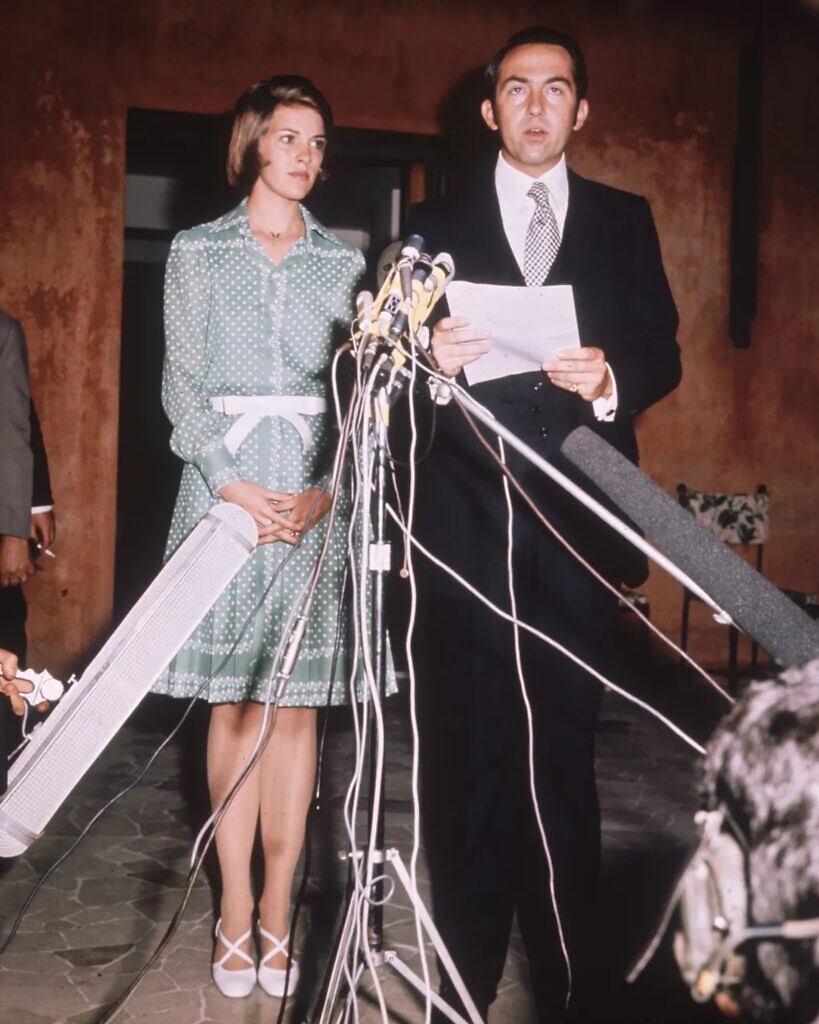
For the royal family, this development was more institutional and symbolic than of immediate practical significance. King Constantine II and his family had already been outside Greece since December 1967. The constitutional change in 1973 sealed, on a political level, a situation that had essentially taken shape since the King’s exile, without, however, marking a new daily reality for the family, since their life had already been relocated abroad.
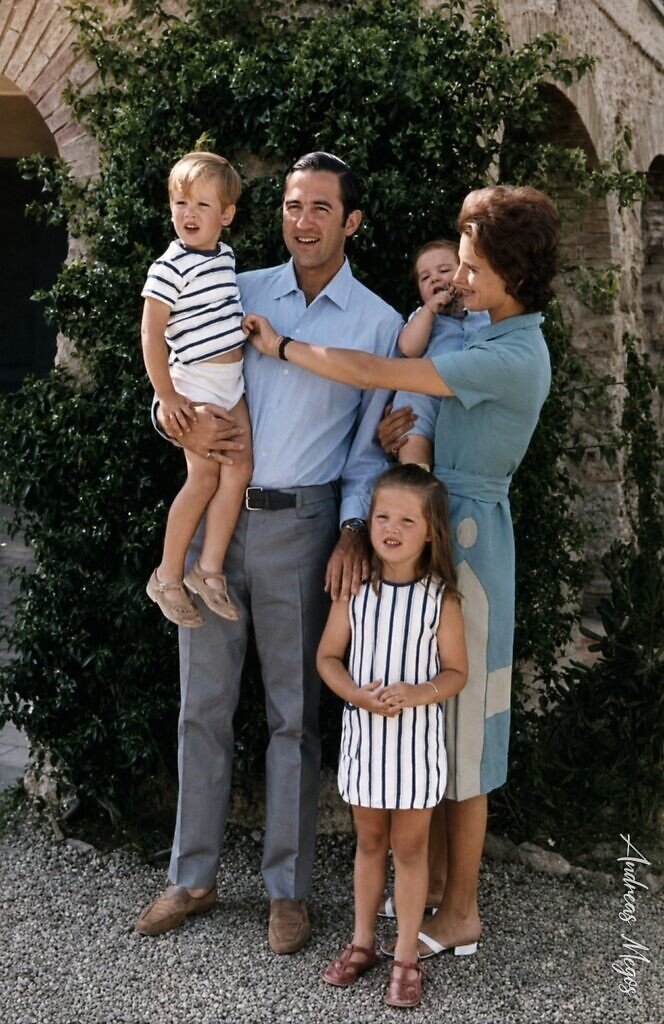
Following the political transition from the dictatorship, Constantine and Anne-Marie relocated from Rome and, along with their children, were hosted by Queen Ingrid, Anne-Marie’s mother, at Amalienborg Palace in Copenhagen. They remained there for approximately a year until the spring of 1974, when they settled first in Chobham, Surrey, in southeastern England, and later in Hampstead, in northern London, where they lived until 2013.
The definitive political change came after the restoration of democracy. On December 8, 1974, Greek society was called upon to decide, through a referendum, on the future of the political system. The majority of citizens chose a republican parliamentary democracy, a decision that brought an end to the constitutional monarchy in Greece.
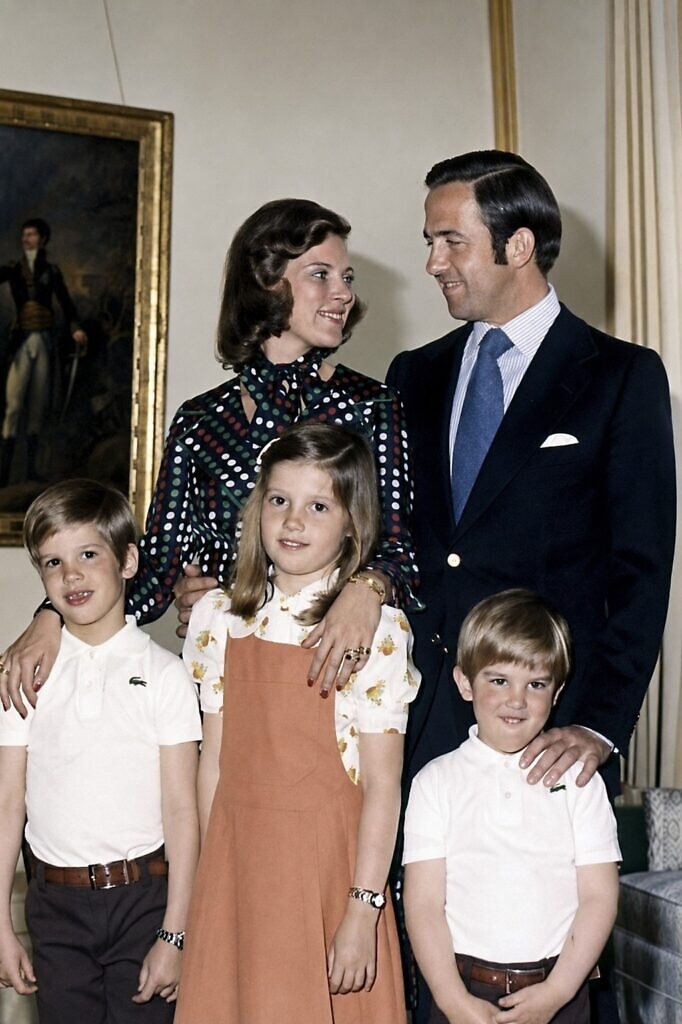
Anne-Marie faced the abolition of the constitutional monarchy with dignity, composure, and discretion, avoiding public confrontations and sharp political stances. For her, the outcome of the referendum signified not only the end of an institution but also the definitive loss of her institutional role as Queen of the Hellenes. Although her life had already taken a course far from Greece, this development undoubtedly held deep personal and emotional significance for her. Anne-Marie had spent the most significant years of her youth in Greece. From her arrival in the country in 1964, through the birth of her children and the years of exile, Greece had become an integral part of her personal history. There she started her family, experienced the first great joys and trials of adult life, and forged bonds that went far beyond the limits of her official role.
That is why the loss of her constitutional status did not mean, for her, the loss of her connection with Greece. The Queen’s institution status may now be a matter of the past, but her personal connection with the country has remained alive. Over the decades, this relationship moved even further away from politics and took on a more deeply personal character, linked to her memories, her family and the years she spent in Greece.
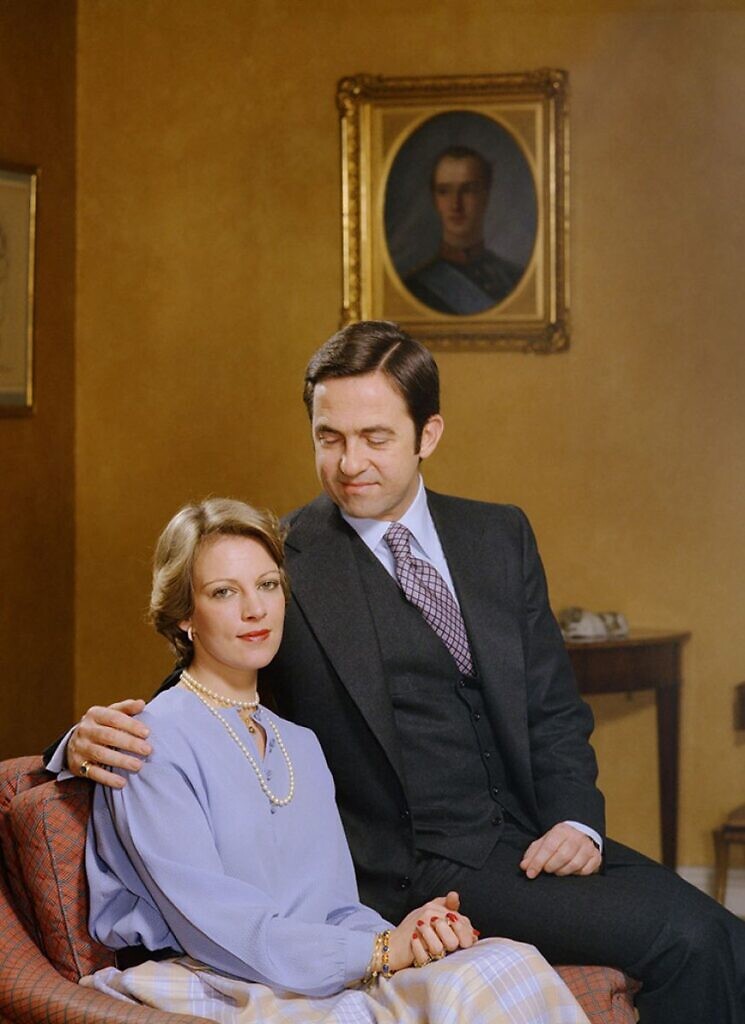
The period from 1967 to 1974 was a life-evolving experience. Through the hardships of exile, Anne-Marie further developed the qualities that would accompany her throughout the rest of her life: patience, self-restraint, discretion, and deep devotion to her family. Her public image gradually shifted from that of a young queen to that of a woman who, regardless of political developments, remained a steadfast pillar of support for her husband and children.
With the end of the first phase of her exile, her life entered a new phase. Greece had permanently changed its form of government, yet her personal connection to the country had not been severed. On the contrary, in the years that followed, it would evolve into a bond based less on her institutional role and more on memory, family, and a deep human connection with the Greek people.
Family, Motherhood, and a New Mission
After the 1974 referendum, which ratified a parliamentary democracy without a monarch in Greece, a historic chapter came to a close for the country. For Queen Anne-Marie, however, a new, equally important chapter was beginning: that of a life away from her institutional role, yet with an undiminished sense of responsibility toward her family, the values she embodied, and the people with whom she continued to maintain ties.
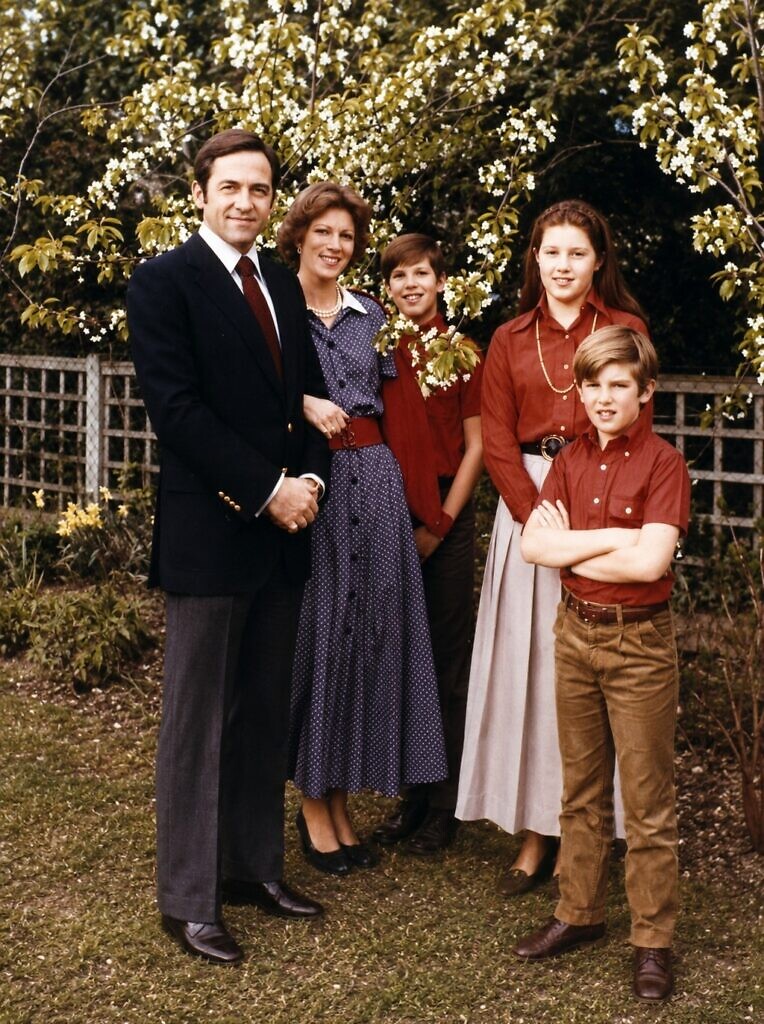
As the years went by, it became clear that the political situation in Greece did not allow for a swift return. After remaining in Rome for six years (1967–1973) and residing in Copenhagen for about a year (1973–1974), the family settled initially in Chobham, in the county of Surrey, in south-east England, and approximately a year later in London, where they would make their permanent home for many decades. The British capital offered the children better educational opportunities and greater stability, whilst also facilitating the King’s international travels. Settling in London did not simply mean a change of residence. It meant the creation of a new daily routine, free from formal state obligations but filled with the demands of a large family. There, Anne-Marie devoted herself almost entirely to bringing up her children, striving to offer them as balanced a life as possible.
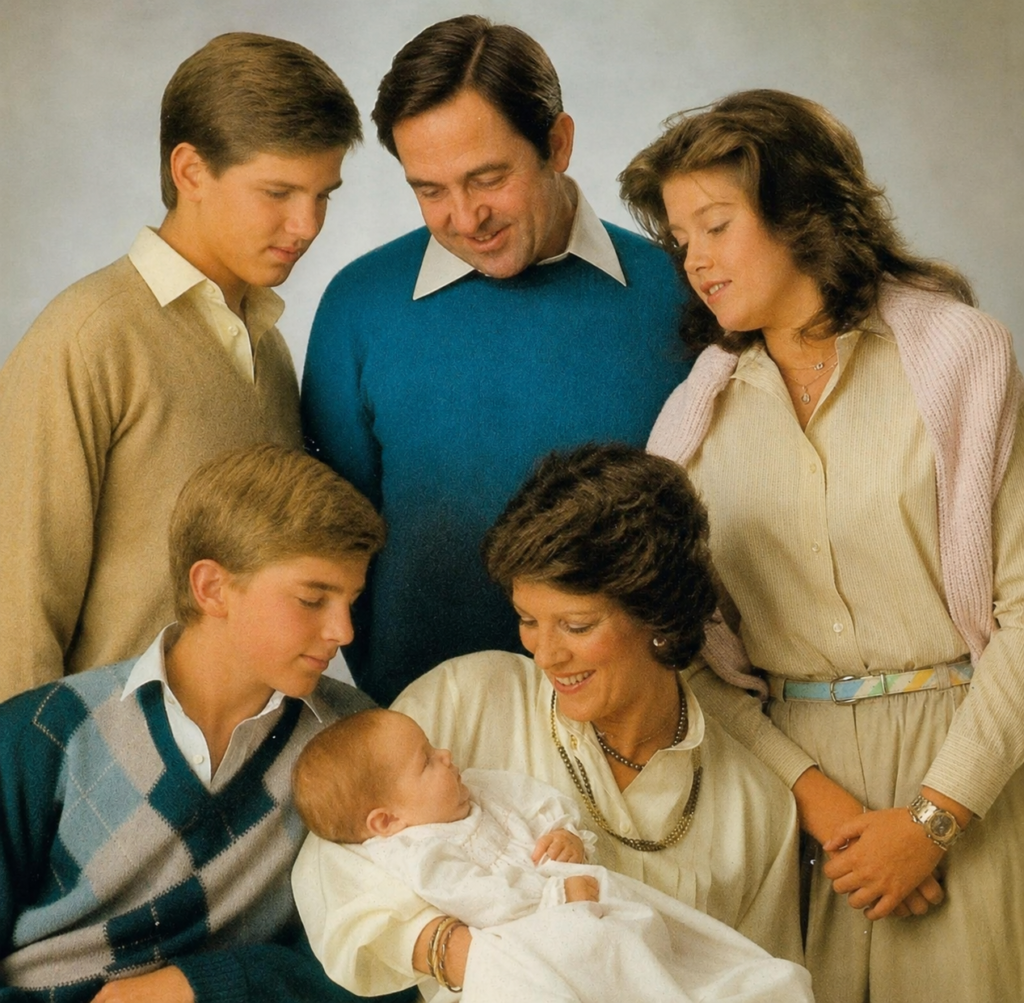
Following the births of Alexia, Pavlos and Nikolaos, Constantine and Anne-Marie’s family continued to grow with the arrival of Princess Theodora in 1983 and, three years later, Prince Philippos in 1986. With the two youngest children entering a different phase of family life, Anne-Marie devoted herself wholeheartedly to maintaining strong bonds between the five siblings, despite the significant age difference between them. Despite the differences in age, personality and the paths each of the five children would later follow, Anne-Marie always encouraged closeness amongst them and the maintenance of a meaningful sibling bond. For her, the family was a place where traditions could coexist with a modern and simple everyday life, far removed from the formality that often accompanied their public roles.
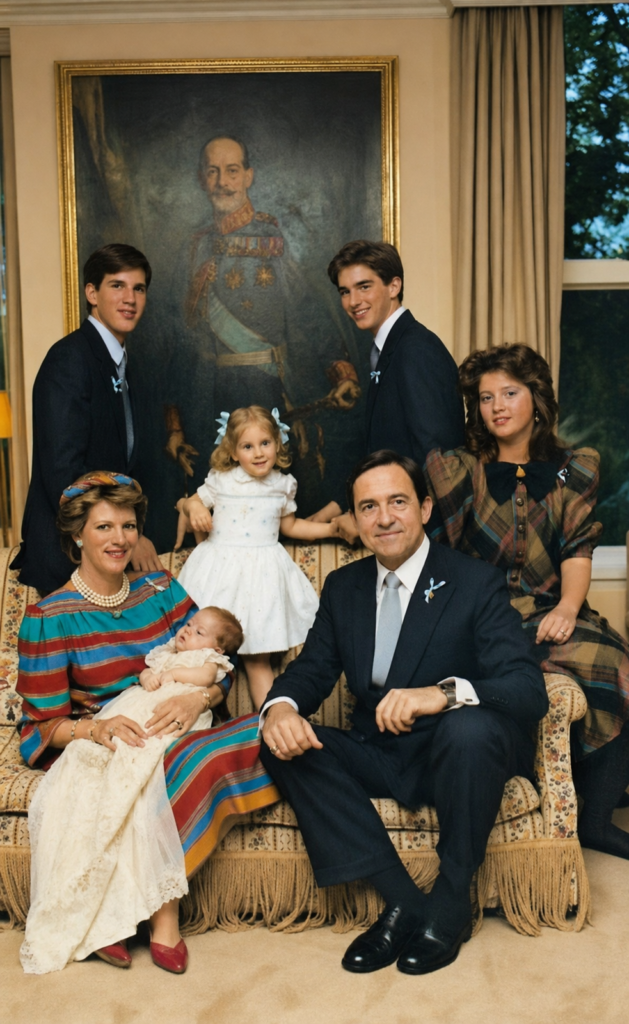
Thus, Anne-Marie did not confine herself to the role of a mother who took care of her children’s day-to-day needs, but made a substantial contribution to shaping a family culture based on unity, devotion and mutual support. The strong bonds that the five siblings maintain to this day are, to a large extent, one of the most enduring legacies of the family life created by Constantine and Anne-Marie.
At home, Anne-Marie established a daily routine that, as far as possible, differed from the typical image of a royal family, where a sense of everyday family life prevailed. Anne-Marie insisted on being personally involved in her children’s education and upbringing, monitoring their progress at school and being there for them at key moments in their development. She believed that the greatest challenge was to ensure her children grew up knowing their family’s history, without, however, feeling confined by it. She instilled in them a love for Greece, Denmark and their European heritage, whilst at the same time encouraging them to develop their own personalities and follow their own choices.
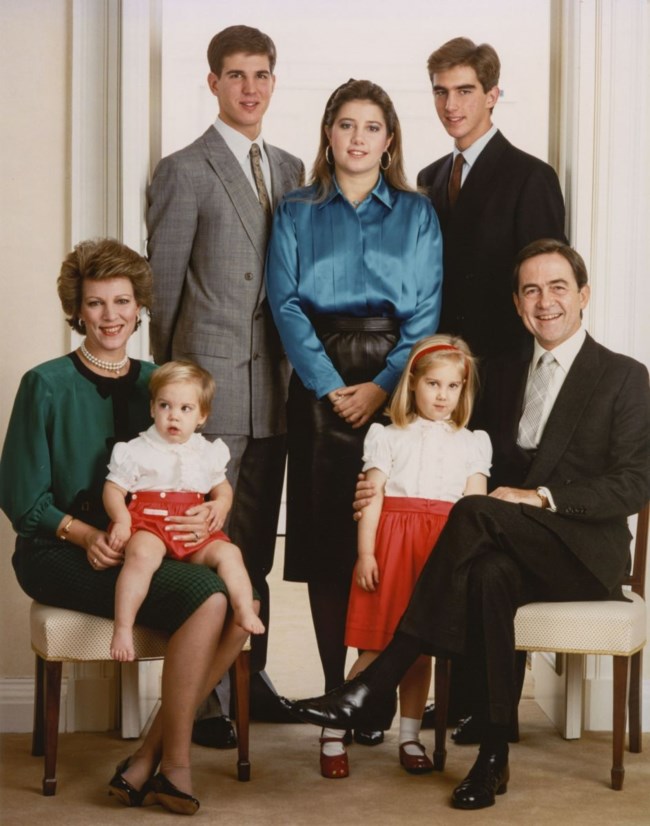
The Greek language held a special place in the family’s daily life, serving as one of the most important links connecting the children to Greece. Although the five children grew up mainly outside Greece and spent much of their childhood and teenage years in different countries, Anne-Marie and Constantine made sure to keep their Greek education lively and to pass on to them a knowledge of Greek history, culture and traditions. The Greek language was a constant presence in family life and served as a daily link to their father’s homeland. At the same time, the children became familiar from an early age with significant moments in Greek history and the country’s culture, so that their Greek heritage would not merely be an element of their family identity, but a living and experienced legacy.
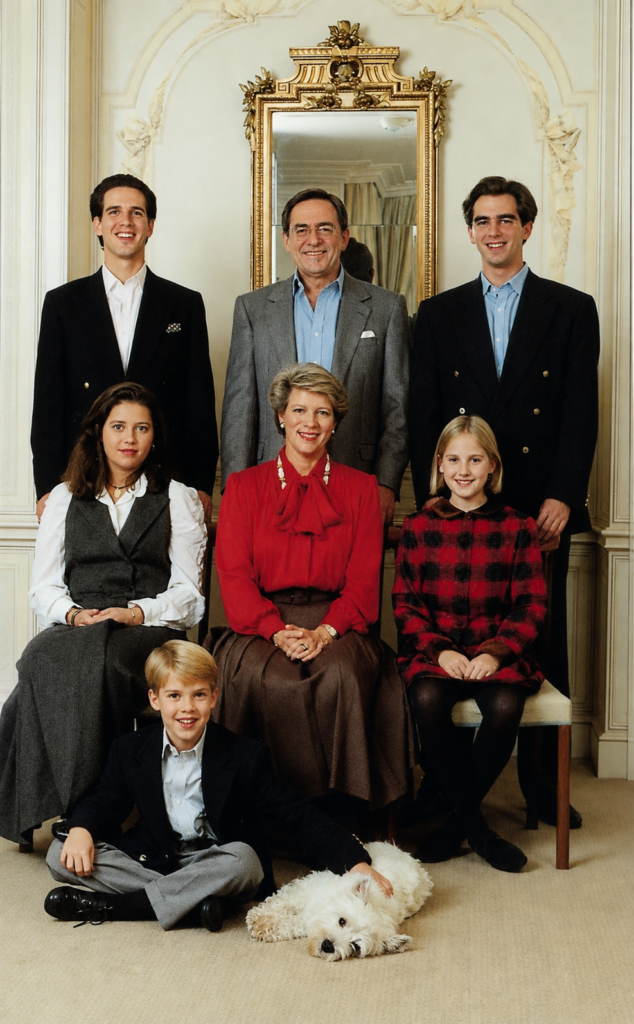
For Anne-Marie, passing on this knowledge to her children was of particular importance. Having grown up in Denmark and joined the Greek royal family at a young age, she knew from personal experience the importance of cultural adaptation and of preserving one’s roots. Thus, within the family environment she created together with Constantine, the Greek language, history, tradition and faith served as constant points of reference, keeping the children’s bond with Greece alive, regardless of where they grew up.
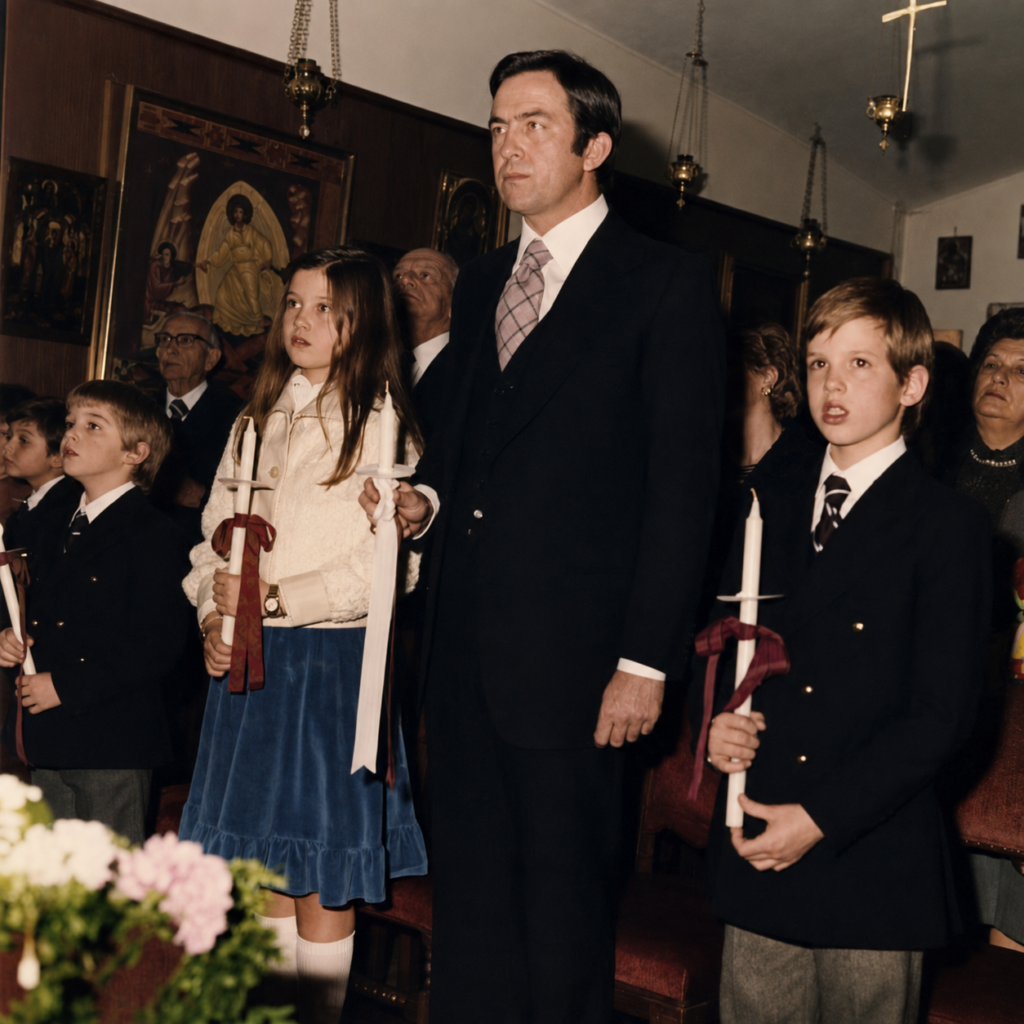
Greek national and religious festivities, family customs and traditions were kept lively in the family’s daily life, even during the years when they were far from Greece. The Orthodox faith held a special place, serving as a constant point of reference in family life and playing a vital role in maintaining the children’s cultural and spiritual connection with Greece and Greek tradition. Through festivals, religious ceremonies and family customs, Greek identity remained present and was experienced as an integral part of their family heritage.
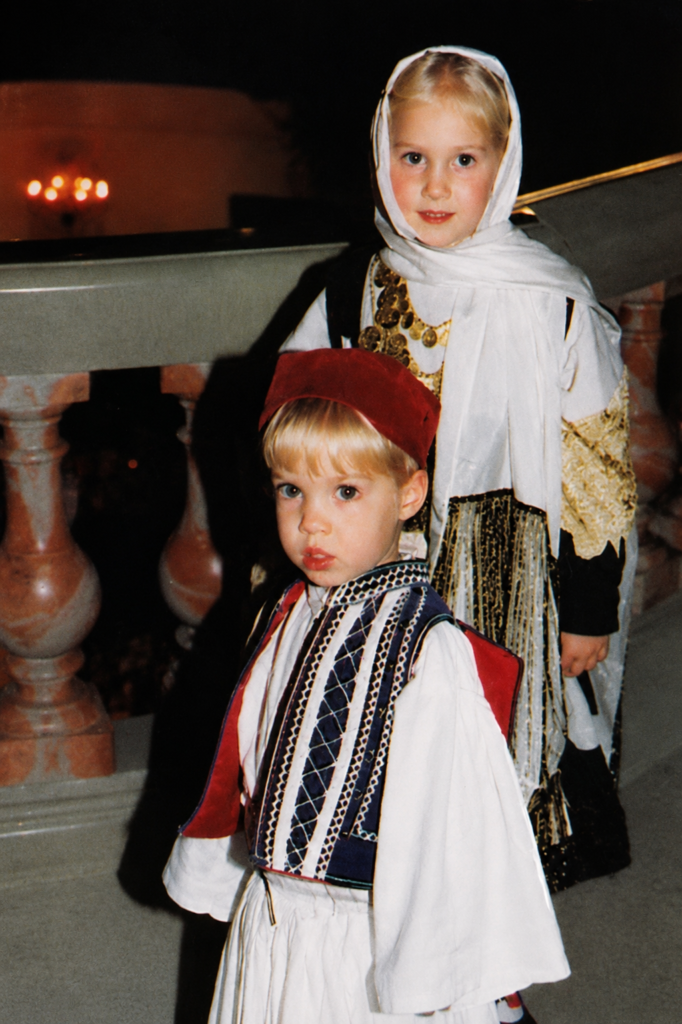
The royal couple placed particular emphasis on maintaining their children’s ties with Greece and their Greek heritage, even during the years the family spent in London. At the same time, Constantine and Anne-Marie supported initiatives aimed at the Greek diaspora and helped to preserve the Greek language, culture and traditions amongst younger generations.
Among the most significant initiatives associated with their presence in the British capital was the founding of the Hellenic College of London, which was established in 1980 under the patronage of King Constantine and Queen Anne-Marie. The school’s primary aim was to provide the children of the Greek community with a high-quality education, combining the British curriculum with the systematic teaching of the Greek language and an introduction to Greek history, culture and the Orthodox tradition. This initiative reflected, more broadly, the couple’s desire to keep alive the ties between their family and the Greek diaspora and Greece. Education was, after all, one of the most important ways in which the Greek language, historical memory and cultural identity could be passed on from generation to generation, particularly in an environment where the children were growing up far from Greece.
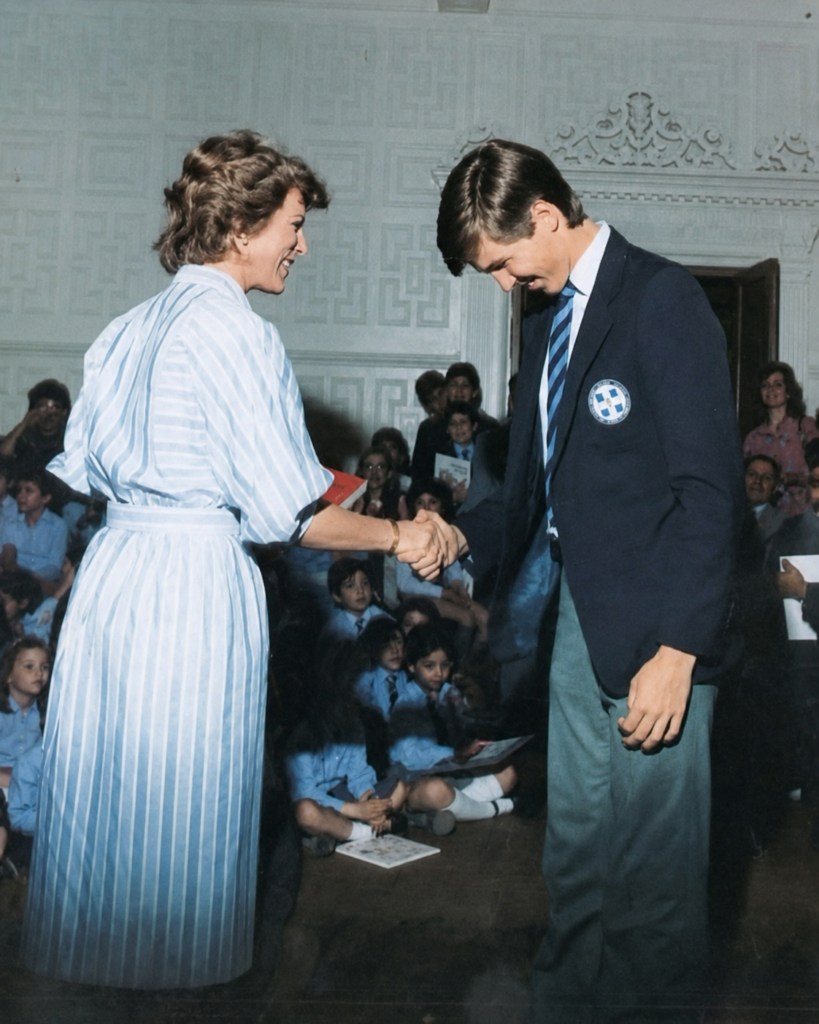
It was, therefore, no coincidence that the royal couple’s children also attended the Hellenic College. This choice was a tangible expression of Constantine and Anne-Marie’s confidence in the educational project, but also an indication of their personal connection to the endeavour to create a stable educational framework for the children of the Greek community.
The Hellenic College of London was not merely an educational institution. For the Greek community in the British capital, it served as a vital link with Greece, offering younger generations the opportunity to keep the Greek language, their historical memory, and the traditions and values of their family and homeland alive. At a time when many Greek families had now settled permanently in the United Kingdom, preserving these elements took on particular significance.
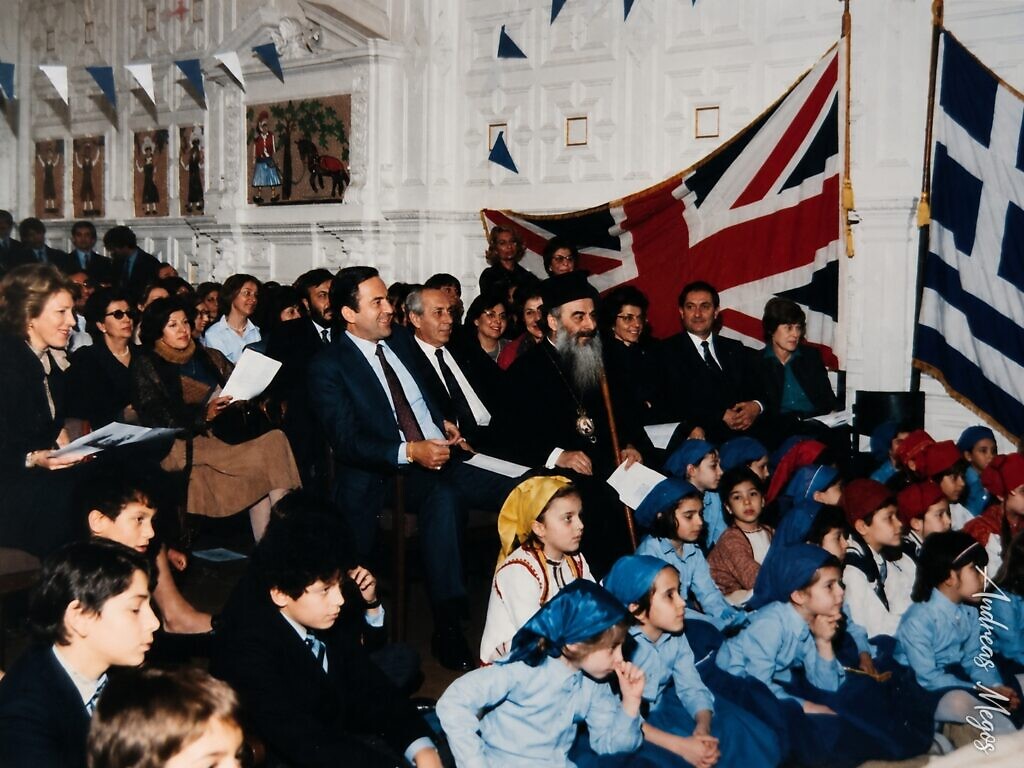
The support given by Constantine and Anne-Marie to this particular project is one of the defining initiatives of their long-standing presence in the United Kingdom. Far from taking on a highly public or institutional role, their contribution was of a more discreet nature, with an emphasis on Greek education, the community and the preservation of the diaspora’s cultural ties. The Hellenic College continued to operate for around a quarter of a century, until 2005, leaving its own mark on the Greek community in London. Its history formed part of a wider effort to keep the Greek language and cultural identity alive for future generations of Greeks in the diaspora.
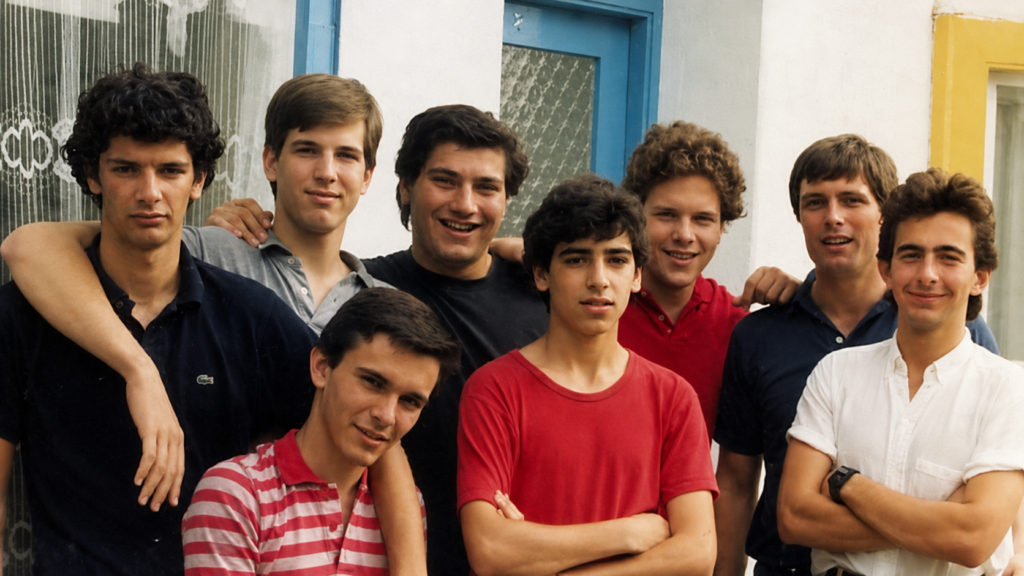
At the same time, Anne-Marie did not withdraw from public service. Although she no longer held public office, she played an active role in charitable initiatives, educational institutions and social welfare organisations. With a particular sensitivity towards children and young people, she supported programmes relating to education, health and social inclusion.
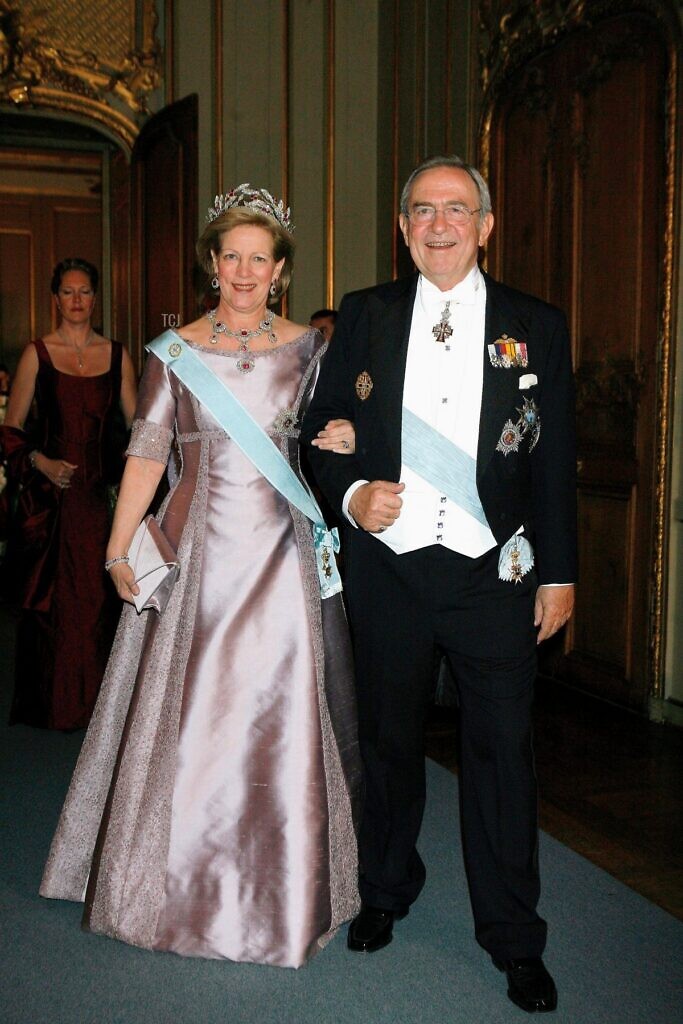
Throughout the 1980s and 1990s, her appearances at international royal events remained frequent. As a member of the wider European royal family, she maintained close ties with the royal courts of Denmark, Spain, Norway, Sweden and the United Kingdom. Her presence was always characterised by discretion and dignity, without any desire for personal prominence.
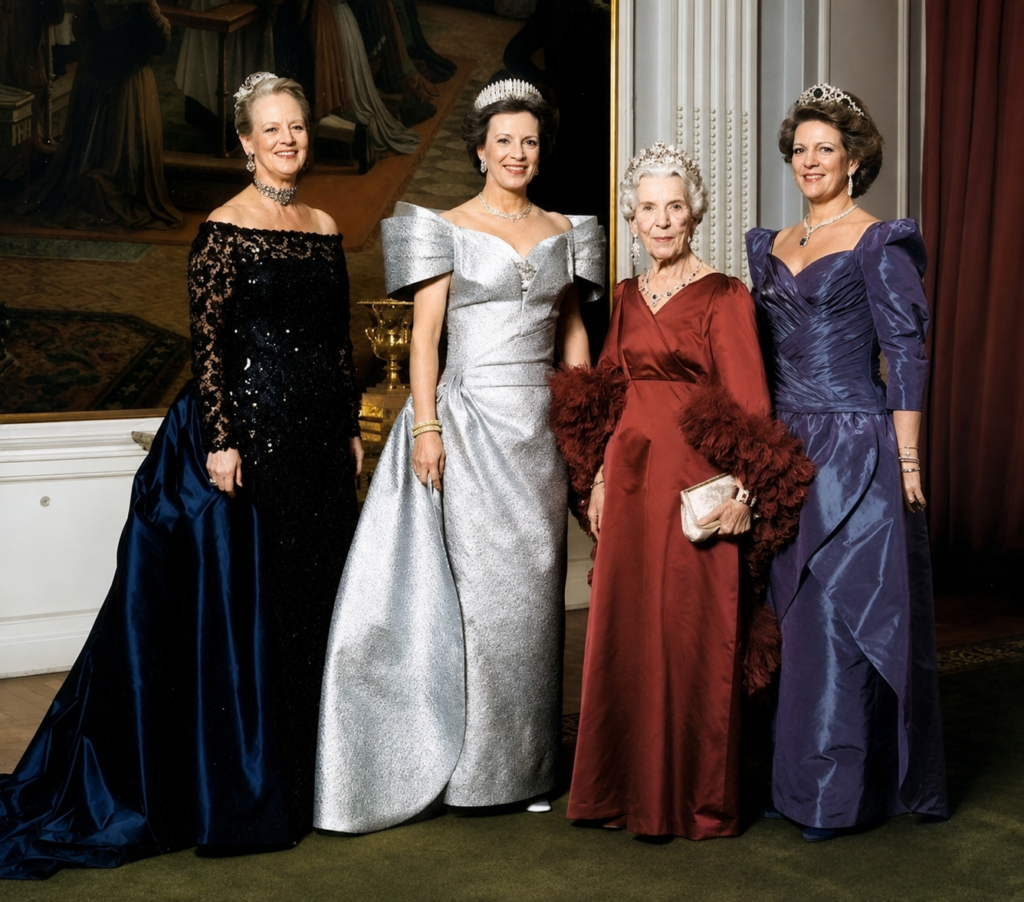
Her relationship with her native country, Denmark, was also a particularly special one. She remained closely connected to her sisters, Queen Margrethe II and Princess Benedikte, and took part in the important family and state ceremonies of the Danish royal family. At the same time, however, she never ceased to regard Greece as an integral part of her identity.
These decades were also marked by difficult times. Her long absence from Greece, the debates surrounding the royal family’s property issues and the ongoing public controversy over the historical role of the monarchy often created a tense atmosphere. Anne-Marie, however, remained consistent in her choice to avoid tension and not to respond publicly to controversies.
A defining feature of her character was her discreet support for her husband. Constantine II continued to be frequently at the centre of public attention, yet Anne-Marie preferred to act as a steadfast pillar of the family, away from the spotlight. Her presence was instrumental in maintaining the family’s cohesion during the decades of exile.
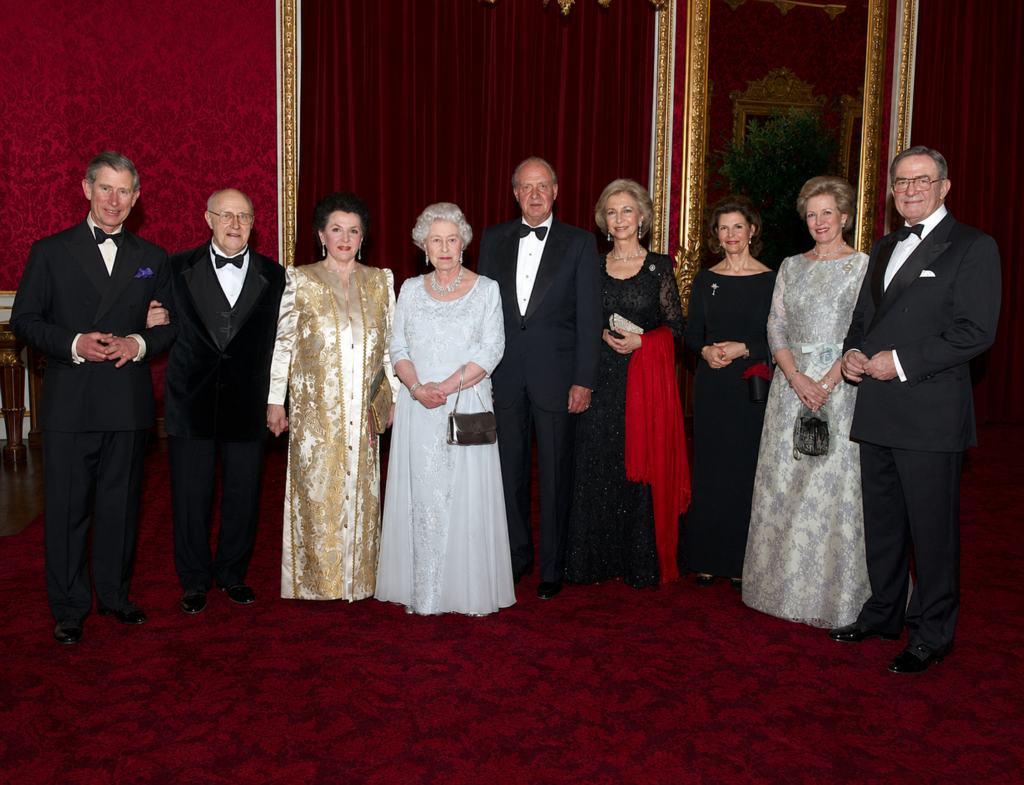
As the children reached adulthood, the Queen encouraged them to gain an international education, to work, to travel and to forge their own paths. This approach reflected a modern view of the role of members of a royal family, adapted to the demands of contemporary European society.
By the mid-1990s, the family’s life had begun to stabilise. The children were coming of age, public tension surrounding the Greek constitutional issue had largely subsided, and the family’s international activities were taking place in a different European context following the end of the Cold War.
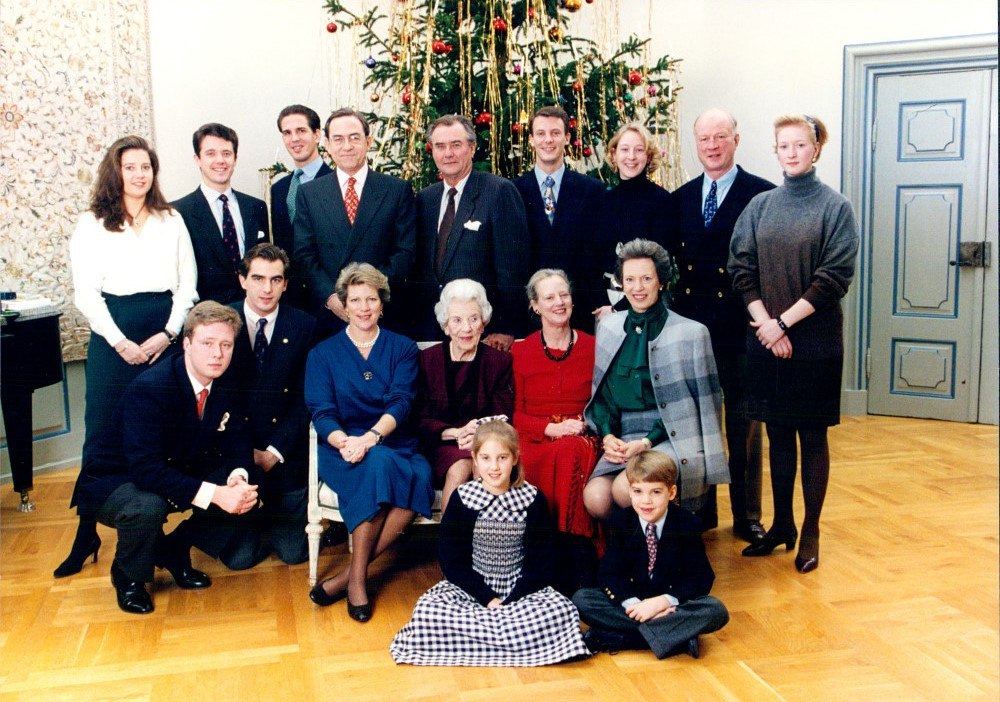
Looking back over those two decades, it becomes clear that Anne-Marie’s most significant contribution was not institutional but personal. She managed to turn the loss of her public position into a new mission: building a united family, maintaining dignity in the face of adversity, and instilling values that would guide her children throughout their lives.
This period shaped the image that the public holds of Anne-Marie today. Not only as the Queen of the Hellenes, but as a woman who faced the great upheavals of her life without bitterness, choosing the path of composure, family devotion and discreet service.
Social contribution, a discreet public presence and ties with Greece
If there is one element that has consistently characterised Queen Anne-Mariaes public life, it is her choice to link her role to social contribution rather than to public controversy. Even after her family settled abroad, she continued to view her position as a responsibility towards people, and particularly towards children, young people and vulnerable social groups.
From her very first years in Greece, she had shown a particular interest in health, child protection and social welfare. Her visits to hospitals, children’s care homes, schools and charitable organisations were not merely symbolic appearances. She sought to talk to people, to find out about their needs and to gain a personal insight into the problems they faced.
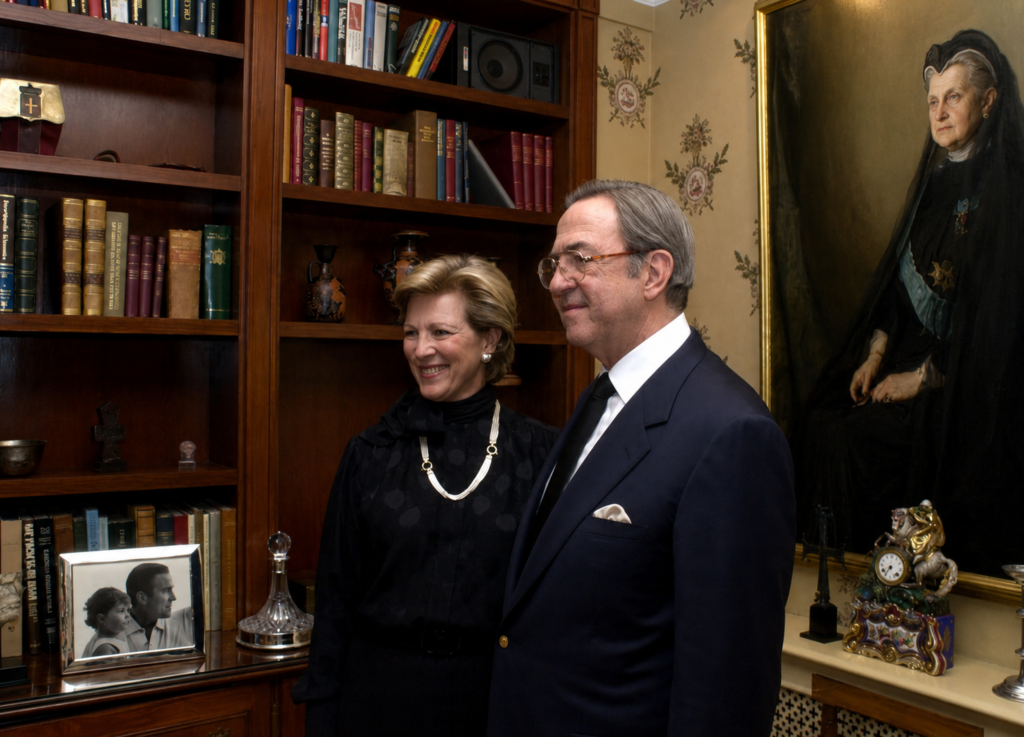
This stance remained unchanged throughout her years in exile. Although she no longer represented a state, she continued to take part in social initiatives and to support organisations engaged in educational, humanitarian and charitable work. True to the philosophy she had learnt from her mother, Queen Ingrid of Denmark, she believed that the true value of a public presence lay in giving without seeking publicity.
Education always held a special place in her activities. She believed that education is not only a means of acquiring knowledge but also of developing character. For this very reason, she took part in events, supported educational initiatives and encouraged young people to develop their abilities through knowledge, sport and culture.
At the same time, she remained closely connected to the world of sport. Her personal passion for sailing, swimming and outdoor activities, which had been nurtured since her childhood in Denmark, proved to be a common point of reference with King Constantine. She herself believed that sport fosters self-discipline, team spirit and respect for one’s opponent — values she considered fundamental to the development of young people.
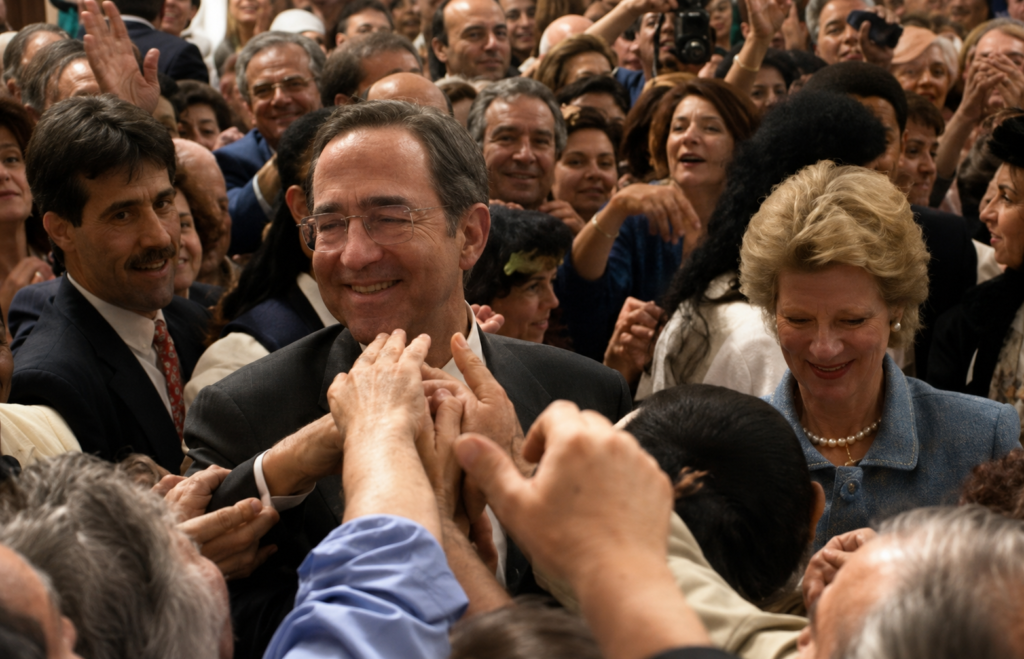
Her relationship with the Greek diaspora was also particularly close. At every opportunity, she would meet with Greek communities abroad, take part in cultural events and keep in close contact with people who, like herself, lived far from Greece without having lost their connection to it. These encounters were often deeply emotional, as they served as a reminder that ties to one’s homeland are determined not only by one’s place of residence but also by memory, language and culture.
Greece remained ever-present in her daily life. The Greek language was spoken within the family, major religious festivals were observed in accordance with the Orthodox Christian tradition, and her children grew up familiar with the country’s history and culture. For Anne-Marie, her children’s Greek identity was not merely a formal marker of their origins but a living part of their personalities.
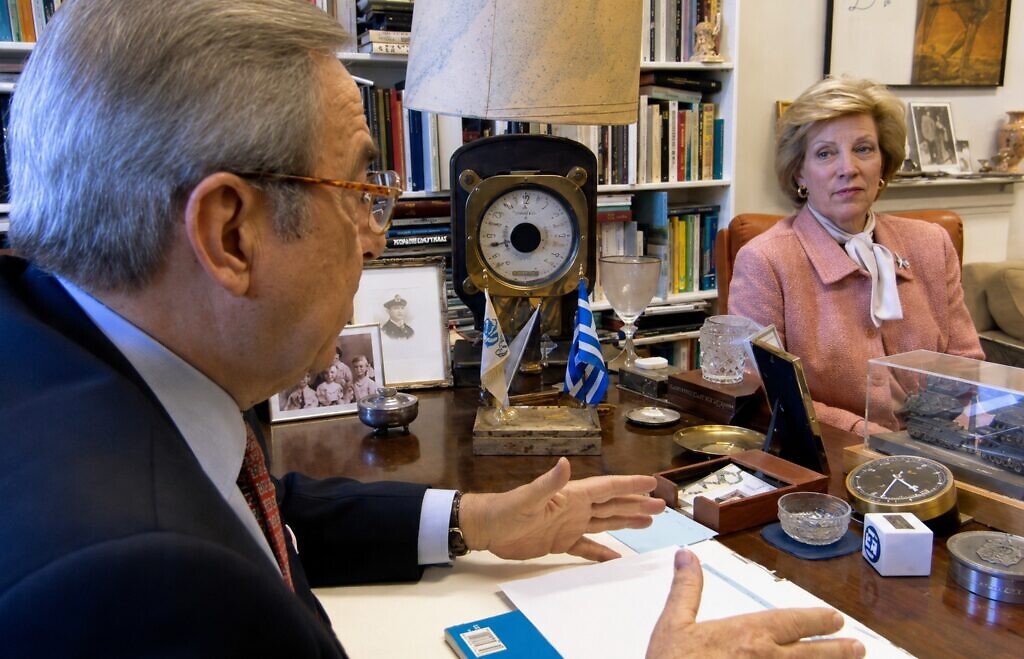
At the same time, she continued to visit Greece whenever circumstances allowed, particularly after relations between the royal family and the Greek state had normalised. These visits were mainly of a personal and family nature, but they always attracted considerable public interest. On all such occasions, Anne-Marie chose to conduct herself with discretion.
One of the most characteristic features of her public presence is her consistency in the way she understands the concept of dignity. At a time when media and social media exposure dominates public life, she chose a different path. She rarely gave interviews, avoided personal revelations and preferred to let her actions speak for themselves rather than her words.
Her close colleagues often highlight her organisational skills, her consistency and her simplicity. Despite her international renown, she never ceased to take an interest in the small details of everyday life, from family cohesion to personal contact with people in need of support.
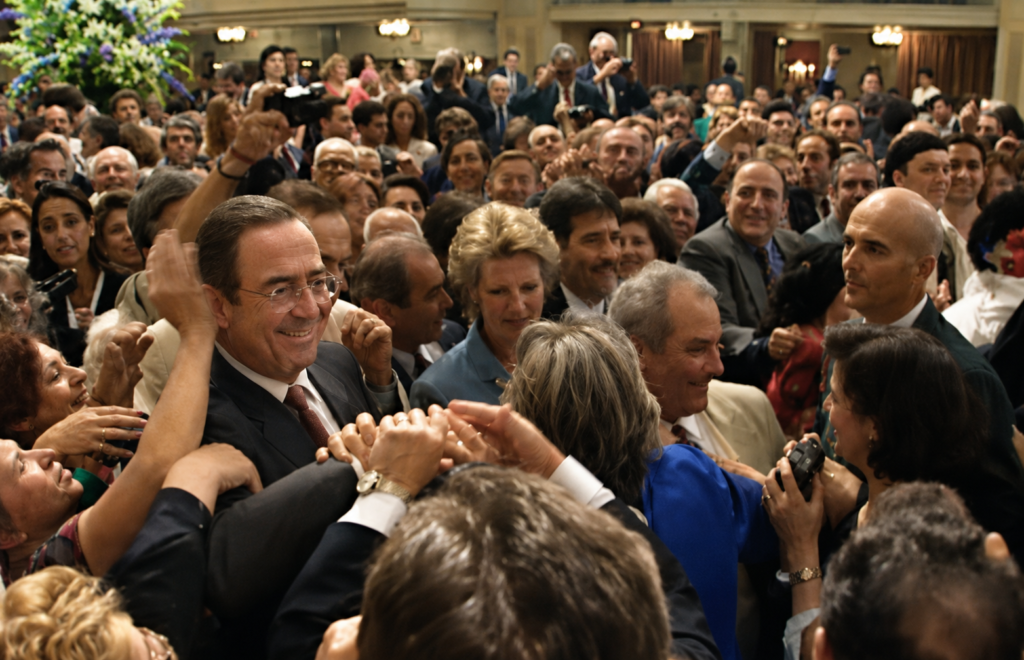
Undoubtedly, her greatest social contribution cannot be measured solely by the organisations or initiatives in which she was involved. It lies primarily in the example she set. Her discretion, her composure in the face of adversity, her devotion to her family and her unwavering belief in the value of service have created a public image that transcends the confines of an institutional role.
As the decades passed, Anne-Marie evolved from the youngest queen in Europe into one of the most respected figures amongst European royal families. This recognition was not due to political influence or institutional authority, but to the personal consistency with which she upheld her principles.
Her social engagement was always an extension of her personality. For Anne-Marie, giving was not a public duty; it was a way of life. And perhaps this is the most important element of her legacy: the conviction that true nobility is not measured by titles, but by one’s willingness to serve one’s fellow human beings with respect, consistency and discretion.
Her return to Greece, her reconciliation with the past, and her final years with King Constantine
No story of exile remains unchanged over time. After almost three decades away from Greece, Queen Anne-Marie’s life gradually began to enter a new phase, in which confrontation gave way to dialogue, distance to a gradual rapprochement, and history to memory. For her, Greece never ceased to be a point of reference. Despite the fact that the family lived permanently abroad, the Greek language, traditions, Orthodoxy and keeping up to date with events in the country remained an integral part of her daily life.
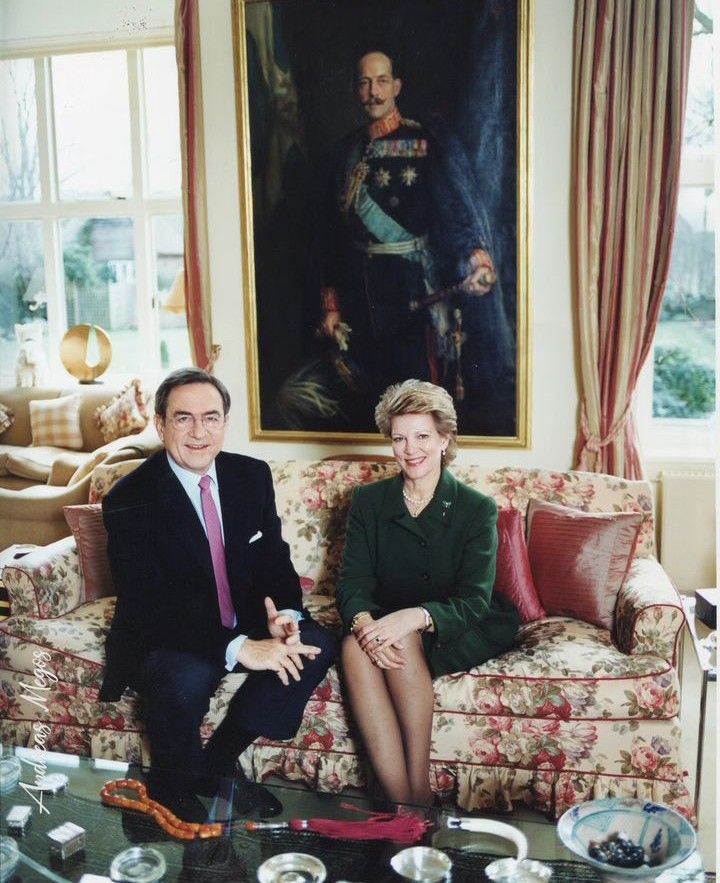
During the 1990s, a new chapter began in the royal family’s relations with the Greek state. This period was not without its difficulties. Issues concerning the family’s assets, as well as debates surrounding the legal and historical dimensions of the institution of the monarchy, occupied the Greek courts and the European courts for a number of years. Anne-Marie, however, remained true to her decision not to turn these disputes into a personal public confrontation.
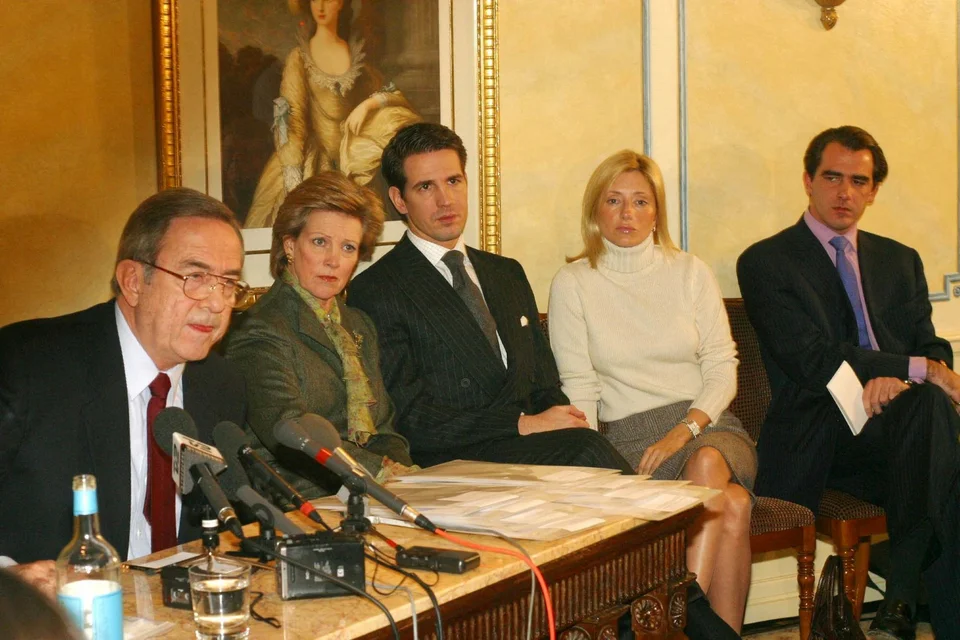
A characteristic feature of her approach was that she preferred to leave matters relating to institutional and legal affairs to her husband, whilst she herself maintained a more discreet role. She continued to accompany King Constantine on their international engagements, but avoided taking a public stance on political issues.
During those years, the family grew and changed. The children completed their studies, forged their own professional and personal paths, and gradually started families of their own. For Anne-Marie, the transition to the role of grandmother has been one of the greatest joys of her life. Those who know her have often remarked that she particularly enjoys spending time with her grandchildren, treating them with the same tenderness and simplicity that always characterised her relationship with her own children.
The first visits to Greece after 1967
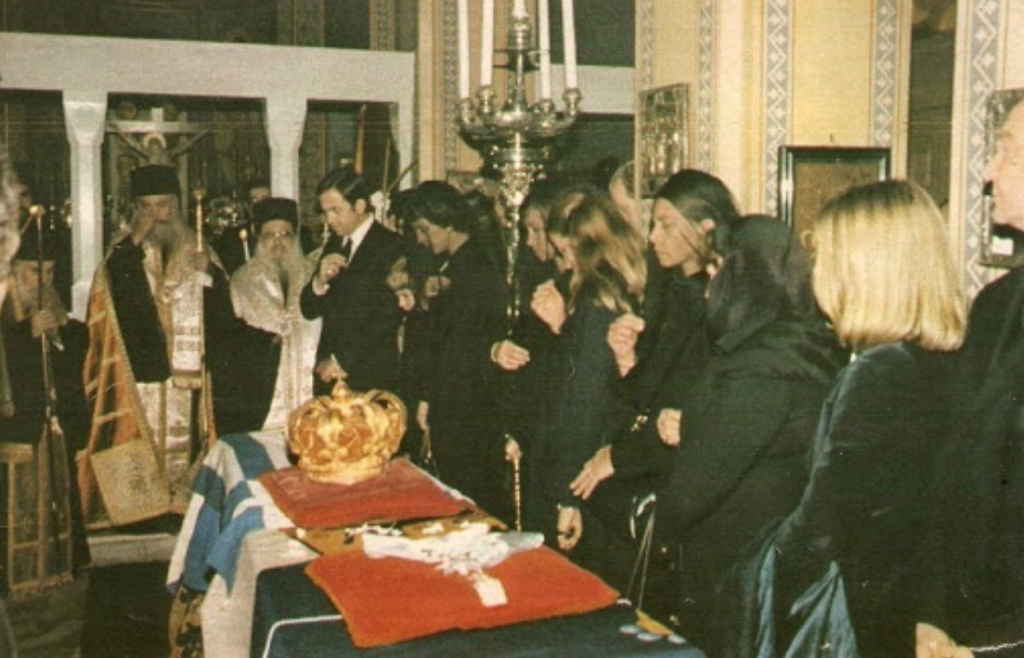
In February 1981, the royal family returned to Greece after 14 years, on a visit lasting just a few hours to attend the funeral of Queen Mother Frederica at the Royal Cemetery of Tatoi. The Queen had died suddenly in Madrid of a heart attack. Although security forces had been deployed around Tatoi to prevent the public from attending the funeral, thousands of people managed to gather in the pine forest of Palaiokastro to greet the family and pay their final respects to Queen Frederica. The government of Georgios Rallis permitted the royal family to enter the country for just a few hours (on the day itself), on condition that they leave immediately after the burial at Tatoi, effectively prohibiting any overnight stay or further stay in the country.
The return to Greece and the eventful visit of 1993
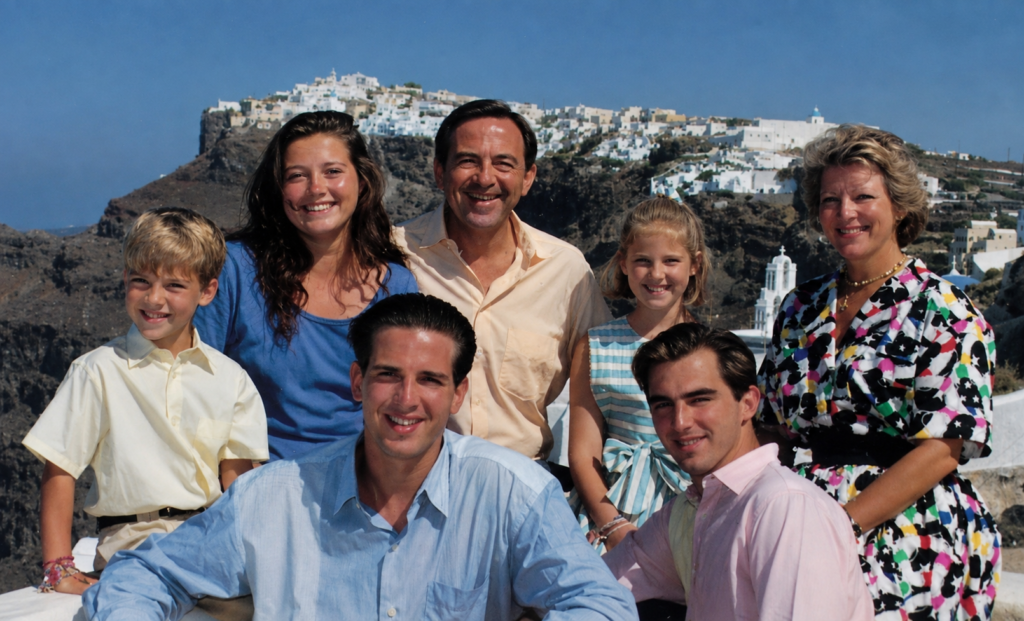
In the summer of 1993, after almost a quarter of a century away from Greece, King Constantine and Queen Anne-Marie returned to the country with their five children for a private visit lasting approximately two weeks. This return held particular emotional significance for the whole family, as it was the first time their three youngest children, Nikolaos, Theodora and Philippos, had been able to experience Greece as part of a genuine family visit. Queen Anne-Marie herself later described the experience as particularly moving, noting that, wherever they went, people would come out to greet them.
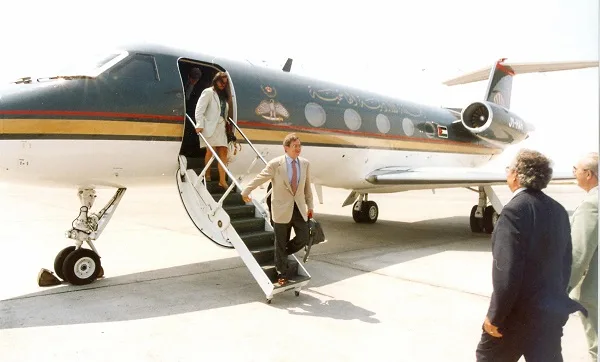
The arrival took place on 10 August 1993 in Thessaloniki. The visit had been planned as a private one and, given the circumstances at the time, the family were to travel mainly by yacht, avoiding crowded areas and public gatherings. However, from the very first days it became clear that the family’s presence in Greece could not easily remain a strictly private affair.
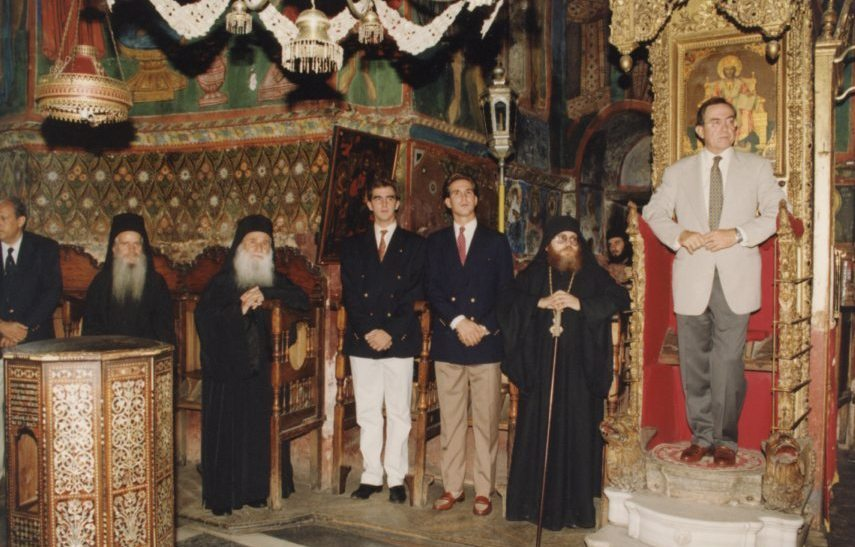
The first significant destination was Mount Athos. King Constantine, accompanied by his two eldest sons, Pavlos and Nikolaos, visited the Holy Monastery of Iveron, where he attended Vespers and met with the abbot and fellow monks. The welcome was particularly warm. For Constantine, the visit also had a strong religious and family dimension, as his connection with Mount Athos had been maintained throughout his years in exile. From Mount Athos, the royal family continued on to Florina, where their arrival took on a clearly significant dimension, and the gathering of residents who rushed to welcome them demonstrated that their presence could still elicit a strong popular response. The welcome she received at various points along the way showed that her presence continued to have a powerful symbolic and emotional impact.
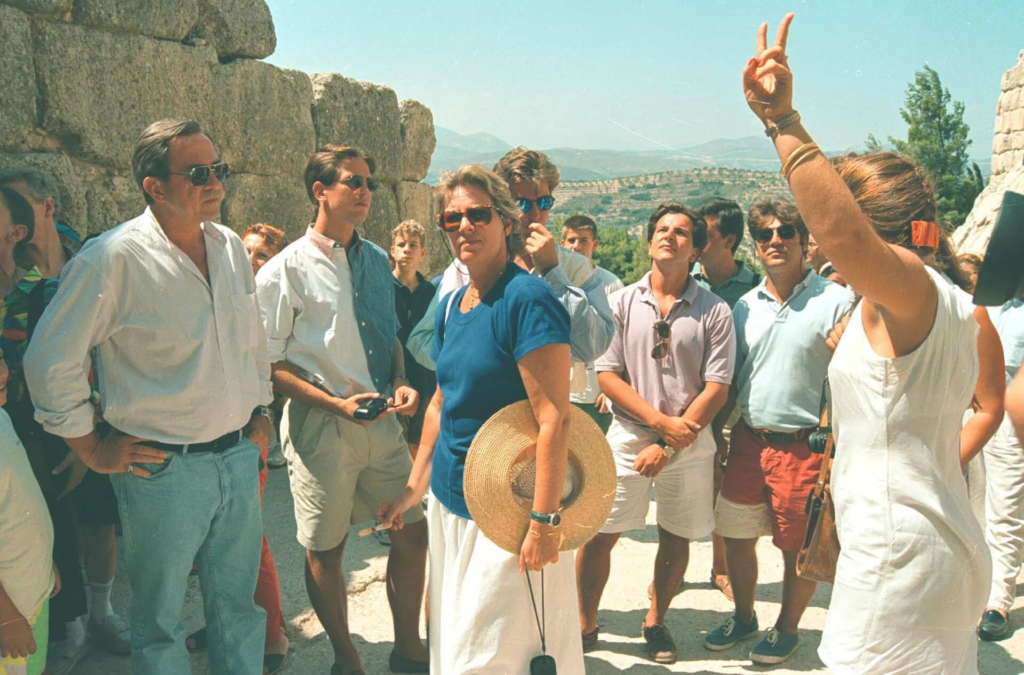
The family continued their journey, visiting parts of Argolis, including Mycenae and Tolo, as well as islands in the Aegean and Spetses. The cruise along the Greek coastline allowed the family to be back in Greece without every move they made turning into an official public appearance. At the same time, however, their presence attracted considerable interest from the press and the public.
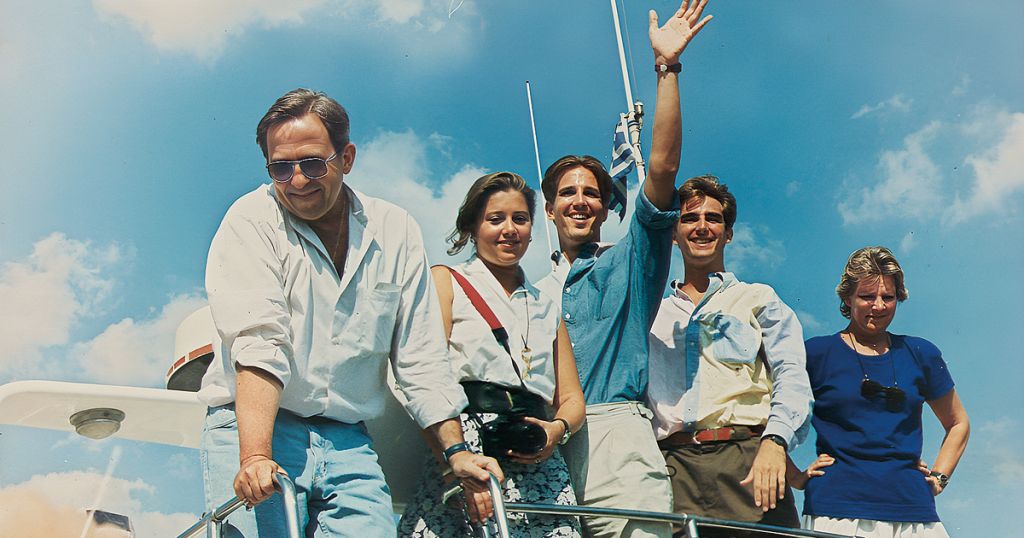
During the royal family’s cruise along the Greek coast, their yacht was placed under surveillance on the orders of the government of the time. The situation reached the point where the yacht was subject to discreet but intense surveillance by Greek military and naval forces. According to information published at the time, Greek torpedo boats and a C-130 aircraft were monitoring the vessel’s progress.
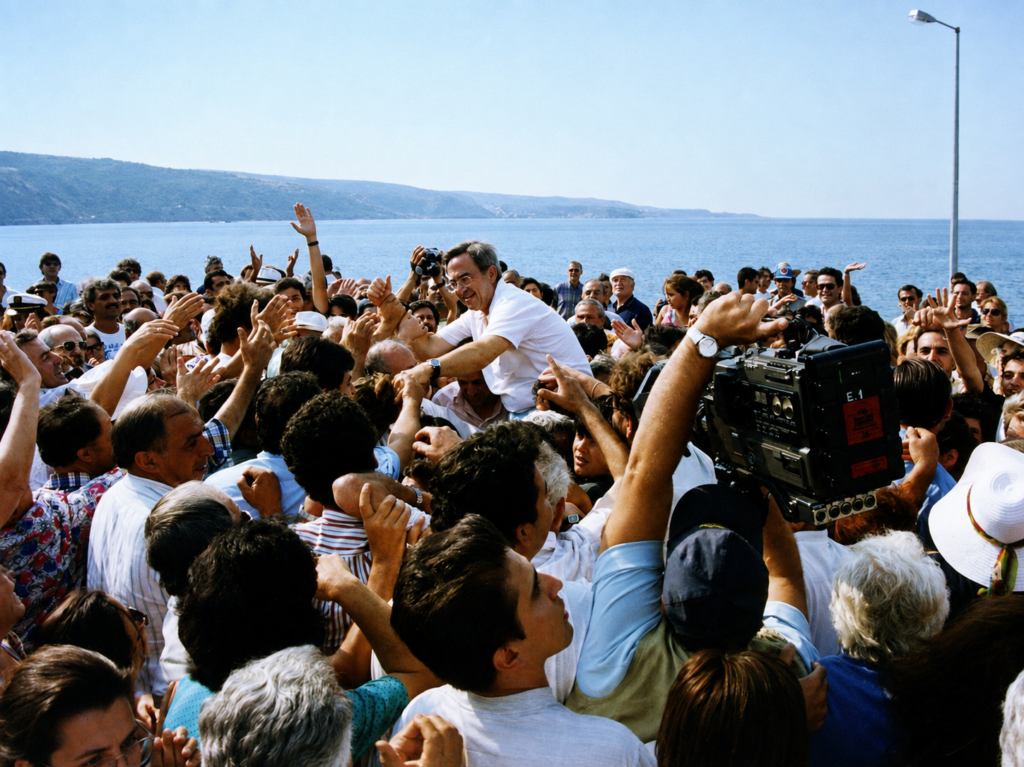
King Constantine expressed his deep discomfort with the presence of the ships around the yacht, claiming that he felt his family was under threat. Eventually, following negotiations with the government, a compromise was reached: the royal family agreed not to visit certain areas of the Peloponnese where there were large gatherings of people, whilst the Greek ships and military aircraft ceased their close surveillance of the yacht.
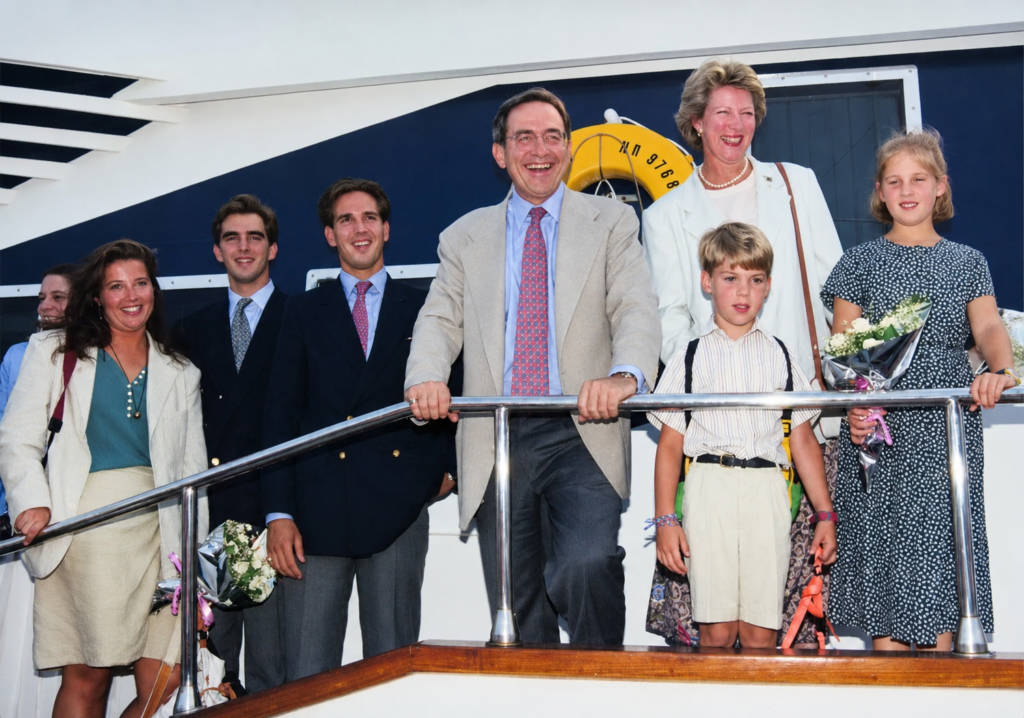
The final stop was Tatoi royal estate. There, the Palace’s senior priest, Archimandrite Father Timotheos, conducted a memorial service for the repose of the souls of King Paul I and Queen Frederica. The King and Queen then guided their children around their home – as the two eldest were still very young and the other three had not yet been born – so that they could see their ancestors’ home for themselves.
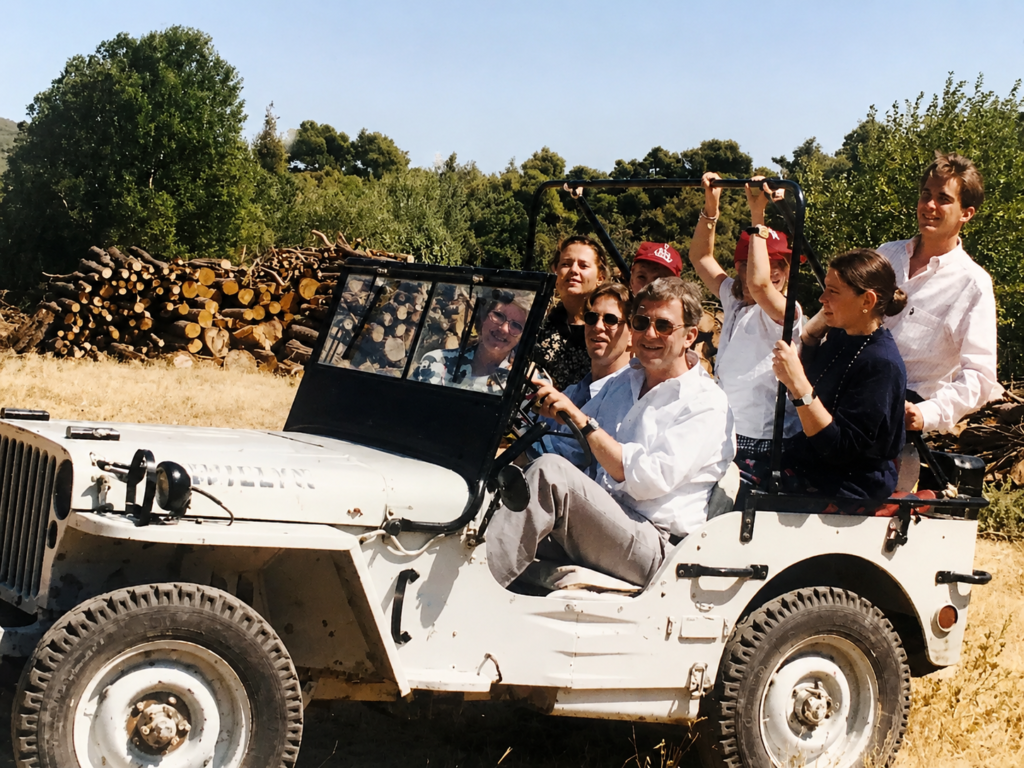
The 1993 visit thus proved to be much more than a simple tour of Greece. For Constantine and Anne-Marie, it was a deeply moving return to a place they had been deprived of since 1967. For their children, it was their first real encounter with Greece outside the context of a brief and strictly controlled visit. For Greek political life, however, it served as a reminder that, although the constitutional monarchy had been abolished, the royal family continued to be a special symbol for a section of Greek society.
In 1994, the Greek Government passed a law under which the royal family’s property was nationalised and their citizenship revoked. In December 2000, the royal family was finally vindicated by the European Court of Human Rights. The case continued for a further two years, as the Greek government refused to return the property and insisted on financial compensation being paid. The second part of the 1994 law, which stripped the family of their citizenship, had not been challenged in court, as King Constantine did not accept the accusation that he was not Greek.
Life in Greece, the return and a new era
The period from 2000 to the present day has been one of the most significant and personal phases in Queen Anne-Marie’s life. After more than three decades away from Greece, the wife of King Constantine II gradually found herself transitioning from a life in exile to a new reality, in which Greece remained at the centre of her family, social and charitable activities. In the early 2000s, Anne-Marie and Constantine were still living in London, whilst maintaining close ties with Greece and Greek society. For Constantine, Greece was his homeland. For Anne-Marie, it was the country where she had become a wife, a mother and a queen. This period coincided with the conclusion of the long-running legal dispute concerning the royal family’s private assets.
The visit in February 2003
The visit by Constantine and Anne-Marie was not merely a private arrival in Greece, but a surprise return organised with the utmost discretion. On 15 February 2003, King Constantine arrived in Athens accompanied by Queen Anne-Marie, at a time when the long-running legal dispute over the royal family’s estate had only just been resolved. Their two-day visit took place on the occasion of the memorial service held at the tombs of King Paul and Queen Frederica in Tatoi.
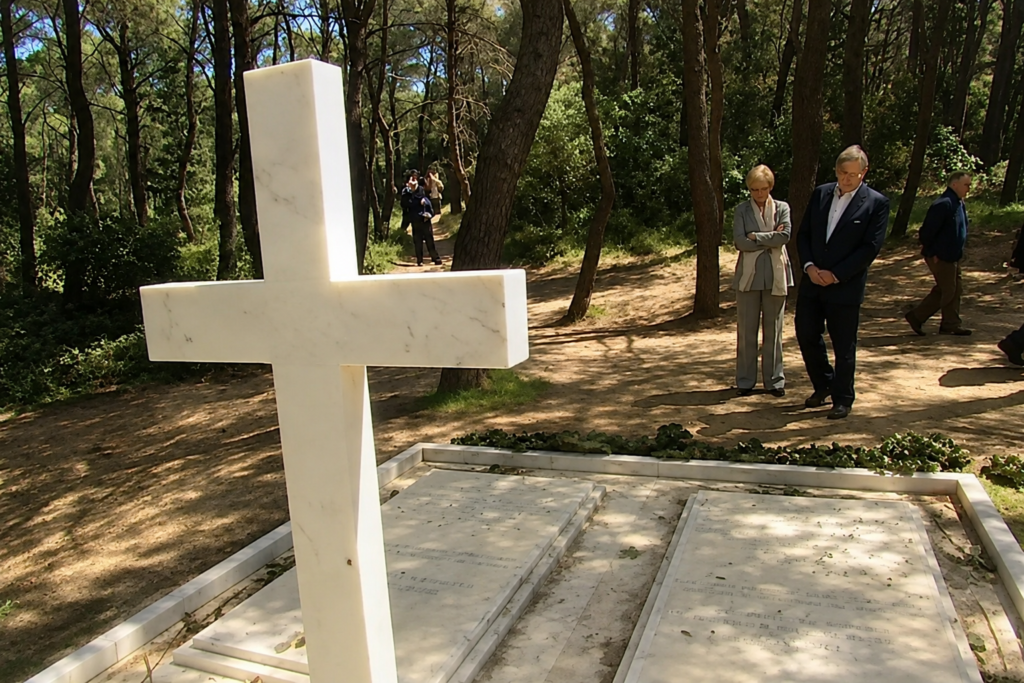
This visit, the first since 1993, carried profound personal and emotional significance. For Constantine and Anne-Marie, Tatoi was not merely the place where his parents were laid to rest, but a place deeply connected to their family history. Significant chapters of Constantine’s life had unfolded there — from his childhood and youth to the creation of his own family with Anne-Marie. Their return, therefore, signified a personal reconnection with a place that remained inextricably linked to their memories, their family and their past. Most importantly, the visit was not a one-off event; it concluded with a promise that the family would return soon to spend Easter in Greece.
Easter 2003 in Epirus
This promise came to fruition just a few weeks later. Constantine, Anne-Marie, Pavlos and Nikolaos arrived at Thessaloniki’s ‘Macedonia’ Airport on 23 April 2003, and from there they set off by road for Ioannina, where they were to spend the Easter holidays.
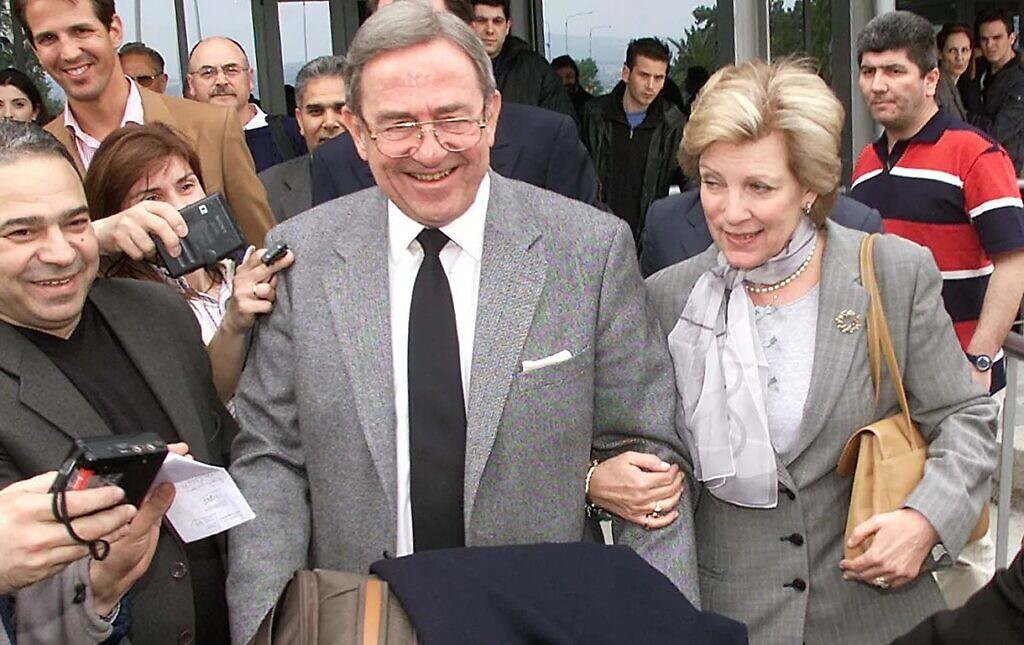
Their stay in Epirus was not limited to a private family celebration. It included visits to historical and archaeological sites and several spontaneous encounters with local residents. Their presence now took on a more personal and family-oriented character, far removed from the intense political confrontations that had characterised their previous visits to Greece.
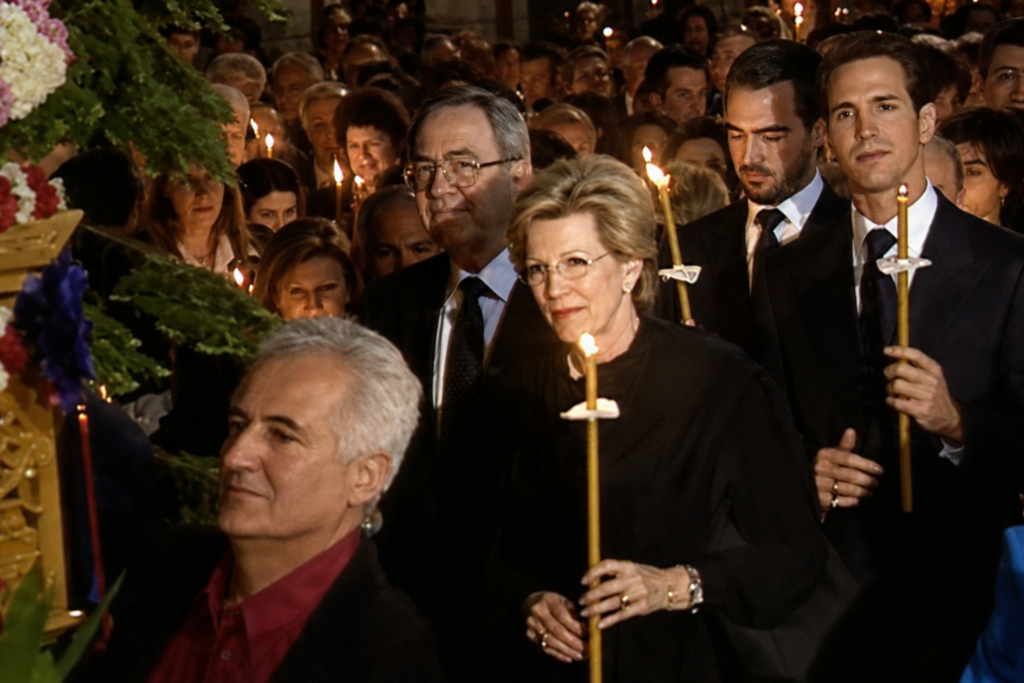
Thus, Easter 2003 in Neokaisaria, Ioannina, was not merely a brief family visit. It was a return to Greece through everyday life, the Orthodox tradition, Greek nature and direct contact with the world. And that is precisely why it held such special significance for Anne-Marie. She had left Greece in 1967 as a young queen and mother of small children. Thirty-six years later, she was returning as the mother of grown-up children and as a woman who had spent most of her life away from the country where she had become queen. The fact that the family’s first Easter in Greece since 1967 took place in a small village in Epirus, amongst the locals rather than in any official or social setting, lent the return a particularly personal character.
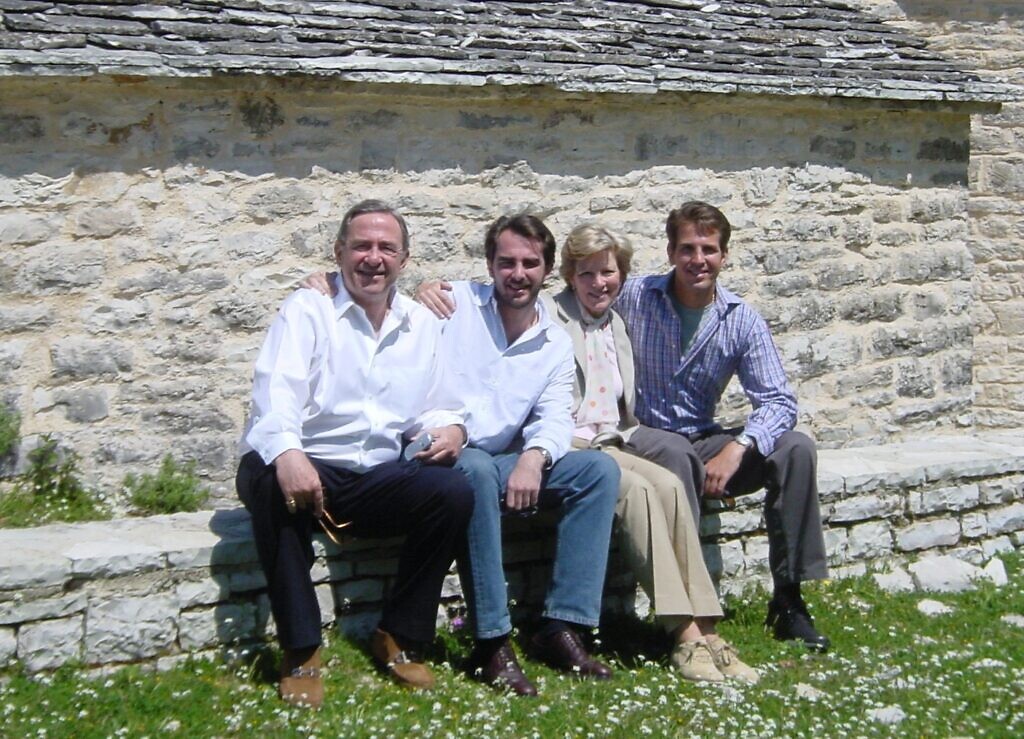
The return to Athens in 2004
The year 2004 was particularly symbolic, as Athens hosted the Olympic Games, 108 years after the first modern Olympic Games in 1896. The Greek royal family arrived in Greece in full force a few days before the Games began. Constantine had a special and institutional reason for being in Athens. He maintained close ties with the Olympic movement. He served as a full member of the International Olympic Committee (IOC) from 1963 to 1974. After 1974, he was made an honorary member of the IOC, a position he held until his death in 2023. His connection with the Olympic Games was also a personal one: as heir to the Greek throne, he had competed at the 1960 Rome Olympic Games and won the gold medal in the Dragon class sailing event. His contribution to the Greek Olympic effort was later recognised by his son, Prince Pavlos, who spoke of his father’s relationship with the IOC and his role in the bid for the 2004 Games.
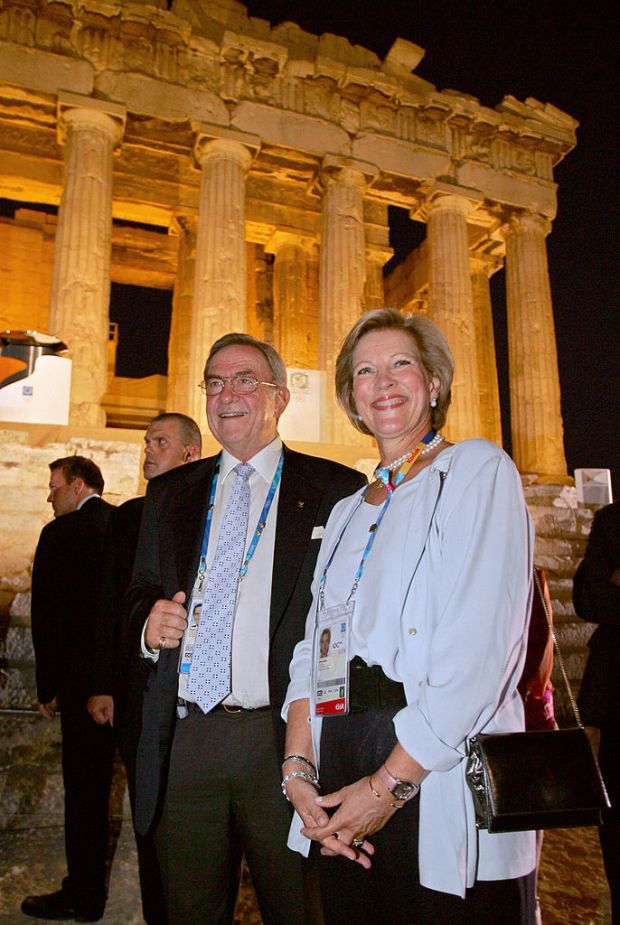
One of the most historic moments of the visit took place on 13 August 2004, on the eve of the opening of the Games. King Constantine and Queen Anne-Marie attended a reception hosted by the President of the Hellenic Republic, Constantine Stephanopoulos, in honour of the members of the IOC and the foreign guests of the Olympic Games. The significance of the occasion was extraordinary: for the first time since December 1967, Constantine and Anne-Marie were returning to the former Royal Palace in Athens, which had since become the Presidential Palace.
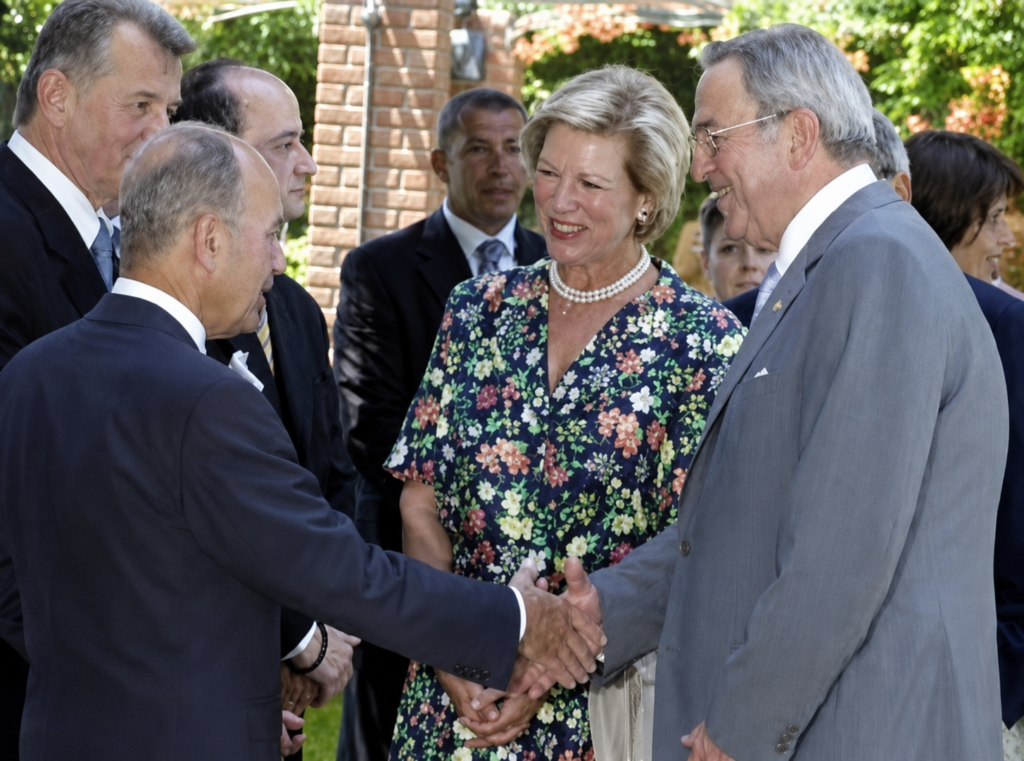
The sight of the couple walking through the gardens of the Presidential Palace was highly symbolic. The place where Constantine had lived as a child and as king, and where he had carried out many of his official duties, now had a different institutional role. Anne-Marie’s presence at the Presidential Palace where she had lived during the early years of her marriage and where her first two children had been born and raised was therefore particularly symbolic.
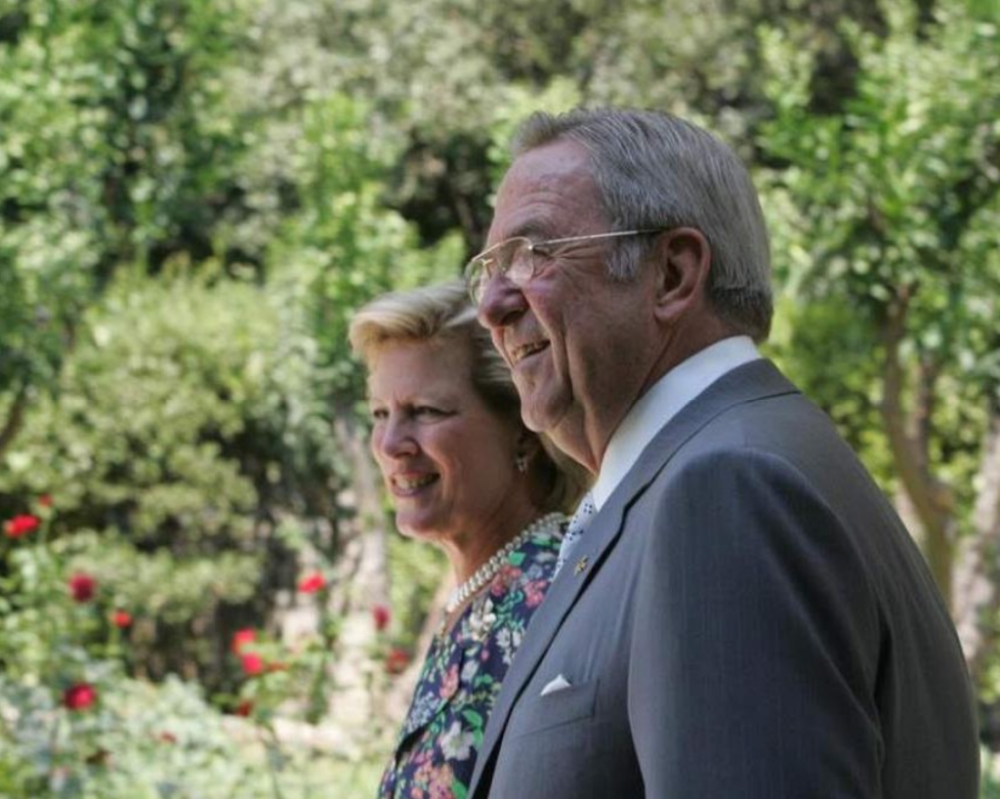
In 2004, this return did not take place against a backdrop of confrontation, but within the context of an international event that placed Greece at the centre of global attention. Indeed, this relationship continued even after the Games. In December 2004, Mr. Stefanopoulos privately invited Constantine, Anne-Marie and members of their family to the Presidential Palace.
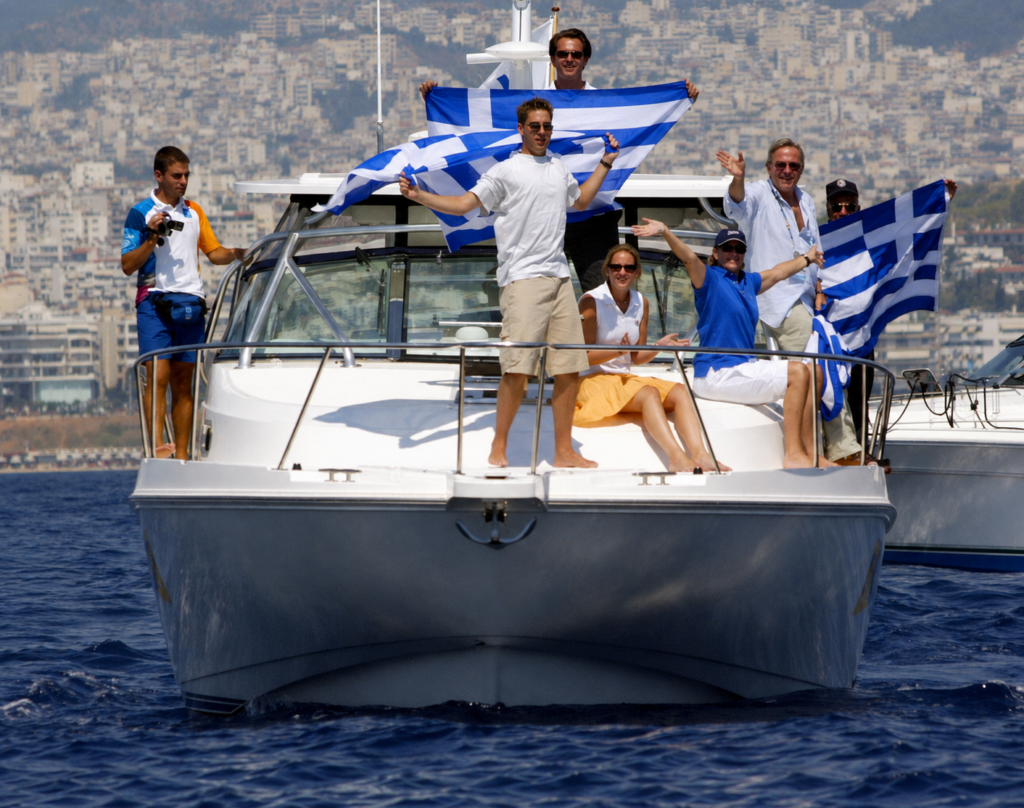
The royal family followed the Greek events closely and supported the efforts of the Greek athletes. A notable example was their presence on a boat, where they celebrated with Greek flags as Sofia Bekatorou and Emilia Tsoulfa won the gold medal in sailing (470 class).
Life in Porto Heli
In the years that followed, Anne-Marie began to spend more and more time in Greece. Together with Constantine, they settled in Porto Heli, in Argolis, choosing a more private and family-oriented life away from the spotlight. Her daily life revolved mainly around her husband, their five children and, later, their grandchildren.
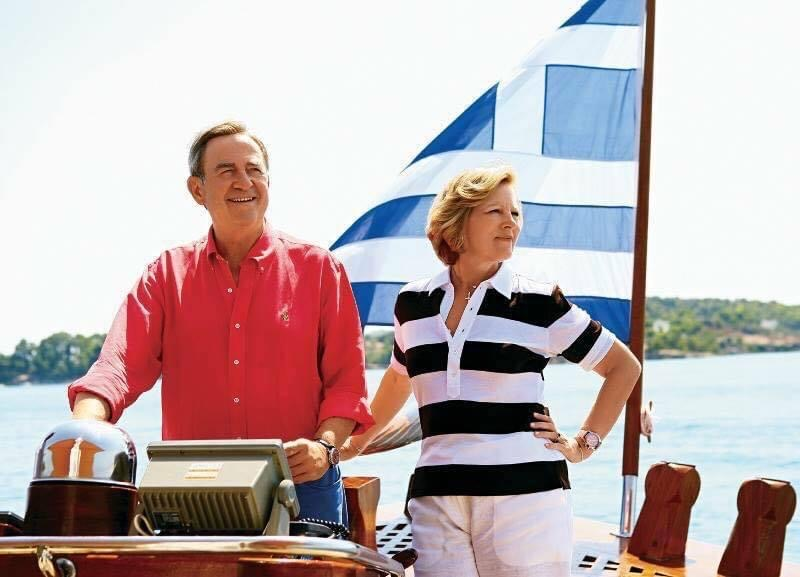
For Anne-Marie, this decade was a period of family stability. Far removed from the official role she had once held as queen, she focused more on her family and her personal relationships.
The permanent return to Greece in 2013
One of the most significant milestones in her modern life came in 2013. After many years living in London, Anne-Marie and Constantine decided to return permanently to Greece. They sold their home in London and settled in Porto Heli, thereby demonstrating in practice that Greece was no longer merely a place they visited, but the main home of their family life.
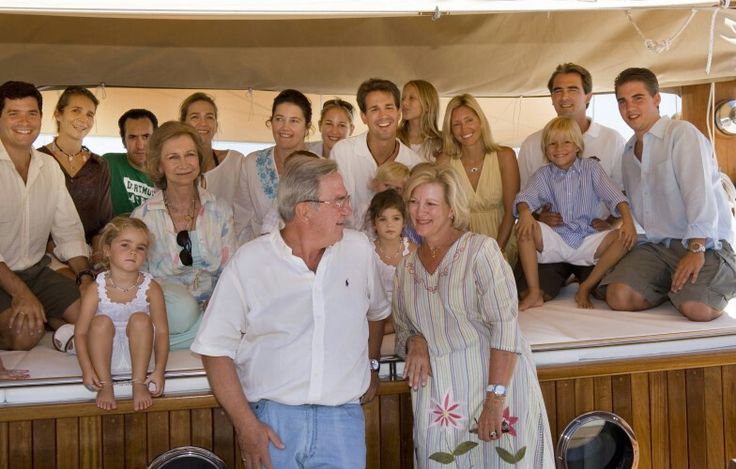
This return held particular emotional significance for Anne-Marie. The woman who had arrived in Athens in 1964 at the age of just 18 as a young princess of Denmark had now returned to Greece after almost half a century, this time not as a queen in an official capacity, but as a wife, mother, grandmother and a member of a family that had now forged a new bond with the country.
September 2014 was a particularly moving and symbolic occasion, when Constantine and Anne-Marie celebrated their Golden Wedding Anniversary. The couple had married on 18 September 1964 at the Cathedral of Athens, in one of the most splendid royal weddings ever held in Greece. Fifty years later, they returned to the same cathedral to mark this significant anniversary.
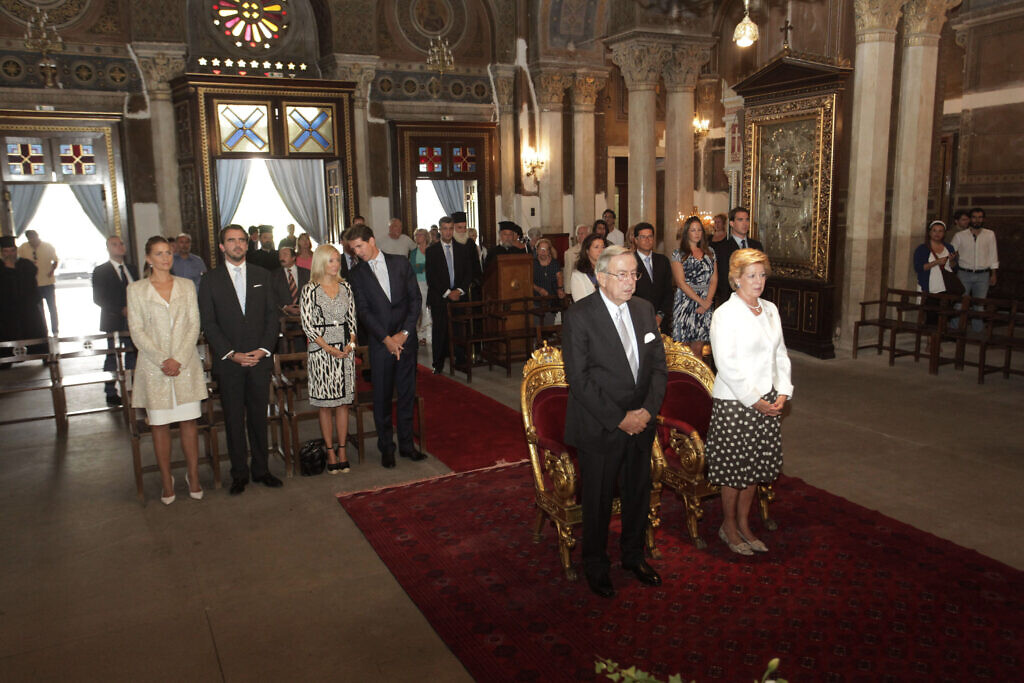
On 18 September 2014, Athens Cathedral opened its doors especially for the occasion, whilst it was still undergoing restoration following the damage it had sustained in the 1999 earthquake. A special prayer service was held there to mark the couple’s golden wedding anniversary, presided over by Ieronymos, Archbishop of Athens and All Greece. During the brief ceremony, prayers were offered for the health and long life of Constantine and Anne-Marie, whilst a Byzantine choir sang.
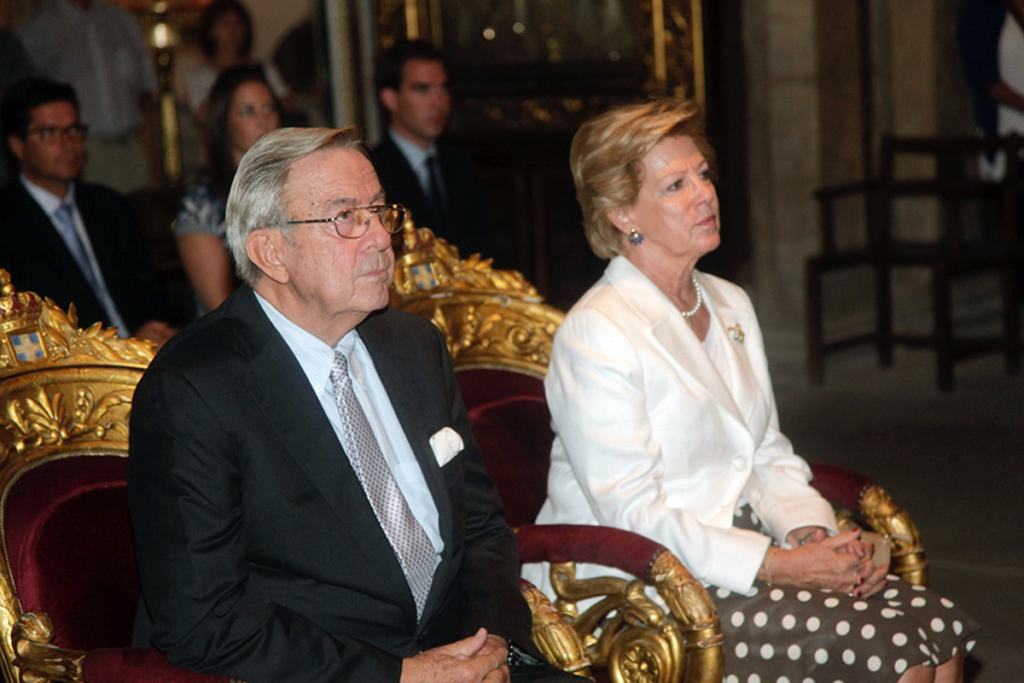
Their return to the Metropolitan cathedral was deeply symbolic. To the very place where, fifty years earlier, they had joined their lives together, they now returned as a mature couple, having weathered historic upheavals together: their departure from Greece, the years of exile, their family life abroad and, finally, their return to their homeland. The sight of Constantine and Anne-Marie in the same church, half a century after their wedding, was one of the most defining moments of this new chapter in their lives in Greece.
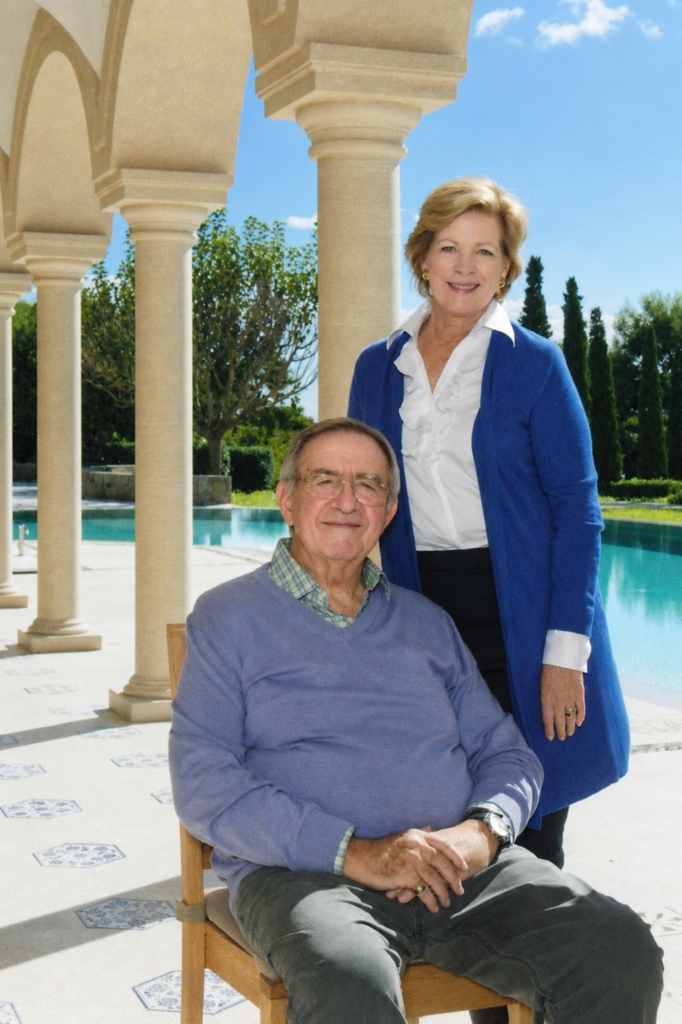
From 2013 until the early 2020s, Anne-Marie maintained a discreet and low-key public profile, choosing for the most part to stay out of the publicity spotlight. Her public appearances were mainly related to family occasions, events and engagements linked to the Greek and Danish royal families, as well as social and charitable activities. Despite her low-key presence, she remained steadfastly by Constantine’s side, accompanying him from time to time to official and social events. The couple continued to appear together at family gatherings and important occasions, maintaining a particularly close relationship. Throughout this period, Anne-Marie was a constant and discreet presence in Constantine’s life, whilst he continued to maintain close ties with his family, his friends and the wider circle of European royal families.
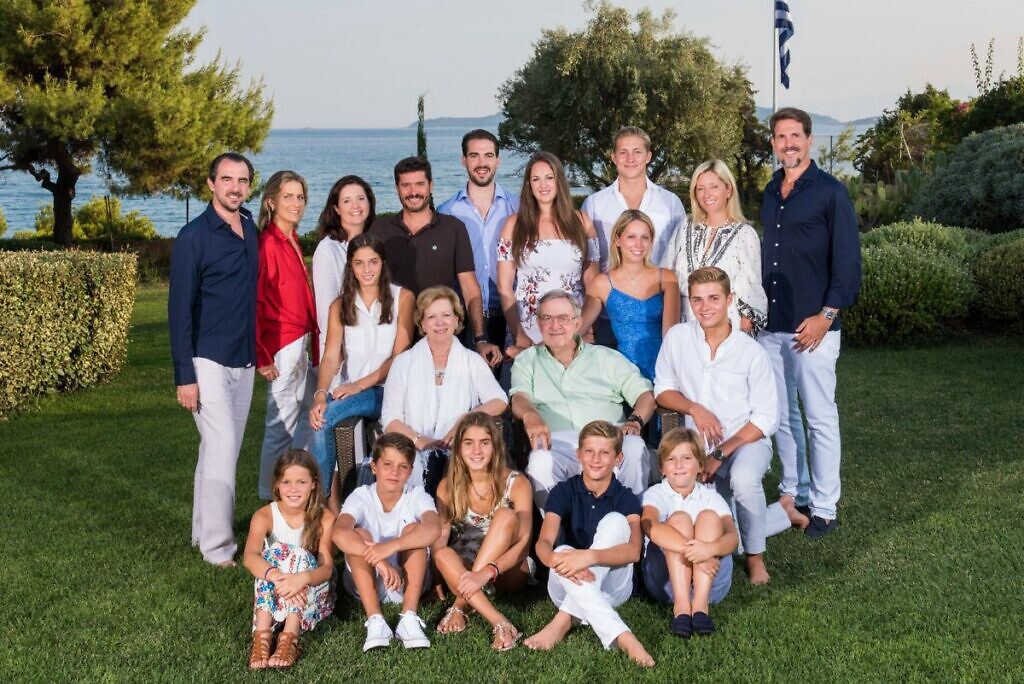
Their life together, which had begun with their marriage in September 1964, had already spanned more than five decades. Anne-Marie was always there for their children — Alexia, Pavlos, Nikolaos, Theodora and Filippos — and gradually took on another important role within the family: that of grandmother. In 2022, Anne-Marie and Constantine settled in Athens, leaving Porto Heli behind.
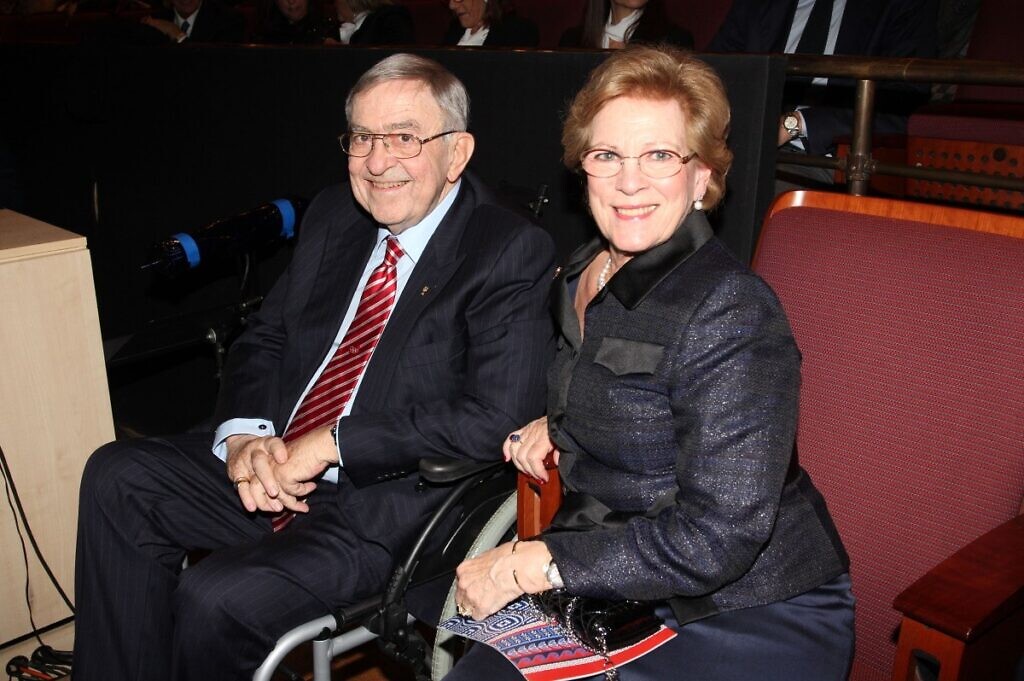
The final years of King Constantine’s life were marked by health problems. Anne-Marie stood by his side throughout, accompanying him on public appearances whenever possible and caring for him devotedly during periods of hospitalisation and rehabilitation. Those close to the family have described this period as further proof of the strong bond that had developed between the couple over nearly six decades of married life.
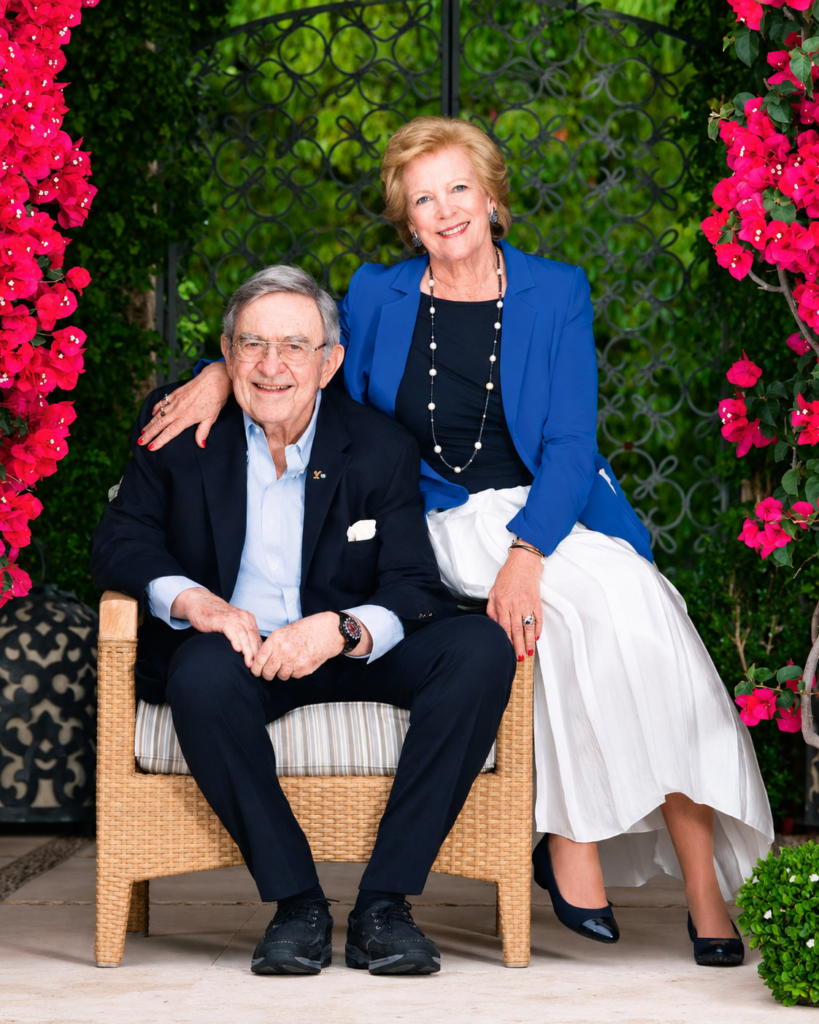
The death of King Constantine II on 10 January 2023 was the most profound personal ordeal of her life since the exile of 1967. The man with whom she had shared nearly sixty years of life was no longer by her side. His funeral, held in Athens, and his burial at Tatoi, brought together members of royal families from across Europe, as well as a large number of Greek citizens who wished to pay their last respects.
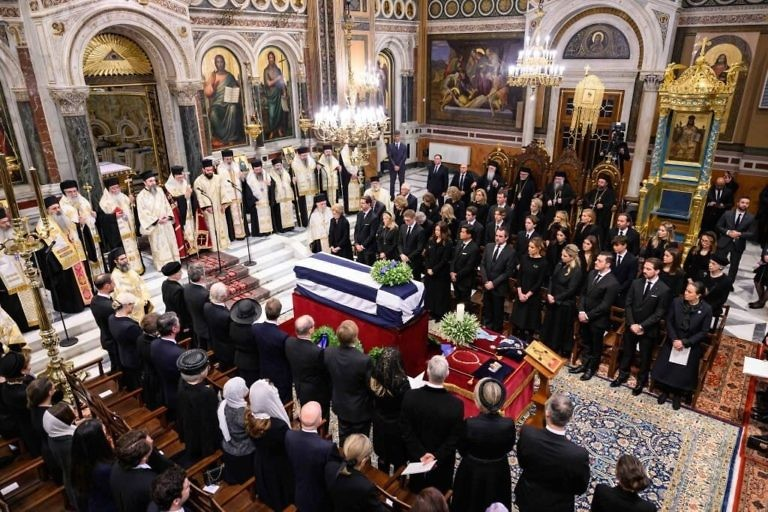
Throughout those days, Anne-Marie maintained the composure and grace that had always characterised her public demeanour. Accompanied by her five children and nine grandchildren, she stood with quiet strength beside her husband’s coffin, knowing that a cycle which had begun almost sixty years earlier, in September 1964, was coming to an end.
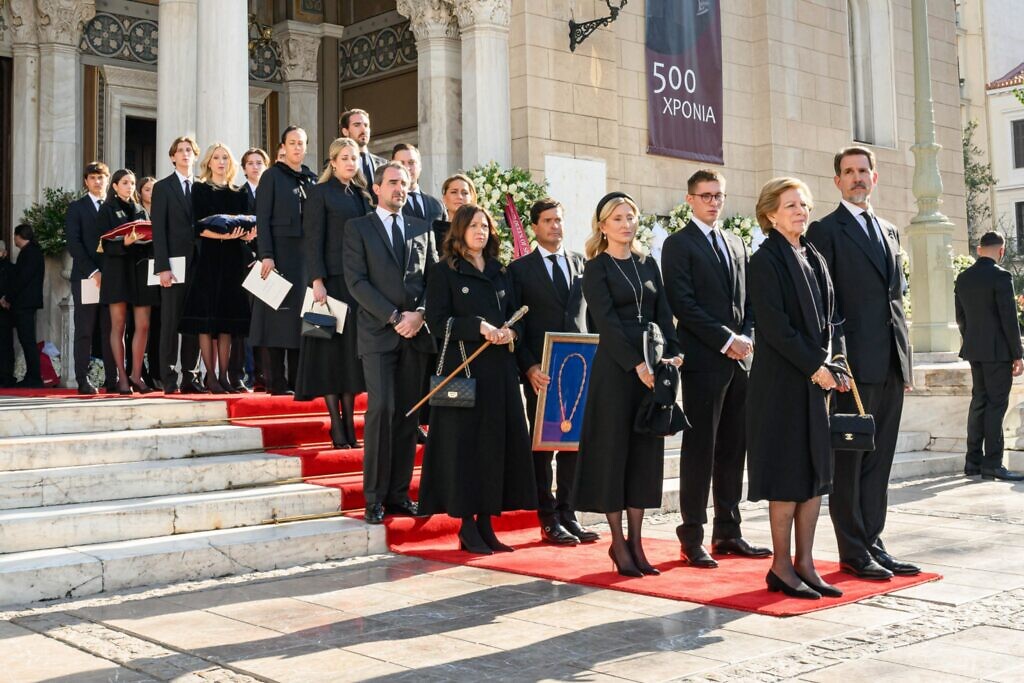
The period following Constantine’s death was characterised by Anne-Marie’s continued close ties with her children and grandchildren. She chose to remain close to Greece, maintaining an active presence in family activities. Her relationship with her children grew even closer, whilst she devotes much of her time to her grandchildren, who now represent the new generation of a family with deep European roots.
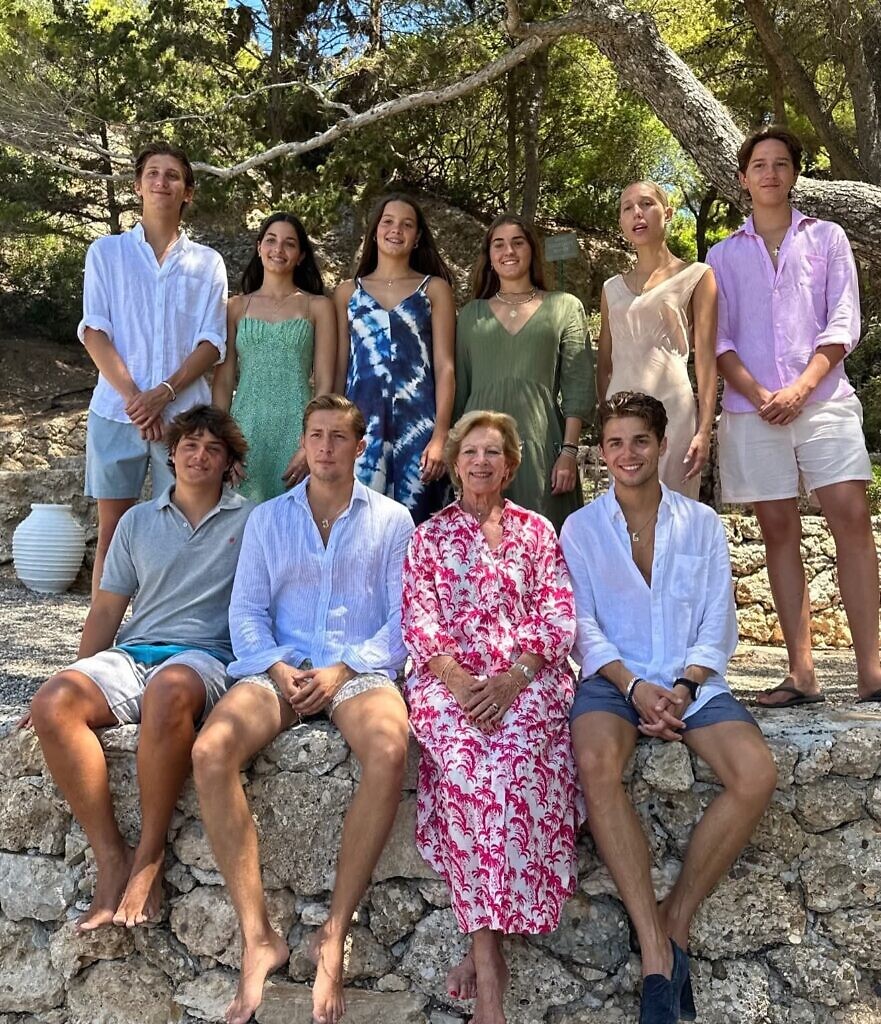
Despite her personal loss, she continues to take part in cultural and charitable events, both in Greece and abroad. Her public appearances are now less frequent, but each one attracts attention due to her distinguished career and the enduring esteem in which she is held within European royal circles.
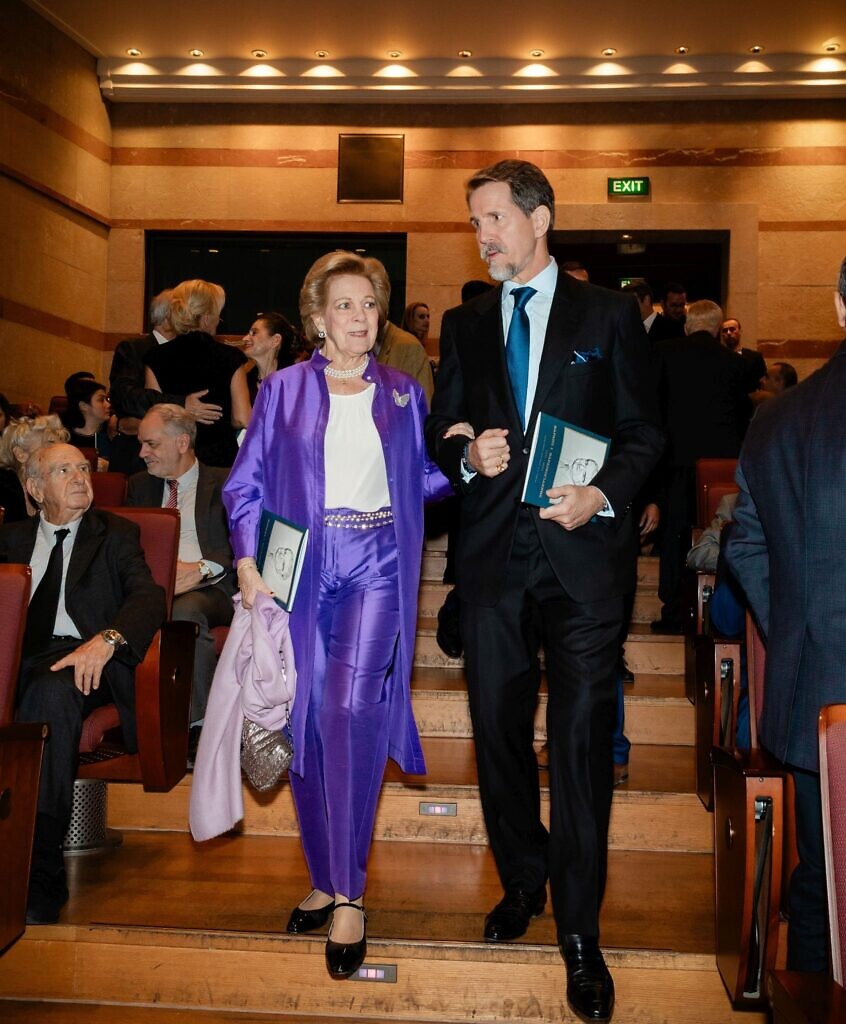
The years 2024 and 2025 marked particularly significant family milestones in Queen Anne-Marie’s life. In 2024, Athens hosted the wedding of her daughter, Princess Theodora, to Matthew Kumar, which took place on 28 September 2024 at the Metropolitan Cathedral of Athens. The family’s return to Athens for such an important occasion held particular symbolic significance, underlining its enduring ties with Greece.
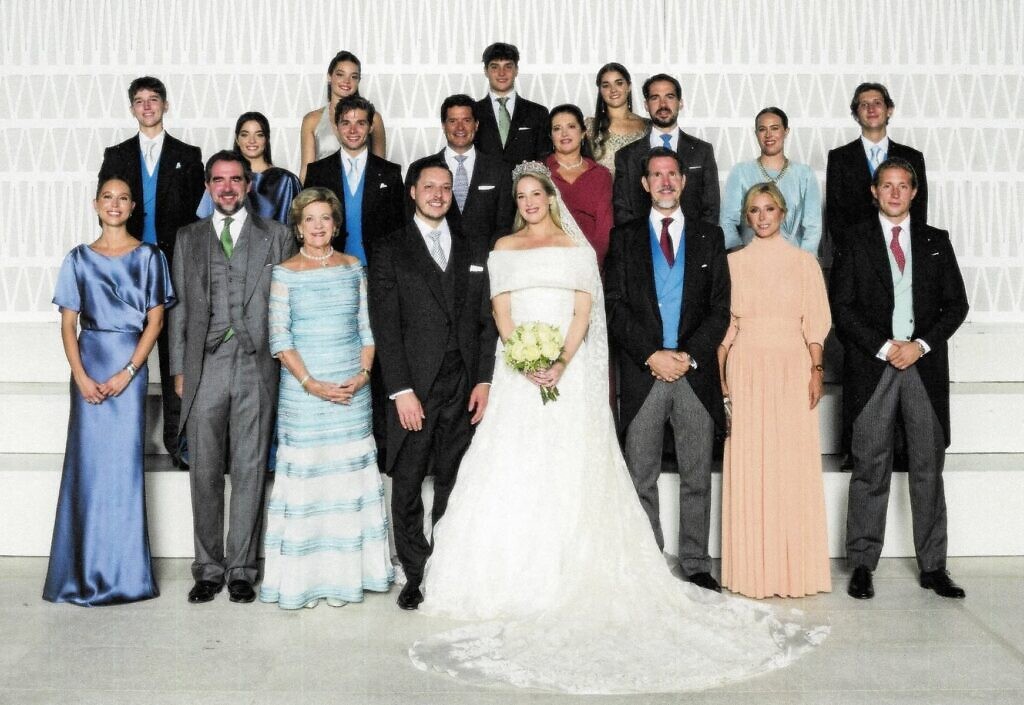
A few months later, on 7 February 2025, another significant family milestone placed Anne-Marie at the centre of the family celebrations: the wedding of her son, Prince Nikolaos, to Chryssi Vardinoyannis at the Church of Saint Nicholas Ragavas in Plaka, Athens. The ceremony took place in the presence of close family only, adding yet another special chapter to the family’s history.
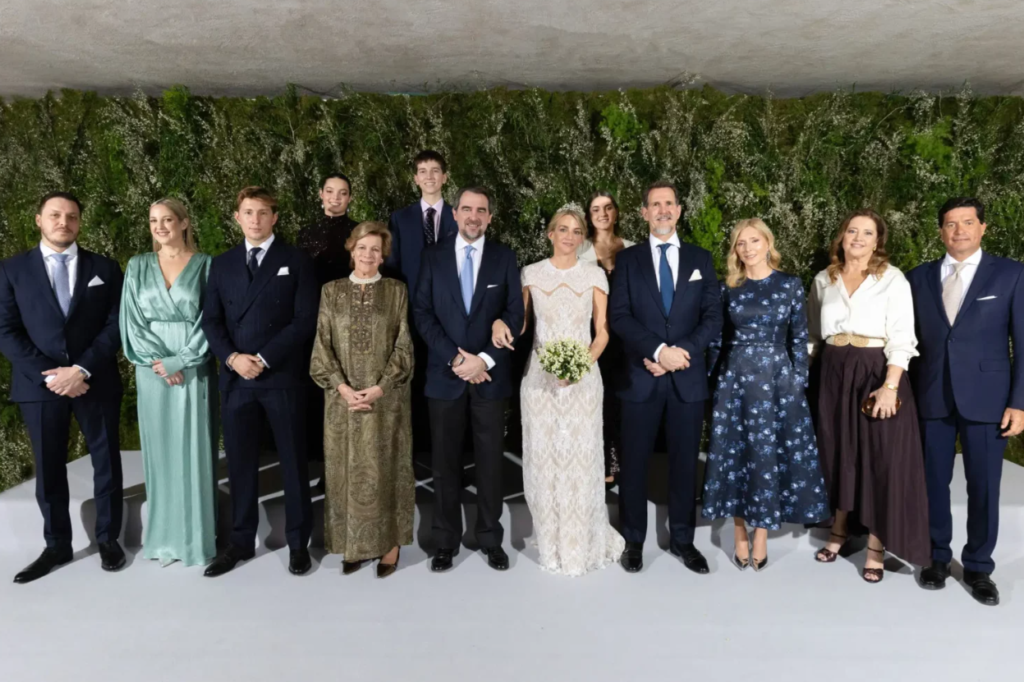
At the same time, the children of King Constantine and Queen Anne-Marie, as well as the children of Prince Pavlos and Princess Marie-Chantal, regained their Greek citizenship and, since December 2024, have officially borne the surname De Grèce. This development marked a new chapter in the family’s relationship with Greece, as the process of regaining Greek citizenship was accompanied, for the first time, by the official registration of a common family surname for these specific members.
‘De Grèce’ is the French rendering of the phrase ‘of Greece’ and is not the historical family name of the Greek royal family. Moreover, members of the Greek royal family did not traditionally use a family surname in the modern sense. However, as part of the process of regaining Greek citizenship, the declaration of a surname was a necessary prerequisite.
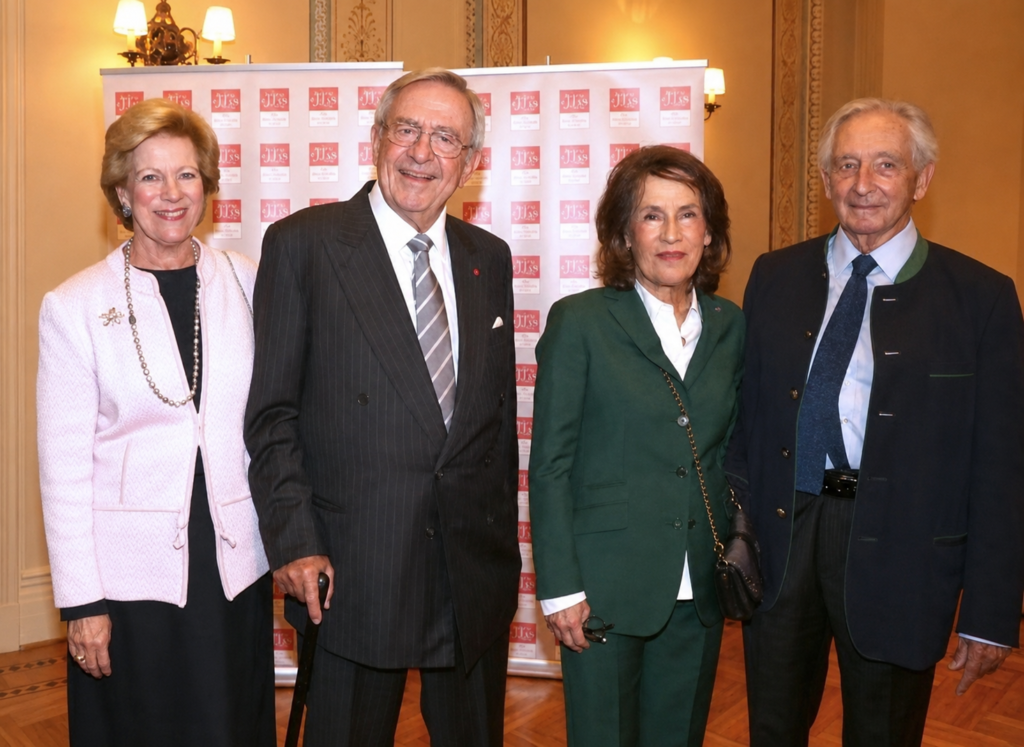
Thus, on 19 December 2024, Prince Pavlos, his siblings and his five children submitted the relevant declarations, choosing ‘De Grèce’ as their family surname. The choice had a clear family connection, as it was linked to their uncle, Prince Michael of Greece and Denmark, who had established himself internationally as an author of historical works and novels under the name Michel de Grèce, meaning ‘Michael of Greece’. Prince Michael was the only member of the Greek royal family to retain Greek citizenship after 1994 and was registered on the municipal register of the City of Athens as Michael De Grèce.
As the family members themselves explained, the choice of ‘De Grèce’ was made because it was their uncle’s surname and represented ‘the most familiar’ option for a family which, traditionally, for generations, had had no surname. Consequently, ‘De Grèce’ does not represent the revival of an old or historical royal surname. It is a name that became associated with Prince Michael during the 20th century and was adopted once again in the 21st century by the children and grandchildren of King Constantine and Queen Anne-Marie, as part of the process of acquiring Greek citizenship and in order to meet the relevant requirement of Greek law.
Queen Anne-Marie today
Queen Anne-Marie continues to live in Greece and plays a discreet yet significant role within her family. She does not seek a high-profile public role, but remains present at important family and social occasions.
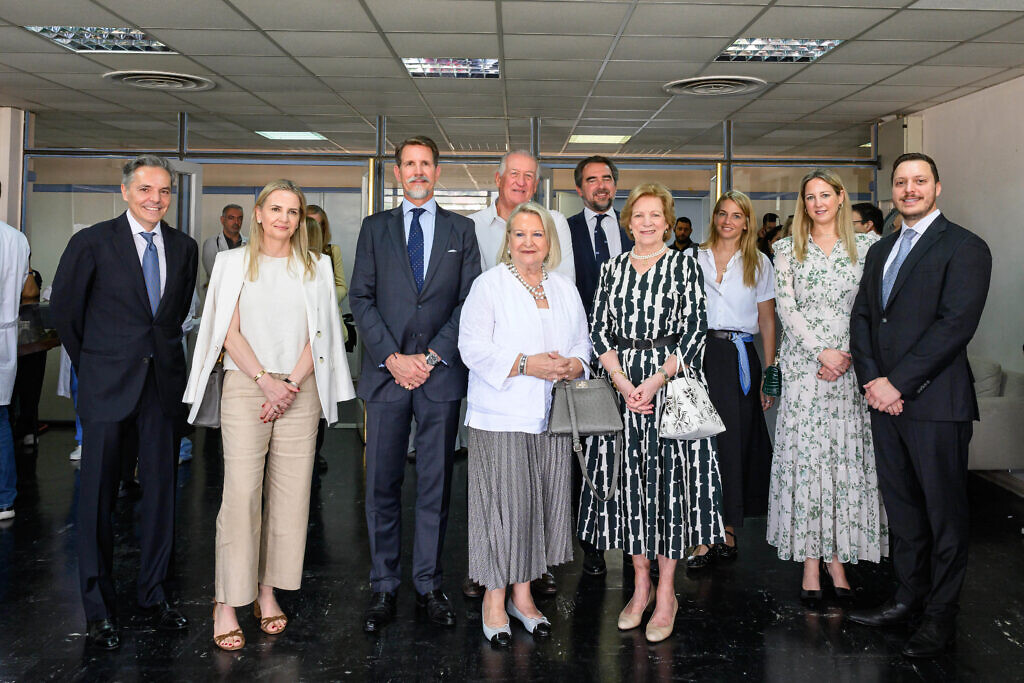
Her presence was particularly notable in June 2025, alongside her sons Prince Pavlos and Prince Nikolaos and her daughter Princess Theodora, at the opening of the refurbished Bone Marrow Transplant Unit at Evangelismos Hospital in Athens. The redevelopment was carried out on the initiative of and funded by Aurora, and thanks to generous donations made in memory of King Constantine II, thus adding yet another dimension to the family’s philanthropic legacy.
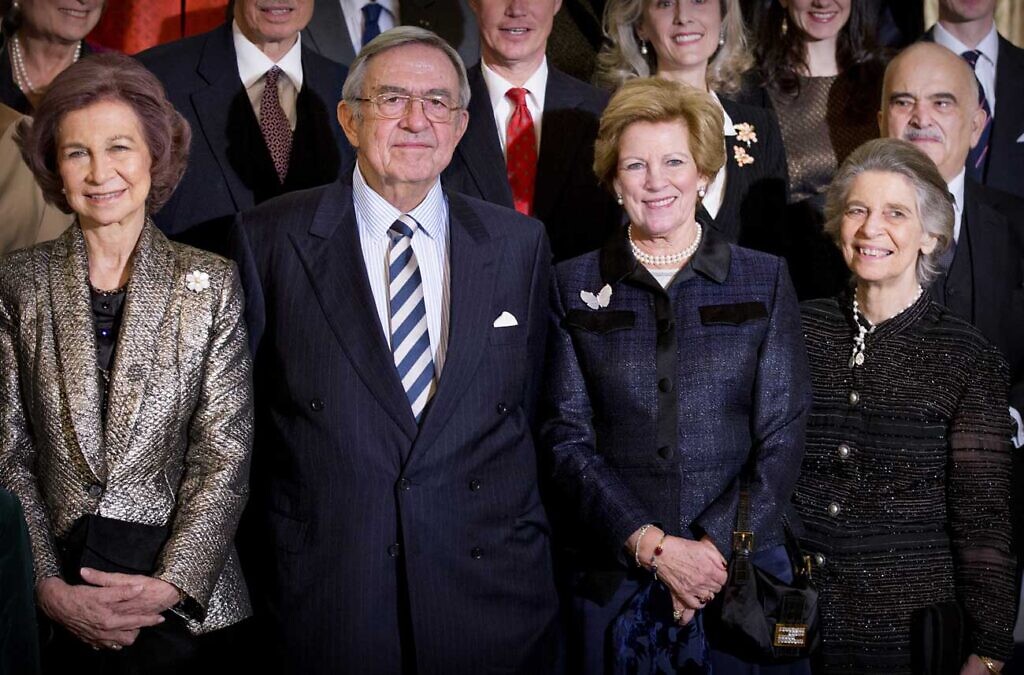
In January 2026, the family suffered yet another profound loss, as on the 15th of that month, Princess Irene, sister of the late King Constantine and Queen Sofia of Spain, passed away at the age of 83. With her life closely linked to music, spiritual exploration and humanitarian work, Irene remained, throughout her life, particularly close to her family and was dearly loved by her relatives and the wider circle of the Greek royal family. For Anne-Marie, her participation in the memorial services and the final farewell marked yet another public appearance during a deeply personal and emotionally charged family occasion. At the same time, it highlighted once again the close bond she maintains with Constantine’s family, as well as her discreet yet steadfast presence at their most significant moments.
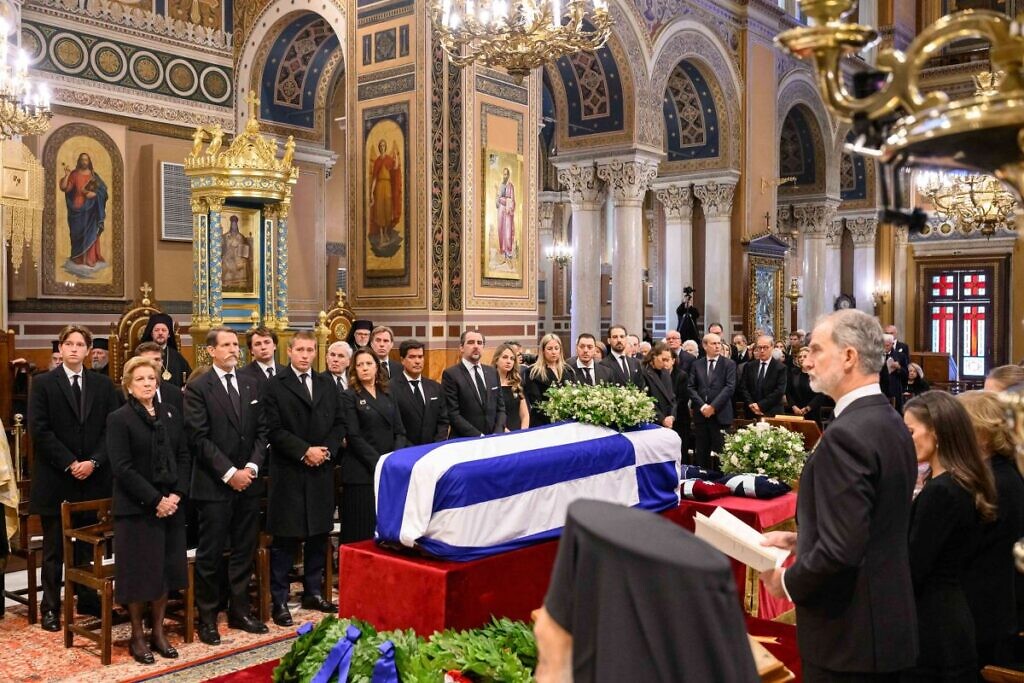
Her life since 2000 is no longer primarily the story of a queen. It is the story of a profound transition from a historic past to a new, more personal era. After decades away from Greece, Queen Anne-Marie returned to the country, established a new home with her husband, devoted herself to her family and continued to uphold the values that had shaped her life ever since her years as Queen of the Hellenes: generosity, support for others and, above all, her deep and unbreakable bond with Greece.
Today, Queen Anne-Marie is a highly symbolic figure in modern Greek history. She is the last Queen of the Hellenes, but at the same time a woman who, despite the historical upheavals and major changes in her life, ultimately chose to make Greece her permanent home. This period can be regarded as the most mature and meaningful phase of her life — a time no longer defined by institutional roles or political developments, but by personal memory, family and a sense of historical continuity.
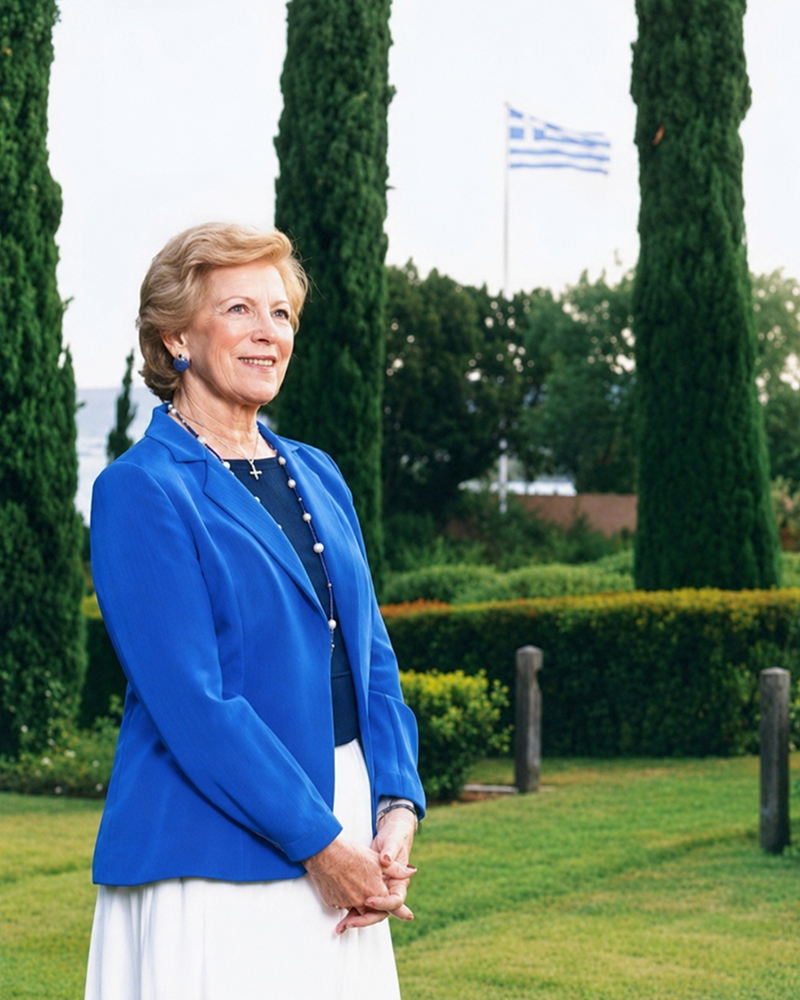
“I have loved Greece very much ever since the first time I visited, before I got married. I fell in love with Athens, the light, the colours, the blue of the sea, but above all, with the Greek people. Wonderful people!”
When she visits places today that are linked to the most significant moments of her life — Athens, Tatoi and other parts of Greece — she is not merely returning to a past that has been lost. She returns as a woman who experienced both the greatest joys and the most difficult trials of her life in Greece, carrying with her memories that have remained vivid over the decades. Perhaps, ultimately, this is the deepest dimension of her relationship with Greece: a bond which, despite political and historical upheavals, has never ceased to be rooted in personal love, memory, devotion and mutual respect.
The personality of Queen Anna-Maria – The character behind the institution
Figures associated with significant historical events are often judged through the political developments of their time. In the case of Queen Anne-Marie, however, her personal journey transcends the confines of her institutional role. Beyond her status as the last Queen of the Hellenes, what emerges is the image of a woman who faced the greatest trials of her life with dignity, inner strength and steadfastness.
Those who have been associated with her over the years agree on one characteristic: Anne-Marie never sought to dominate the public sphere. At a time when image and publicity were becoming increasingly important, she preferred to remain discreet, allowing her actions to speak louder than her public statements.
This discretion was not the result of caution or aloofness. On the contrary, it was a conscious way of life. From her childhood in Denmark, she had been taught that nobility is linked more to behaviour than to titles, and that public service requires self-restraint, respect and consistency.
Another characteristic often mentioned is her simplicity. Despite belonging to one of Europe’s best-known royal families, those who know her personally describe her as unpretentious, with a keen interest in the everyday lives of those around her. She herself never seemed to regard titles as a mark of personal superiority; on the contrary, she treated them as a responsibility.
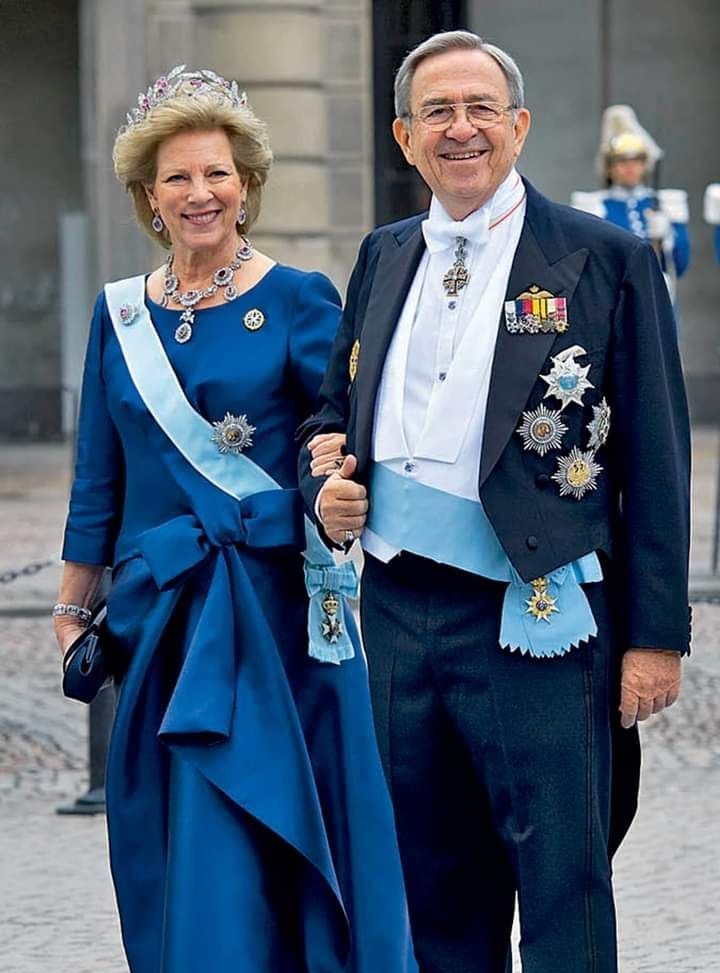
Her relationship with King Constantine was pivotal in shaping her public image. From the time they met in the early 1960s until his death in 2023, the two of them walked side by side for almost six decades, sharing both moments of great joy and times of profound hardship. Historical upheavals, exile, personal difficulties and the vicissitudes of public life never undermined their relationship of mutual trust.
Anne-Marie did not seek to supplant or overshadow her husband’s role. On the contrary, she acted as the family’s steadfast pillar, offering composure and balance during the most difficult times. In several of his own interviews, Constantine himself had publicly acknowledged the importance of her presence in his life, referring to the devotion and strength she offered him in times of crisis.
Motherhood is perhaps the most important aspect of her personal identity. Despite her international commitments and constant travel, she chose to be there for her children herself at every stage of their lives. Their upbringing was not entrusted exclusively to staff or tutors, as was often the case in royal families of earlier times. Anne-Marie played an active role in their daily lives, their education and their personal choices.
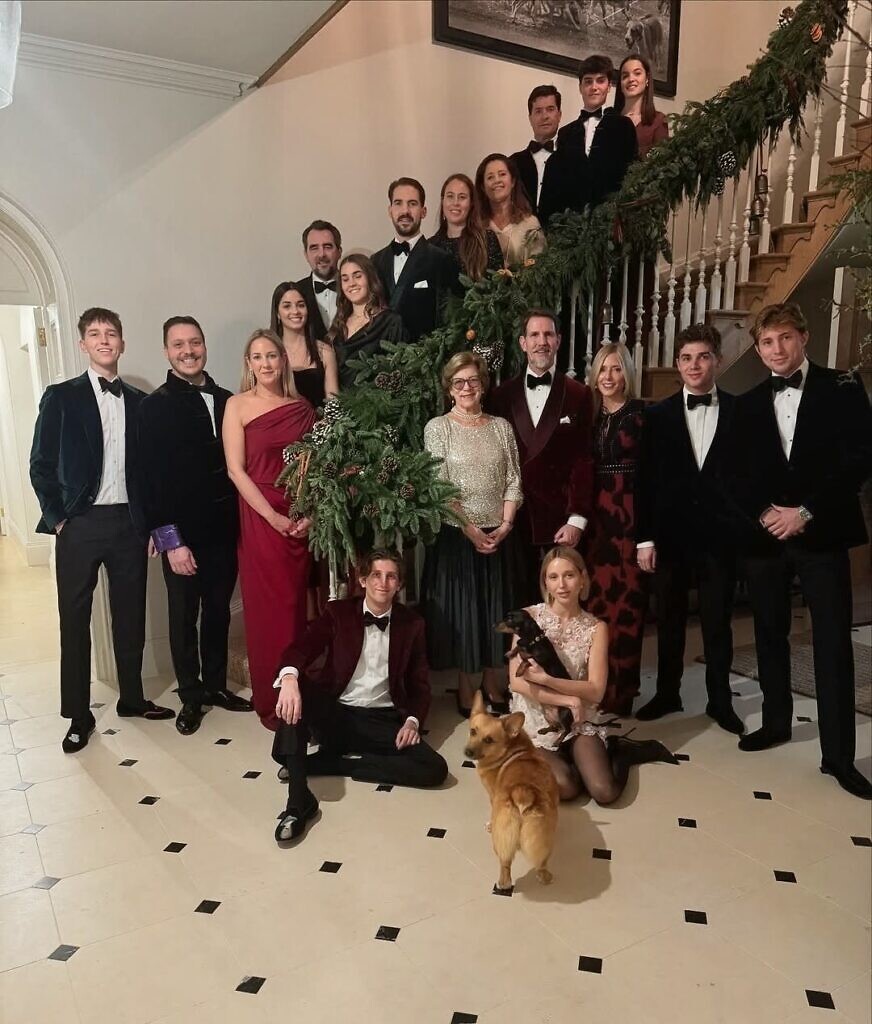
She maintains the same stance today towards her grandchildren. Her public appearances with her extended family reveal a person who enjoys her family life more than her public role. In many cases, photographs from family gatherings capture an atmosphere of intimacy and simplicity, far removed from the grandeur usually associated with royal families.
Another defining feature of her character was her deep sense of duty. Even after the abolition of the monarchy in Greece, she never considered her public mission to be over. She continued to take part in charitable work, to support cultural initiatives and to represent her family with dignity at international royal gatherings.
Her relationship with Greece is of particular interest from a historical perspective. Although she spent much of her life outside the country, she never severed her emotional ties with it. She learnt the Greek language, converted to Orthodox Christianity, raised her children with a Greek education and maintained an active presence in Greek society whenever circumstances permitted.
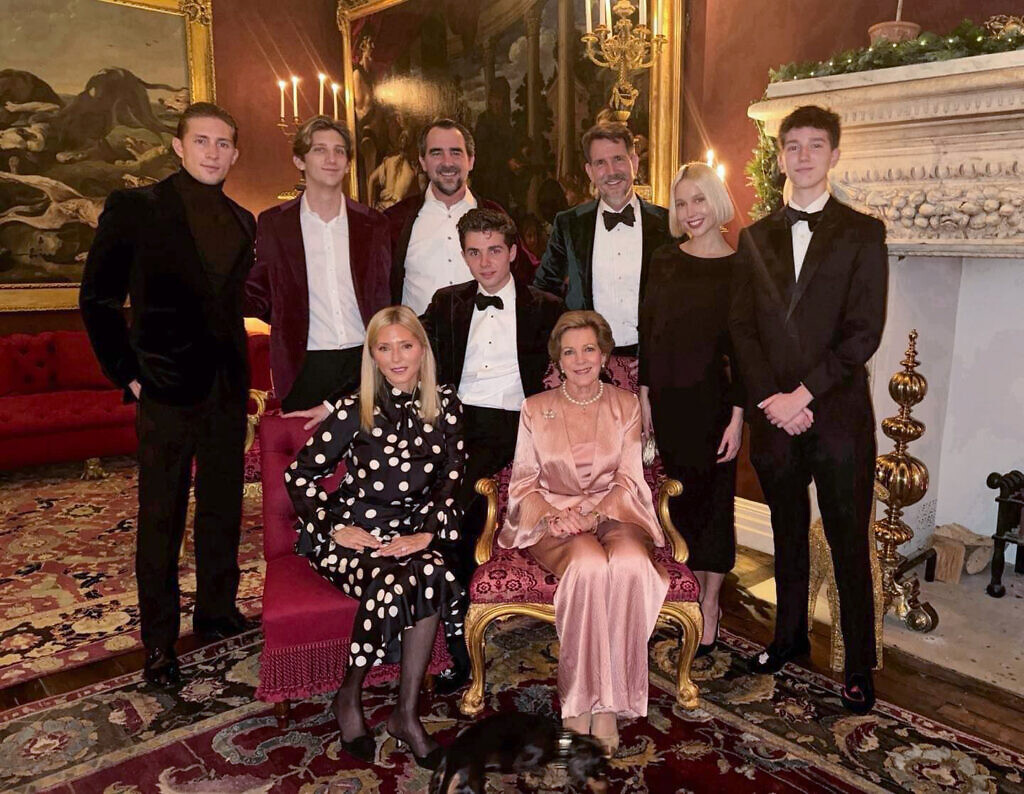
Historians who study the modern Greek monarchy point out that Anne-Marie’s personal journey differs markedly from that of many of her predecessors. She never sought to carve out a personal political role, nor did she intervene in public life in a way that went beyond the bounds of her position. This choice helped to shape an image that focuses more on her personal character than on the political controversies of the past.
Today, eighty years after her birth, Queen Anne-Marie is one of the very few figures who can recount, from personal experience, almost the entire post-war history of European monarchies. She has met kings, emperors, presidents, prime ministers and figures who shaped the 20th century. She lived through the transition from a Europe of traditional dynasties to the modern European reality and witnessed events that left their mark not only on Greece but on the entire continent.
Her historical legacy cannot be assessed solely on the basis of the brief period during which she was Queen of the Hellenes. Her true contribution lies in the steadfastness with which she faced all the trials that followed: exile, the loss of her public position, personal hardships and, ultimately, the loss of her husband.
At a time when public figures are often judged by the intensity of their media exposure, Anne-Marie took the opposite path. She chose discretion over publicity, stability over conflict, and personal dignity over public confrontation.
Perhaps that is why, eighty years after her birth, the image that remains most vivid is not that of the young queen in her 1964 wedding dress, nor that of the exiled wife of 1967. It is the image of a woman who remained steadfast in her principles, devoted to her family, and faced every historical upheaval with calm strength.
It is precisely this consistency that constitutes, perhaps, the most significant aspect of her life and the reason why her character continues to command respect beyond historical, political or ideological perspectives.
Queen Anne-Marie and Queen Sofia: a bond that unites three royal houses
On Queen Anne-Marie’s 80th birthday, her special relationship with her sister-in-law, Queen Sofia of Spain, holds a special place. It is a bond that goes far beyond the bounds of a relationship by marriage. The two women are bound by a long and deep friendship, but also by shared experiences that now make them two of the last living links to an entire European era and to a royal generation that left its own mark on the history of the Old Continent.
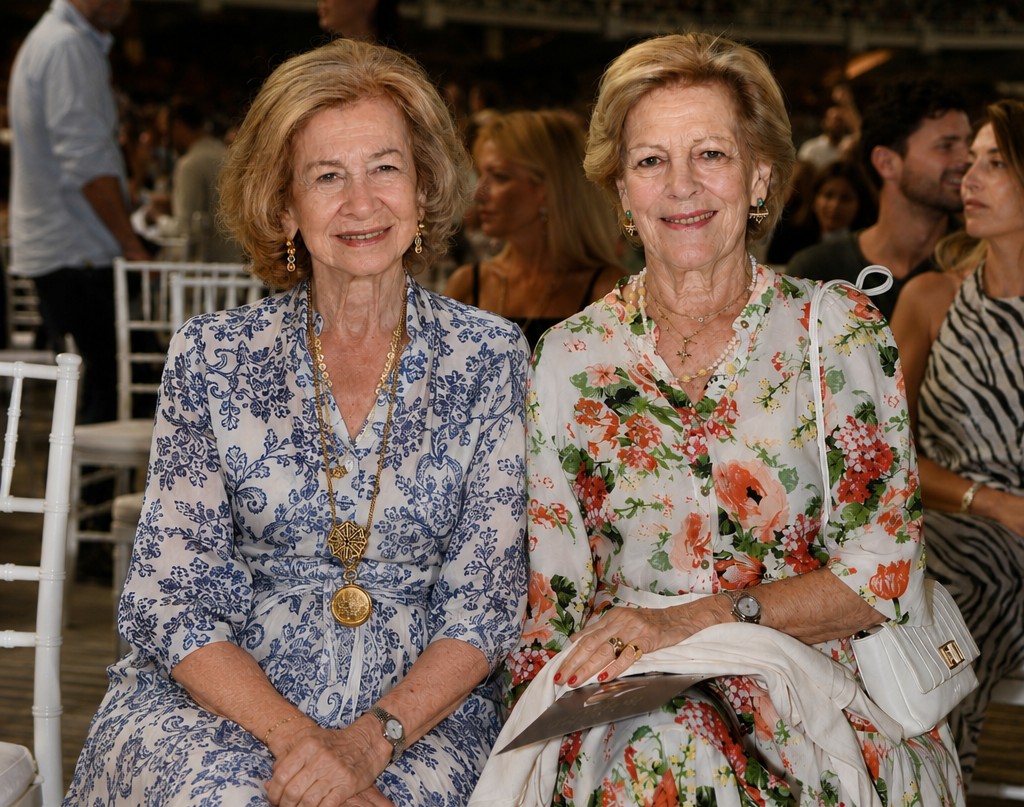
They first met when they were still young women. Over the decades, their relationship developed into a bond of deep trust and mutual love. Through the joys, the family moments, and also the major changes that shaped their lives, Anne-Marie and Sofia always remained close to one another. Their family ties turned into friendship, and that friendship into a bond which, over the years, became almost as strong as a blood relationship.
The two women lived through a period when Greece was a constitutional monarchy and were active members of the Greek royal family at a time of intense political and social upheaval. For Anne-Marie, this experience was even more immediate and formative. As the wife of King Constantine II, she was Queen of the Hellenes and experienced, from the very heart of events, one of the most significant periods in modern Greek history.
For Sofia, Greece was the country of her childhood and youth. The sister of Constantine II and now the last surviving sister of the last King of the Hellenes, she grew up as a Princess of Greece within the royal family, at a time when the monarchy was an integral part of the country’s political life. Her memories of Greece were never merely a chapter of the past, but remained an integral part of her personal identity. Later, her marriage to Juan Carlos, then Heir to the Spanish Throne, led her into a new royal world. As Queen of Spain, Sofia became intertwined with the history of the country that became her second homeland, whilst maintaining a deep and unbreakable bond with Greece, her family and the memories of her youth.
Their shared journey reflects, in a unique way, the close ties that bound European royal houses throughout the 20th century. Anne-Marie, born a Princess of Denmark, and Sofia, born a Princess of Greece, found themselves linked through their family history to Denmark, Greece and Spain.
Today, the presence of Queen Anne-Marie and Queen Sofia takes on a special historical significance. They are not merely two prominent figures in modern European royal history. They are, at the same time, living witnesses to an era that has now passed into history; a Europe different from today’s, where royal houses were closely linked to one another and family ties spanned national borders.
Through their friendship and family ties, a fragment of the memory of an entire royal generation is preserved. And perhaps this is one of the most beautiful aspects of their shared journey: two women who met as young princesses and, after decades of shared memories, remain united today not only as relatives, but as two women who regard one another as family in the truest sense of the word.
Anne-Marie, Margrethe and Benedikte: a bond that has withstood the test of time and distance
Among the most special relationships in Queen Anne-Marie’s life is the one she shares with her two sisters, Queen Margrethe and Princess Benedikte. A bond that began in their childhood years at the palaces of Denmark and, more than seven decades later, remains deep, meaningful and full of mutual love. They grew up together, shared the same family experiences and enjoyed a childhood which, despite its royal setting, was filled with the same simple joys, the same memories and the same moments of sisterly bond. Amalienborg, Fredensborg and Grasten provided the backdrop to the early years of their lives.
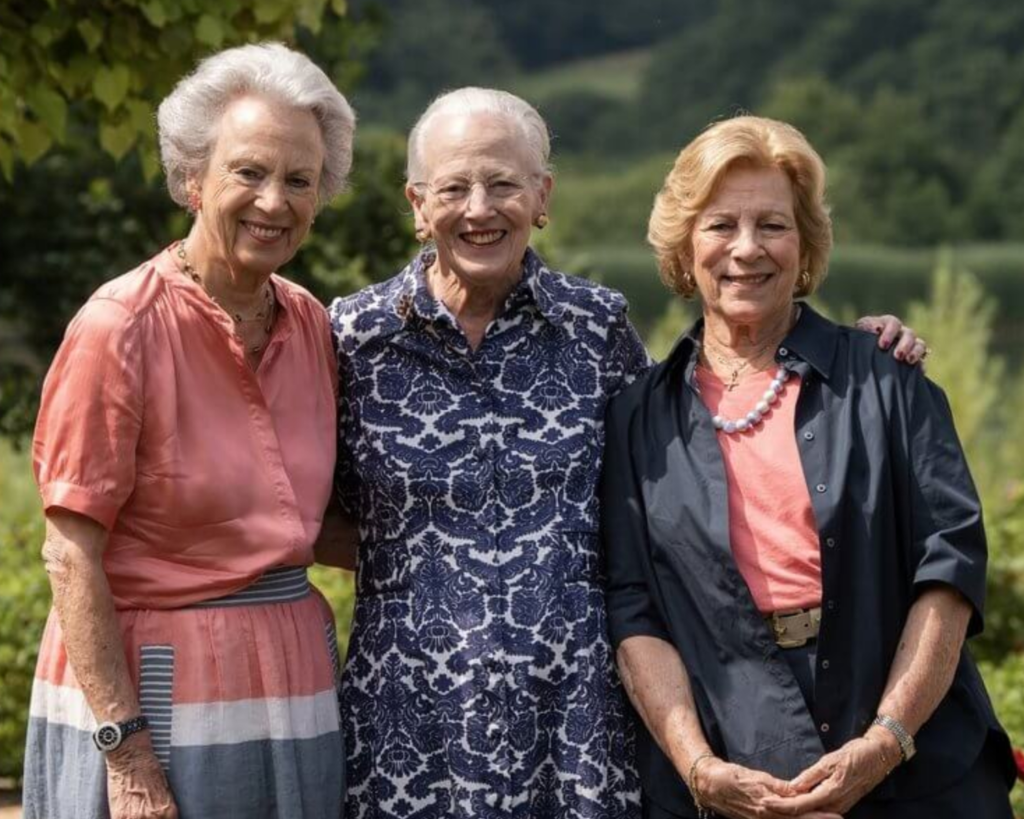
As time went by, however, the three sisters went their separate ways. Margrethe ascended the Danish throne and remained at the centre of the country’s public life for decades. Benedikte built her own family and life in Germany, whilst the youngest, Anne-Marie, left Denmark in 1964 when she married King Constantine II and became Queen of the Hellenes. Three different lives, three different countries and three different roles. And yet, the distance did not manage to weaken their bond.
Anne-Marie has described this development in a characteristic way. When they were children, the age difference between the three was more significant; as they grew up, however, the gaps in age and their different roles ceased to matter. The three women became, as she herself has pointed out, essentially ‘the same’ to one another in adult life. Perhaps this is the most beautiful aspect of their relationship: behind the titles, the ceremonies and the public obligations, there remain three sisters who have known each other all their lives.
Margrete, Benedikte and Anne-Marie did not need to live in the same country to stay close. Their family, shared memories and deep personal bond formed a lasting connection that continued to unite them, even when life took them in different directions. And perhaps that is why the moments when the three sisters meet are imbued with a special warmth. It is not merely a meeting of three members of a European royal family. It is a reunion of three women who have shared a whole lifetime: from their childhood years in the palaces of Denmark to the great joys, trials, losses and changes that time has brought.
Their bond is, ultimately, one of the most human aspects of their story. Margrethe, Benedikte and Anne-Marie may have lived in different countries and held different titles and responsibilities, but they never ceased to be what they were from the very beginning: three sisters, bound by a bond that time could not alter.
Acknowledgements
I would like to express my sincere appreciation to Ms. Tepi Pistofidou for her invaluable contribution to the preparation of this article, as well as for her constructive suggestions, insightful comments, and valuable guidance. Her contribution was instrumental in enhancing the completeness of the present work.
 Share On Facebook
 Tweet It